

Prioritize the entrance, safety lighting, a few high-value amenities, and a simple maintenance contract. Those four moves deliver the fastest gains in curb appeal and tenant retention, and they set up every other improvement on this list. Well-maintained green space and shade correlate with higher resident satisfaction, which means the landscaping choices you make now affect lease renewals later. We put this guide together from fieldwork on commercial maintenance plans, which are part of daily business.
TL;DR:
- A Las Vegas study recorded fewer police calls after landscape and lighting changes; keep shrubs below 3 feet and tree canopies 7 to 8 feet high.
- Match amenities to resident demand: dog runs suit properties with many pet residents, while pop up seating can test interest before permanent construction.
- Require written contracts to specify service frequency, seasonal tasks, insurance, storm response times, debris disposal, and phased care for newly installed plants and hardscape.
- Rain gardens, permeable pavers, and planters can reduce directly connected impervious area by roughly 20% to 30%; drainage features tied to grading need engineering review.
- Industry reporting supports a phased timeline: year one for safety work, year two for amenity pilots, and year three onward for planting or green infrastructure.
Table of Contents
- Entrance and curb-appeal upgrades
- Seating and programmed gathering spaces
- Plant palette, color, and low-maintenance selections
- Common-area amenities that add value
- Safety, lighting, and CPTED-informed planting
- Privacy and screening solutions
- Pathways, circulation, and wayfinding
- Tree selection, placement, and long-term care
- Maintenance strategy: in-house vs. contracted plans
- Sustainable, stormwater-aware options for constrained sites
- Implementation, phasing, and budget-friendly tactics
- Integration of signage and wayfinding elements
- Design considerations for parking lot landscaping and buffer zones
- Publisher perspective from Chas / Ivan’s Landscaping
- How Ivan’s Landscaping can implement these ideas
- FAQ
- Sources
Entrance and curb-appeal upgrades
The entry sequence is the first thing a prospective tenant judges, often before they park. Layered planting, clean sightlines, and a well-lit sign do more for leasing than almost any other single upgrade.
- Frame the entry with container groupings and layered beds that stay tidy without constant trimming.
- Keep signage legible and hardscape swept so the entrance photographs well for listings.
- Maintain lighting and clear sightlines near the entry so the first impression doubles as a safety check.
Seating and programmed gathering spaces
Small gathering areas turn hallway traffic into informal community oversight, since residents who linger outside also watch the grounds.
- Cluster durable benches near walkways or windows where residents naturally pass.
- Add a compact fire-pit seating area for mid-size complexes with enough green space to buffer it.
- Install a covered picnic pad for residents who want shade and a place to gather in groups.
- Post simple signage covering reservation rules and quiet hours to keep the space usable for everyone.
- Schedule a seasonal maintenance cadence so seating areas stay clean and inviting year-round.
Plant palette, color, and low-maintenance selections
A workable palette blends flowering shrubs, perennials, and rotating seasonal containers so the property shows color across most of the year without demanding constant replanting. Group plants in odd numbers, typically clusters of three, to create visual rhythm without looking scattered.
- Choose native and drought-tolerant species where possible to cut irrigation needs and ongoing care.
- Plan bed layouts around each plant’s mature size so you avoid overcrowding and expensive corrective pruning later.
- Mix bloom times among perennials and shrubs so something is always flowering between spring and fall.
Pro Tip: Check a plant’s mature spread on the nursery tag before you plant it. Saving two feet of bed space now costs far less than ripping out an overgrown shrub in three years.
Common-area amenities that add value
Amenity demand shifts with the market, and the strongest performers right now are flexible outdoor spaces rather than purely decorative ones.
- Dog runs consistently rank high with renters who have pets and reduce informal dog walking on ornamental beds.
- Community gardens give residents a hands-on outdoor activity and build a sense of ownership over the grounds.
- Reservable terraces work well for small gatherings and double as a leasing selling point.
- Seating near package areas supports the kind of resident convenience features covered in resident service upgrade benchmarks, especially where package volume is high.
Match the amenity to who actually lives at the property. A dog run at a complex with few pet residents becomes an underused “show” feature that still needs mowing and fence repair.
Safety, lighting, and CPTED-informed planting
Crime Prevention Through Environmental Design rests on four principles: natural surveillance, territorial reinforcement, access control, and maintenance. Applied to landscaping, that means keeping shrubs below window height, trees pruned so canopies start above eye level, and lighting placed to remove shadowed corners rather than just floodlighting a wall.
- Keep shrubs near windows and walkways under 3 feet so sightlines stay open from inside units and from the street.
- Prune tree canopies to begin around 7 to 8 feet up so they don’t create hiding spots at eye level.
- Use pedestrian-scale lighting fixtures aimed downward to limit glare and light trespass into neighboring units.
- Maintain plantings on a regular schedule, since neglected beds signal low oversight and invite the kind of problems CPTED is meant to prevent.
A comparative study of two Las Vegas apartment complexes found that the property with more CPTED features recorded fewer police calls for service after landscape and lighting changes. That kind of measurable drop in incidents also tends to show up in how safe residents say they feel, which affects renewals as much as any amenity does.
Privacy and screening solutions
Ground-floor units need privacy without turning into blind spots. Staggered evergreen hedges, trellised planters, and raised screens give residents separation from walkways while keeping sightlines workable for staff and neighbors.
- Stagger evergreen plantings instead of a single dense hedge row, which keeps some visibility while still blocking direct views.
- Choose screening plants with a known mature height so privacy doesn’t quietly become a sightline problem two years later.
- Offer balcony and terrace residents tall planters or trellis panels as a lighter-weight screening option, an approach covered well in this container gardening guide for small spaces.
Pathways, circulation, and wayfinding
Walking routes should be obviously different from driveways, both for safety and for simplifying maintenance.
- Use a distinct paving material or color for pedestrian paths so drivers and walkers both know where they belong.
- Choose permeable, durable surfaces that make snow plowing and leaf cleanup faster rather than slower.
- Add basic wayfinding signs and painted crosswalk markings at vehicle crossings to cut down on pedestrian-vehicle conflicts.
- Light paths to a consistent, even level rather than leaving gaps between fixtures, since uneven lighting reads as unsafe even when it technically meets code.
Tree selection, placement, and long-term care
Trees are the biggest long-term investment on most properties and the easiest to get wrong. Species with aggressive root systems near sidewalks or utility lines create repair costs that outlast any curb-appeal benefit they provided.
- Match species to the planting space, keeping large canopy trees away from narrow tree lawns or utility corridors.
- Place shade trees near seating areas and south-facing building walls where summer shade lowers cooling demand.
- Build pruning and deep watering into the maintenance contract rather than treating tree care as a one-time install cost.
Maintenance strategy: in-house vs. contracted plans
Deciding who maintains the grounds matters as much as what you plant. In-house crews carry hidden costs in equipment, training, and the staff time diverted from other property duties, and operational analyses of maintenance programs consistently point to contracting as the more predictable option for many property managers.
- Confirm service frequency and seasonal task lists are written into the contract, not left verbal.
- Require proof of insurance and a defined response window for storm damage or urgent cleanup.
- Spell out cleanup scope, including debris removal and disposal, so nothing gets left behind after a job.
- Build in a phased schedule that protects recent capital improvements like new plantings or hardscape instead of letting them lapse into neglect.
Pro Tip: Ask any contractor for a written scope document before signing. A vague one-page quote almost always leads to disputes over what counts as “included” later in the season.
A detailed maintenance checklist helps boards and managers track what should happen each month, whether the work is contracted or handled internally.
Sustainable, stormwater-aware options for constrained sites
Smaller lots can still manage runoff and add marketable green space at the same time.
- Rain gardens and planter-based bioretention capture runoff from roofs and parking areas while doubling as landscaped features.
- Permeable pavers reduce standing water on walkways and parking aisles without needing a full drainage overhaul.
- EPA case studies on green infrastructure show combinations of green roofs, pervious pavers, and planters can reduce directly connected impervious area by roughly 20 to 30 percent, which also creates usable open space residents notice.
- Bring in an engineer for any stormwater feature tied to grading or drainage code, since compliance requirements vary by site.
Implementation, phasing, and budget-friendly tactics
A phased rollout spreads cost and lets you confirm an idea works before committing capital to it.
- Start with entrance cleanup, lighting, and basic safety fixes, since these carry the most leasing impact per dollar.
- Pilot amenities with temporary planters or pop-up seating, then track actual resident usage before building anything permanent.
- Add planting and seasonal color once the higher-impact items are in place and budget allows.
- Introduce larger green infrastructure projects last, once the earlier phases have proven resident demand.
Industry reporting on amenity trends supports front-loading safety and entrance work in year one, piloting amenities in year two, and expanding planting or green infrastructure in year three and beyond.
Integration of signage and wayfinding elements
Signage does more than mark a building number. On multifamily sites, it guides visitors to leasing offices, directs residents to amenities, and reinforces the territorial cues that CPTED relies on to make a property feel owned and watched.
Place a clear entry sign at the main drive with the property name and office hours, lit well enough to read after dark. Inside the property, use consistent, smaller signs at decision points: where a path splits toward a pool, dog run, or garden, a simple directional marker prevents confused wandering and keeps foot traffic on intended routes rather than cutting across beds.
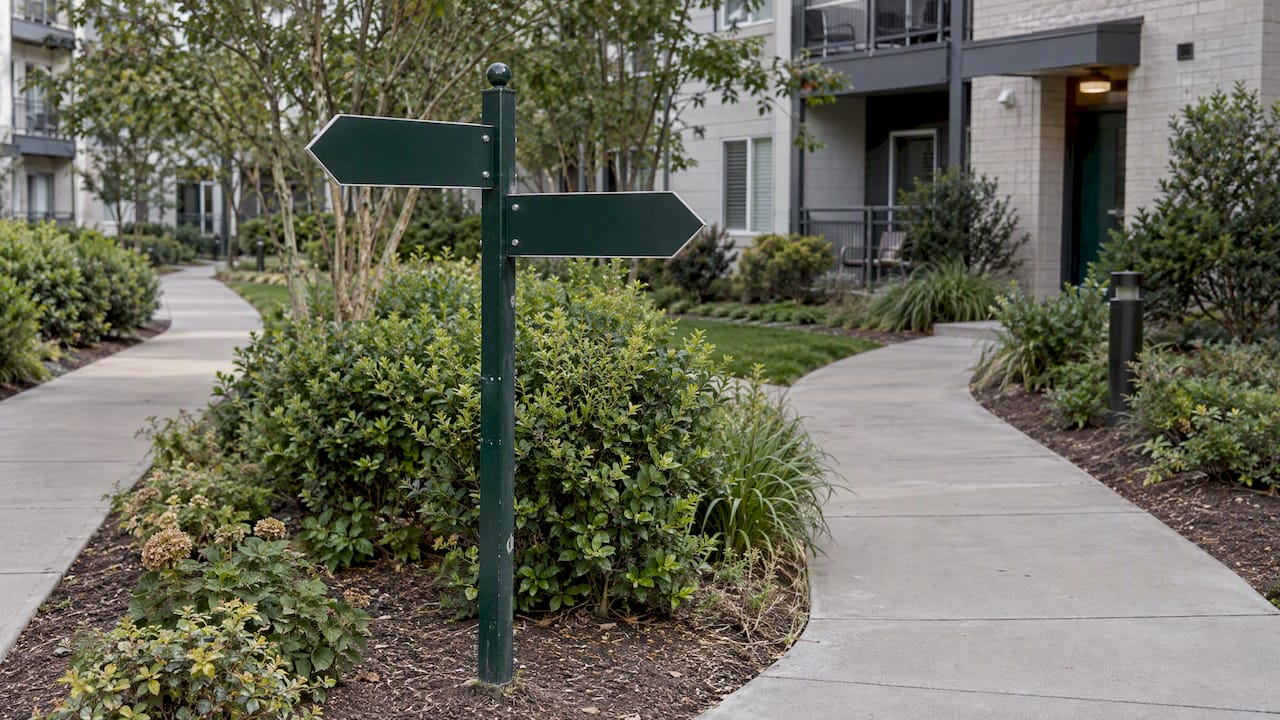
Match sign materials to the landscape style instead of defaulting to generic plastic placards. A property with mature plantings and brick hardscape reads better with metal or wood-toned signage than with bright vinyl banners, and consistent materials across the site signal ongoing care rather than piecemeal fixes.
Keep rule signage, like pet waste stations or pool hours, minimal and grouped rather than scattered on every post. A cluttered sign field reads as a management problem even when the landscaping underneath is well kept. Pair directional signage with the lighting upgrades covered earlier so wayfinding still works after sunset, since a sign nobody can read at night isn’t doing its job for half the day.
Review signage every time you update a path or amenity. An arrow pointing to a dog run that moved two years ago undercuts the sense of order the rest of the landscaping is trying to build.
Design considerations for parking lot landscaping and buffer zones
Parking areas take up more square footage than almost any other part of a multifamily property, and they’re often the most neglected from a design standpoint. A few structural choices make a measurable difference in both appearance and function.
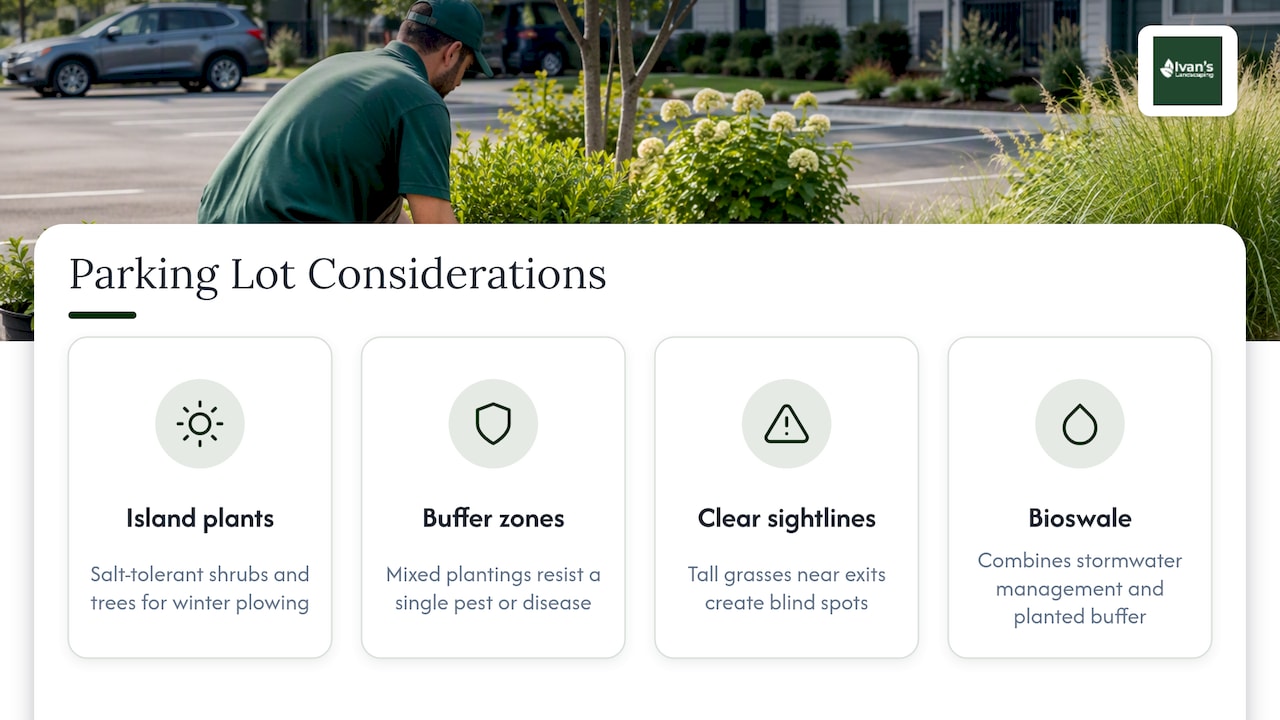
Island plantings between parking rows break up heat and glare while giving the lot some visual relief from an unbroken sea of asphalt. Choose salt-tolerant shrubs and trees in regions with winter plowing, since standard ornamental species often decline fast along plowed edges where salt-laden snow piles up.
Buffer zones between the parking lot and neighboring properties or public streets serve a dual purpose: they soften the view of parked cars and create a sound and sightline barrier. A staggered row of evergreen and deciduous shrubs, sized to mature height, works better here than a single species hedge, since mixed plantings are more resistant to a single pest or disease wiping out the entire buffer.
Keep sightlines clear at lot entrances and drive aisles. Tall ornamental grasses or overgrown shrubs near a parking exit create blind spots for both drivers and pedestrians crossing to the building, which works against the CPTED principles covered earlier in this guide.
Drainage matters as much as plant choice in parking lot design. Low spots that collect water erode mulch, stress plant roots, and create ice hazards in colder months, so grading and drainage review should happen before any buffer planting goes in. Where space allows, a bioswale along the lot’s low edge can double as both stormwater management and a planted buffer, combining two needs into one feature instead of treating them separately.
Publisher perspective from Chas / Ivan’s Landscaping
Planned maintenance protects every upgrade on this list. Commercial design and maintenance work consistently shows that a property holds its curb appeal only when the contract scope matches the improvements actually installed.
— Chas
How Ivan’s Landscaping can implement these ideas
We handle the full range covered here: commercial landscape design, mulch and planting, paver patios for seating areas, tree care, and the maintenance plans that keep all of it looking intentional instead of neglected. Our commercial landscape design services are built around property managers who need predictable scope and fast turnaround on estimates. If you’re ready to prioritize entrance, safety, and a workable maintenance schedule, request a free estimate and we’ll walk the property with you.
FAQ
What is the rule of 3 in landscaping?
The rule of three groups plants in odd-numbered clusters, typically three, since odd groupings read as more natural and visually balanced than even rows. It’s a common design shorthand for arranging shrubs, perennials, or containers around an entrance or seating area.
What is the most low-maintenance landscaping?
Native and drought-tolerant plant selections paired with mulched beds generally require the least ongoing water, pruning, and replacement. Grouping these species by water need, rather than mixing thirsty and drought-tolerant plants in the same bed, keeps irrigation simple and reduces plant loss.
Can ChatGPT do landscape design?
A chatbot can suggest general plant lists or layout ideas, but it can’t assess a specific site’s soil, drainage, sun exposure, or utility lines, which a workable landscape design depends on. For a property that needs a plan suited to its actual conditions, a site visit from a landscape professional remains the more reliable route.
What are some good ideas for an indoor apartment garden?
Compact container gardens using herbs, small flowering plants, or trailing vines work well on balconies or windowsills where outdoor ground space isn’t available. Vertical planters and tiered shelving let residents grow more in a small footprint without crowding walkways.
Sources
- Effects of green space on resident satisfaction (research article)
- Crime prevention through environmental design: A comparative analysis of two Las Vegas apartment complexes
- City Green: Innovative green infrastructure solutions for downtowns and infill locations (EPA)
- The Ongoing Evolution of Amenity Spaces (NAA report)