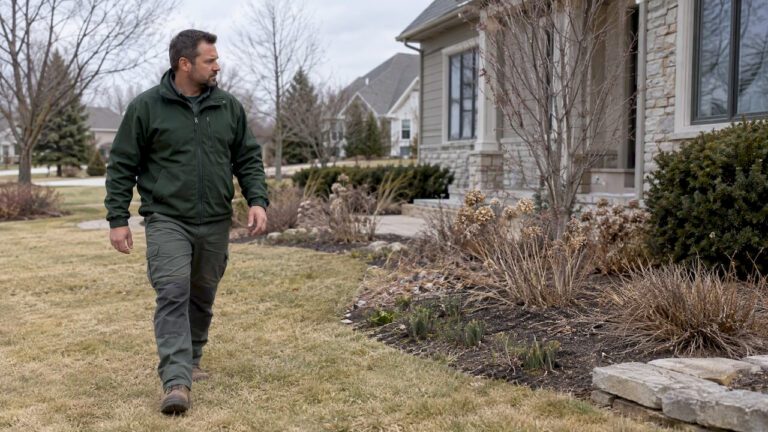
Permanent buckthorn control on Illinois properties requires an integrated approach: cut-stump removal with immediate herbicide application, follow-up spot treatment, and active restoration. The stump needs chemical treatment within 10 minutes of cutting to stop resprouting, and the work is best scheduled for late fall or early spring, when identification is easy and herbicides move efficiently into the root system. For small infestations, this is a manageable weekend project. For dense, mature stands, a local provider like Ivan’s Landscaping can handle the clearing, stump treatment, and restoration in one coordinated plan.
TL;DR:
- Most buckthorn removal projects require immediate herbicide treatment within 10 minutes of cutting to prevent resprouting, especially on mature plants.
- Fall and early spring are the optimal times for removal, as plants are nutrient-depleted in roots and leafless native plants make buckthorn easier to identify.
- Mechanical removal is suitable for seedlings and small plants, but large stands need professional treatment combining cutting, stump herbicide application, and follow-up monitoring.
- Costs vary widely based on infestation size, method, and whether DIY or contractor services are used, with municipalities offering seasonal cost-share programs in some areas.
- Complete eradication needs a multi-season approach involving stump treatment, native replanting, and ongoing monitoring to prevent re-invasion.
Table of Contents
- How to identify common and glossy buckthorn on your property
- Best timing and preparation before removal
- Step-by-step removal methods: mechanical and chemical techniques
- Large infestations and when to hire a contractor
- Costs, cost-share programs, and permit considerations in Illinois
- Restoration and monitoring after removal to prevent re-invasion
- How Ivan’s Landscaping delivers buckthorn removal and restoration
- Common mistakes and practical field tips from practitioners
- How Ivan’s Landscaping can help with your buckthorn problem
- FAQ
- Sources
How to identify common and glossy buckthorn on your property
Before you cut anything, confirm what you are looking at. Both common buckthorn and glossy buckthorn behave similarly in Illinois landscapes, and both are aggressive enough to crowd out native understory plants within a few seasons.
The clearest clue is timing. Buckthorn leafs out earlier in spring and holds its green leaves later into fall than almost any native shrub or tree around it, which is one reason it spreads so effectively in Illinois woodlands and why it stays visibly green well after surrounding natives have dropped their leaves, according to University of Illinois Extension.
Look for these signs when scouting your property:
- Leaf shape and veins: oval leaves with slightly toothed edges and curved veins that run toward the leaf tip.
- Bark and thorns: gray-brown bark with pale spots, often ending in a short, sharp thorn at branch tips.
- Berries: small black or dark purple fruit clusters in late summer through fall, a key giveaway for mature female plants.
- Growth pattern: dense, multi-stemmed thickets that shade out everything beneath them.
Walk the property and separate what you find into two categories: scattered seedlings you can hand-pull, and multi-stem mature plants that will need cutting and herbicide. A rough count or sketch of problem areas helps you estimate how much time, tool rental, or contractor labor the job will take.
Best timing and preparation before removal
Late fall through early spring is the preferred window for buckthorn work in Illinois, and the reasoning is practical rather than arbitrary. Once native trees and shrubs lose their leaves, buckthorn is still green and easy to spot. The dormant season also means the plant is pulling nutrients down into its roots, which makes herbicide applied to a fresh cut travel further into the root system and improves kill rates, per Illinois Extension guidance.
Before you start cutting, run through a short preparation checklist:
- Map the site. Flag any desirable trees, shrubs, or perennials you want to protect, along with water features or wetland edges that limit herbicide choice.
- Check your gear. Loppers, a pruning saw or chainsaw, a sponge or spray applicator, herbicide, and full personal protective equipment should all be ready before the first cut.
- Confirm weather. Avoid windy days for spray applications and avoid rain within 24 hours of cutting, since a quick downpour can wash herbicide off a treated stump.
- Look into cost-share windows. Some Illinois municipalities and counties run seasonal cost-share programs for invasive shrub removal, and application deadlines often precede the actual removal season by weeks or months.
If you are hiring a contractor, this is also the point to get on their schedule. Fall and early spring are busy seasons for invasive removal work across McHenry County, and booking early avoids a rushed, late-season treatment that misses the ideal translocation window.
Step-by-step removal methods: mechanical and chemical techniques
The right method depends on plant size and density, and most properties end up using a combination.
Mechanical removal works best for seedlings and small plants. Hand-pull seedlings when soil is moist, grabbing low on the stem to get the root. For plants up to roughly an inch in diameter, a weed wrench or similar grubbing tool can pull the entire root crown, which avoids the need for herbicide altogether. The tradeoff is soil disturbance: pulling out a root ball opens bare soil that buckthorn seeds already in the ground are happy to colonize, so plan to mulch or replant disturbed patches quickly.
Cut-stump treatment is the standard method for mature, multi-stemmed plants and is considered the most reliable way to prevent resprouting, according to Illinois Extension’s invasive plant management guide. Cut the stem as close to the ground as possible, then apply herbicide to the fresh-cut surface promptly, before the plant seals the wound. Extension guidance lists typical glyphosate and triclopyr amine concentrations within recommended ranges for cut-stump treatments. Always follow the product label for mixing ratios and application method, since labels vary by formulation and can override general guidance.
- Basal-bark application works on smaller-diameter stems without cutting: a triclopyr ester and oil mix painted around the full circumference of the lower trunk.
- Foliar spray suits large thickets of low seedlings and resprouts, typically at 1 to 2% triclopyr amine v/v or 2 to 4% glyphosate v/v, applied when leaves are fully developed and conditions are calm.
- Near water, use an aquatic-safe glyphosate formulation labeled for that use, since standard formulations can harm aquatic life.
Pro Tip: Carry a small spray bottle or foam dauber dedicated to cut-stump work; a squeeze bottle lets you treat a stump the moment the saw clears it, instead of walking back for a sprayer.
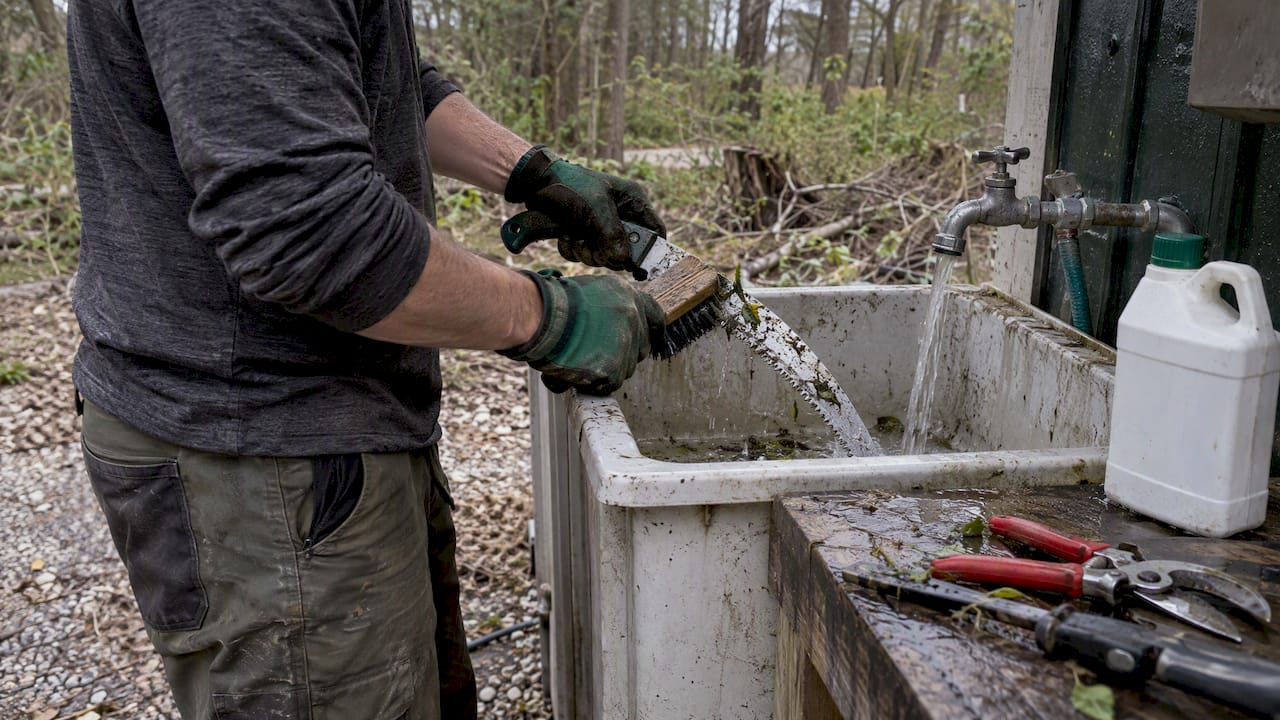
Wear chemical-resistant gloves, eye protection, and long sleeves for any herbicide work, and avoid spraying on windy days to limit drift onto desirable plants. Keep equipment clean between sites, since seeds and plant fragments on tires or blades can spread the infestation to new ground.
Large infestations and when to hire a contractor
A few scattered buckthorn plants are a manageable DIY project. A half-acre thicket with hundreds of mature stems is a different calculation.
Heavy equipment such as brush mowers or skid-steer mulchers can clear dense stands quickly, but Illinois Extension notes that this speed comes with a tradeoff: aggressive clearing disturbs soil and can trigger a fresh wave of buckthorn seedlings from the existing seedbank. A contractor who understands this balances mechanical clearing with deliberate, lower-impact techniques where the stand is less dense.
A typical professional workflow looks like this:
- Initial clearing of standing buckthorn, prioritizing dense thickets first.
- Stump treatment applied on the same visit, within the 10-minute window.
- Follow-up visits in the following one to two seasons to spot-treat resprouts and newly germinated seedlings.
- Restoration planting once the site is clear, to close the gap before new invasives move in.
Before hiring anyone, ask directly how they treat stumps and how quickly after cutting, what their follow-up schedule looks like, and whether restoration planting is part of the plan or a separate cost. A contractor who treats buckthorn removal as a one-visit job, with no plan for resprouts or replanting, is a sign the work will need redoing within a year or two.
Costs, cost-share programs, and permit considerations in Illinois
Costs scale with plant size, density, and how much of the work you do yourself, so consider following a budget landscape improvement workflow to avoid wasting money on unnecessary phases (A Budget Landscape Improvement Workflow That Won’t Waste Money – PriceLows™). A homeowner clearing a few dozen seedlings and small shrubs might spend only on tool rental and herbicide. Hiring hourly labor crews for a mid-size thicket costs more, and full-service contractor removal with stump treatment and restoration planting sits at the higher end, since it includes equipment, disposal, and follow-up visits.
Some Illinois municipalities help offset these costs. The Village of Riverwoods, for example, runs an invasive shrub removal cost-share program that requires an initial consultation and documentation of the work before reimbursing qualifying property owners. Programs like this vary by municipality, so check with your local public works or natural resources department before starting work if you want to apply.
A few practical notes on compliance and disposal:
- Illinois Exotic Weed Act: buckthorn is listed, so check current state and local regulations before large-scale removal, especially near wetlands or conservation easements.
- Herbicide labels are legal documents. Using a concentration or method the label does not permit is both a compliance issue and a safety one.
- Disposal: do not pile berry-bearing branches where birds can spread seed to new areas, and check your municipal green-waste program for brush drop-off rules before hauling material offsite.
Restoration and monitoring after removal to prevent re-invasion
Removal without restoration tends to be a temporary fix. Buckthorn seeds can persist in soil, and bare ground left behind after clearing is exactly the kind of opening those seeds are waiting for.
- Test and amend soil where heavy clearing disturbed the ground, since compacted or disturbed soil favors aggressive invasives over slower-establishing natives.
- Plant local ecotype natives suited to your site conditions, whether that is woodland edge species for a shaded lot or prairie species for open ground.
- Mulch bare areas promptly to suppress the buckthorn seedbank and reduce competition while new plantings establish.
- Monitor monthly during the first growing season, then at least once a year for three to five years, pulling or spot-treating any resprouts or new seedlings you find.
Resprouts from an incompletely treated stump are common in the first year. Treat them the same way you would a fresh cut: small enough to pull by hand, pull them; too established, cut and treat again within that same 10-minute window.
Pro Tip: Favor transplants over seeding on recently cleared ground. Seeding requires more soil disturbance and a longer establishment period, both of which give buckthorn seedlings a head start.
How Ivan’s Landscaping delivers buckthorn removal and restoration
We handle buckthorn and other invasive shrub removal as part of our invasive species removal and brush and land clearing services across McHenry County, pairing cutting and stump treatment with proper disposal and site cleanup. For mature specimens too large for hand tools, our tree removal crews bring the equipment needed to take down bigger stems and grind stumps flush with the ground.
Every estimate documents the scope of work up front, so you know what is included before any cutting starts. We carry insurance coverage, and we leave job sites clean when the work is done. Timing, follow-up visits, and any restoration planting are laid out as part of that initial plan, not added on later as surprises.
Common mistakes and practical field tips from practitioners
The most common failure we see is treating buckthorn removal as a one-time cut, with no plan for the stump or the root crown. A cut stem left untreated resprouts within weeks, often with more shoots than it started with. The second common mistake is leaning too hard on heavy equipment for a mixed-density site, which disturbs soil far beyond what the job needs and gives the existing seedbank room to germinate.
A short checklist helps: treat every stump within 10 minutes of cutting, limit equipment use to genuinely dense stands, and schedule at least one follow-up visit before calling the job finished.
— Chas
How Ivan’s Landscaping can help with your buckthorn problem
If your property has buckthorn ranging from scattered seedlings to a dense, overgrown thicket, we can take the project from clearing through restoration. Our brush and land clearing service handles the heavy cutting, our tree crews manage stumps too large for hand tools, and we can follow through with soil preparation and native or ornamental planting once the site is cleared. Every estimate spells out the scope, timeline, and follow-up plan before work begins, and we serve properties in the local area. Request a free estimate for brush and land clearing and we will walk your property with you to map out next steps.
FAQ
How much does it cost to remove buckthorn?
Costs depend on infestation size and method: small DIY jobs mainly cost tool rental and herbicide, while hourly crews or full contractor service with stump treatment and restoration cost more as density and labor time increase. For an exact figure on your property, request a free estimate, since pricing depends on site access, plant size, and how much restoration work you want included.
How do you get rid of buckthorn permanently?
Permanent control means treating the stump immediately after cutting, since an untreated stump resprouts within weeks. Combine cut-stump herbicide treatment with a follow-up schedule over several seasons and restoration planting to fill the space before new buckthorn seedlings can establish, as Illinois Extension recommends.
Does buckthorn grow back after being cut?
Yes, buckthorn resprouts vigorously from the root crown if the stump is not treated with herbicide right after cutting. Cutting alone, without chemical treatment within about 10 minutes, usually produces a bushier plant with multiple new stems rather than killing it.
Why is buckthorn such a major concern in Illinois?
Buckthorn leafs out earlier and holds its leaves later than most native plants, which lets it shade out native seedlings and wildflowers before they can compete. It forms dense thickets that degrade wildlife habitat and can host pests and diseases that affect nearby crops and trees, according to Illinois Extension.
Sources
- Invasive plants and pests of Illinois (University of Illinois Extension)
- Invasive Shrub Removal Cost-Share Program Application (Riverwoods example)