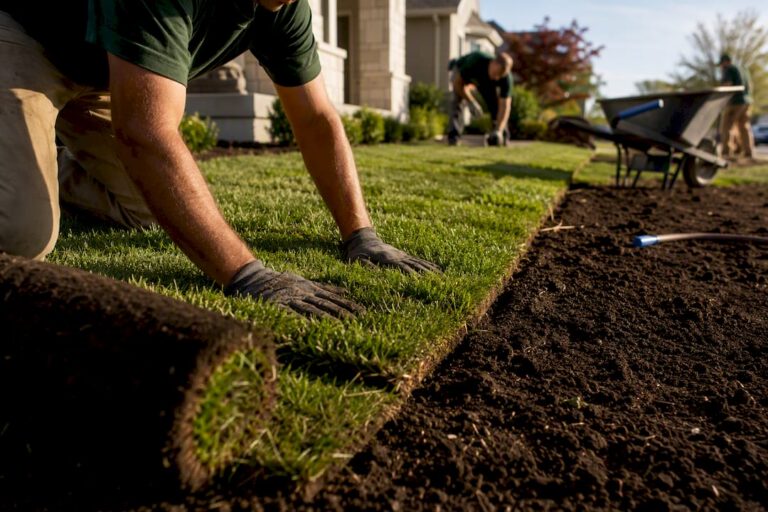
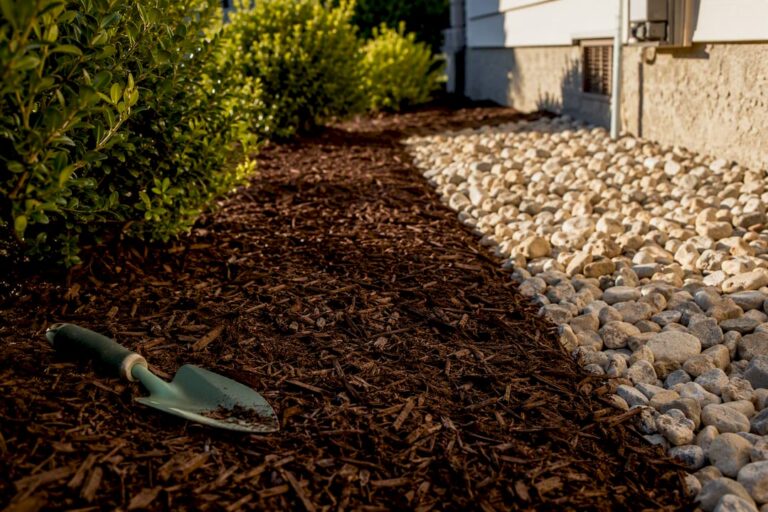
The quickest way to get lasting curb appeal is to design for structure first: evergreen anchors, layered plantings, and one clear hardscape path. Everything else, from color to lighting, sits on top of that framework. Which specific front yard landscaping ideas you choose depends mostly on your yard’s size and how much upkeep you’re willing to sign up for.
TL;DR:
- Prioritize hardscape elements like walkways, retaining walls, and foundation beds before planting to prevent damage and ensure proper integration.
- Use site assessments, including sun exposure and drainage, to inform plant choices and placement, reducing the risk of plant failure within the first year.
- Choose plants based on their mature size and group them in odd numbers to create a cohesive, intentional design that looks planned rather than scattered.
- Opt for drought-tolerant native plants and use drip irrigation to match water use with climate conditions, minimizing maintenance and conserving resources.
- Hire professionals for complex elements such as grading, drainage, or paver installation to avoid costly mistakes that can compromise the yard’s stability and appearance.
Table of Contents
- Front Yard Landscaping Ideas by Style and Budget
- Site Assessment and Design Checklist
- Plant Selection and Layering for a Front Yard That Reads as Designed
- Walkways, Edging, and Hardscape Material Choices
- Small Front Yard Landscaping: Making Limited Space Work Harder
- Drought-Tolerant and Water-Wise Front Yard Landscaping Ideas
- Lighting and Finishing Touches That Lift Curb Appeal After Dark
- Installation Order and Budget Tiers for Front Yard Projects
- Seasonal Maintenance: Mulch, Pruning, and Year-Round Upkeep
- Soil Preparation: The Step Most Homeowners Skip
- Native Plants and Wildlife-Friendly Front Yard Landscaping
- Tools and Materials for a DIY Front Yard Project
- Common Mistakes That Undercut Front Yard Landscaping
- A Local Pro’s Take on Planning a Front Yard Makeover
- Get a Free Estimate for Your Front Yard Project
- Sources
Front Yard Landscaping Ideas by Style and Budget
Front yard landscape design works best when you pick a category that matches your lot size and tolerance for weekend maintenance, then commit to it instead of borrowing a little from every style. Below are the ideas homeowners in McHenry County and beyond most frequently ask about, grouped by what they actually solve.
Low-maintenance and no-mow options
- No-mow xeriscape beds. Replace turf with gravel, drought-tolerant shrubs, and mulch. Best for full-sun yards with poor soil. Maintenance is minimal once established. Tip: install a weed barrier before the gravel goes down, or you’ll be pulling weeds through rock for years. Cost hint: gravel runs $3 to $6 per square foot, making it one of the cheaper hardscape surfaces available.
- Groundcover lawns. Creeping thyme, clover, or sedum replace grass in small or shady patches. Best for yards with foot traffic that doesn’t need mowing. Tip: start with plugs, not seed, for faster coverage.
- Ornamental grass borders. Feather reed grass or little bluestem along the foundation. Best for anyone tired of pruning shrubs twice a season. Tip: cut back hard in late winter before new growth starts.
Budget-friendly makeovers
- Entry planters. Two matching large pots framing the front door. Best for renters or anyone wanting instant impact without digging. Cost hint: under $150 for pots and seasonal plants.
- Mulch refresh with existing beds. Sometimes the fastest facelift is simply reshaping bed edges and laying fresh mulch. Best for yards with decent bones but a tired look. Cost hint: a few hundred dollars for a standard suburban lot.
- Foundation bed deepening. Extend beds from the typical 24 to 30 inches out to 4 feet or more. This single move anchors a house visually far better than adding more small plants, since clean structure reads as intentional from the street.
Modern front yard landscaping
- Gravel and steel-edge geometry. Sharp rectangular beds, ornamental grasses, and a single specimen tree. Best for contemporary homes with clean architectural lines. Maintenance is low. Tip: use a metal edge, not plastic, for a crisper line that holds up over years.
- Monochrome plant palettes. One or two plant species repeated in blocks rather than a mixed border. Best for minimalist homeowners. Tip: repetition reads as design, not laziness.
Cottage-style front yards
- Layered perennial borders. Coneflower, black-eyed Susan, and salvia mixed along a curved bed edge. Best for homeowners who enjoy some hands-on gardening. Maintenance is moderate.
- Picket or low rail accents. A short decorative fence section near the entry walk. Best for older or farmhouse-style homes. Cost hint: modest if installed as an accent rather than a full perimeter.
Hardscape-forward front yards
- Paver walkway with foundation planting. A defined path paired with structural shrubs. Best for yards where the current walk is cracked concrete. This is where paver patio and walkway installation tends to deliver the most visible return.
- Retaining wall terraces. For sloped lots, a low retaining wall creates level planting shelves. Best for yards with drainage or erosion issues. This typically requires professional grading.
- Dry creek beds. A rock-lined channel that doubles as drainage management and a design feature. Best for yards with a low spot that stays wet.
Small front yard solutions
- Vertical container gardens. Tiered planters or a trellis against the house. Best for narrow lots with little ground space.
- Single focal tree. One well-placed ornamental tree instead of several competing shrubs. Best for townhomes and small setbacks.
- Gravel patio courtyard. A tiny sitting area replaces a strip of lawn nobody uses. Best for corner lots or unusually shaped yards.
Climate swaps matter here too. In drier regions, swap boxwood for rosemary or artemisia. In humid climates, hostas and ferns handle shade better than most Mediterranean substitutes.
Site Assessment and Design Checklist
Every front yard landscape design should start with a site inventory, not a trip to the nursery. Skipping this step is the single biggest reason plants die within their first year, because homeowners guess at sun exposure instead of measuring it. The University of Florida IFAS Extension points to mismatched plant-to-light exposure as a leading cause of landscape failure, and it is almost entirely preventable.
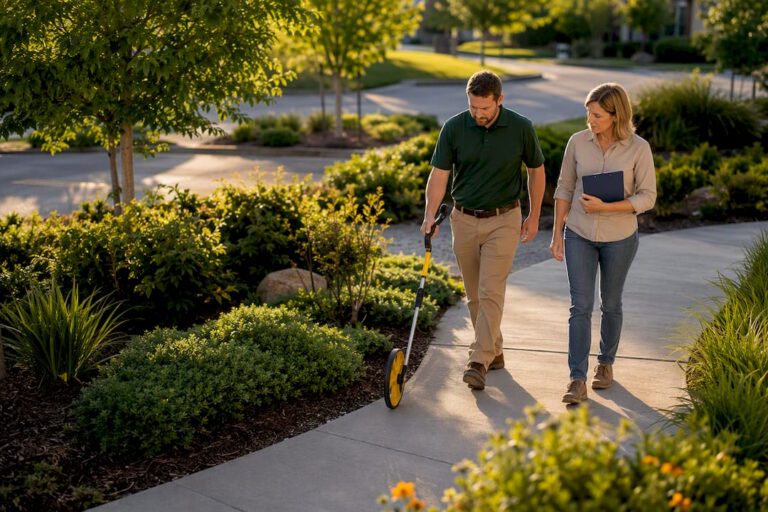
Walk your yard three times in one day, morning, midday, and late afternoon, and note where sun actually falls. A spot that looks “full sun” at noon might sit in shadow by 4 p.m. once a neighbor’s tree leafs out.
Before you buy a single plant, check off:
- Sun and shade patterns at three different times of day
- Drainage: does water pool anywhere 24 hours after rain?
- Utility lines and sprinkler heads marked before you dig
- Sightlines from the street and from your front windows
- Existing bed depth (most suburban beds run only 24 to 30 inches)
- Walkway width from the driveway or sidewalk to the door
Bed depth and walkway width both affect how proportional your yard looks from the curb. A 2 foot bed against a two story house looks pasted on. A walkway under 3 feet feels cramped the moment two people try to walk side by side.
Pro Tip: Take photos of your yard at each sun check. When you’re standing at the garden center three weeks later, you’ll trust your notes more than your memory.
Plant Selection and Layering for a Front Yard That Reads as Designed
Layer by height: short plants in front, medium shrubs in the middle, tall anchors at the back or corners. This single principle, borrowed straight from Purdue Extension’s landscape design guidance, is what separates a yard that looks planned from one that looks scattered.
Group most plantings in odd numbers, threes or fives, rather than pairs or single specimens scattered around. Odd-numbered clusters read as intentional to the eye in a way that even numbers rarely do. A trio of hydrangeas anchoring a corner looks deliberate. One hydrangea here and another twelve feet away looks like an afterthought.
Build your palette around three functional layers:
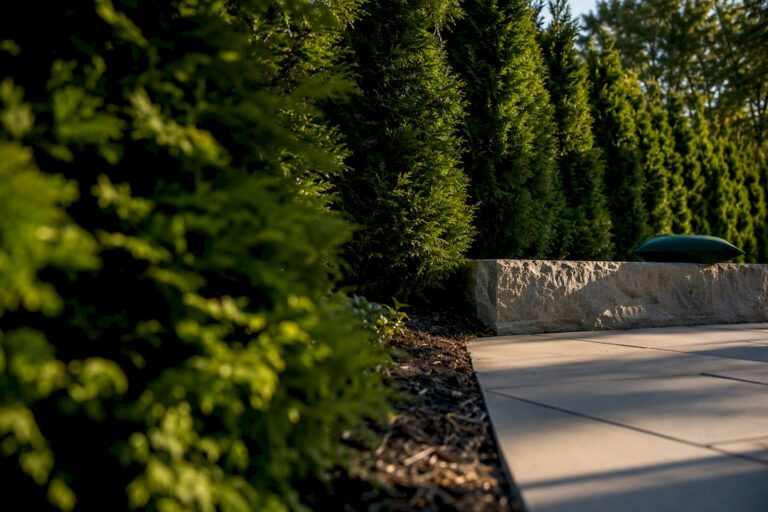
- Evergreen anchors: boxwood, arborvitae, or holly for year-round structure when everything else goes dormant
- Midlayer shrubs: hydrangea, spirea, or viburnum for seasonal texture and bloom
- Low-water perennials: coneflower, black-eyed Susan, and ornamental grasses for color that survives dry stretches with minimal watering, a combination Garden Design recommends for low-upkeep front yards
Always check a plant’s mature size before you decide spacing, not its size in the one-gallon pot. A shrub tagged as reaching 6 feet wide needs to be planted at least 3 feet from its neighbor and further from the foundation, even though it looks lonely and small the day you plant it. Buying fewer, larger plants up front, rather than a dozen small ones you’ll need to thin out later, tends to deliver more visible impact sooner and avoids the overcrowded scramble three summers down the road.
Walkways, Edging, and Hardscape Material Choices
Design your main walkway between 3 and 5 feet wide. Purdue Extension uses that same range as the standard for comfortable, functional pedestrian access, wide enough for two people to walk side by side without stepping into the mulch.
Material choice affects both cost and long-term maintenance:
- Poured concrete: roughly $8 to $15 per square foot, durable, but can crack in freeze-thaw climates without proper base prep
- Brick pavers: roughly $12 to $20 per square foot, individual units can be replaced if damaged, strong curb appeal
- Flagstone: roughly $15 to $25 per square foot, irregular natural look, higher cost but distinctive
- Gravel: roughly $3 to $6 per square foot, cheapest option, needs occasional replenishing and a solid edge to stay contained
Edging matters more than most homeowners expect. A hand-cut trench, steel edging, or a row of pavers between bed and lawn often does more for perceived professionalism than the plants themselves. A blurry, grass-invaded bed line makes even a well-planted yard look neglected, while a crisp edge makes a modest planting look curated.
Small Front Yard Landscaping: Making Limited Space Work Harder
Small front yard landscaping succeeds by restraint, not by cramming in variety. Pick one or two focal features, a single specimen tree, a striking entry planter duo, and let everything else support them quietly.
Cut lawn down to a clean, useful panel rather than an oddly shaped strip that’s hard to mow. A rectangular patch of turf bordered by defined beds looks bigger than a sprawling, ragged lawn twice its size.
- Use vertical elements (trellises, tiered planters) when ground space is tight
- Choose compact cultivars bred for small spaces rather than full-size shrubs you’ll be pruning constantly
- Keep the plant palette to two or three species repeated, not eight species crammed in
- Add one high-contrast finishing touch, a painted door, a bold house number, a single well-placed light
A small yard with three well-chosen elements almost always outperforms a small yard trying to fit in ten.
Drought-Tolerant and Water-Wise Front Yard Landscaping Ideas
Xeriscaping isn’t about giving up on curb appeal. It’s about matching plant choice to available water so you’re not fighting your climate every July.
Ornamental grasses, native perennials like coneflower and black-eyed Susan, and tough groundcovers form the backbone of a low-water plant palette that still delivers seasonal color and texture. Pair them with drought-tolerant shrubs like juniper or dwarf fothergilla for structure that doesn’t need supplemental watering once roots establish.
- Replace water-hungry turf sections with gravel or mulch beds planted densely enough to shade the soil
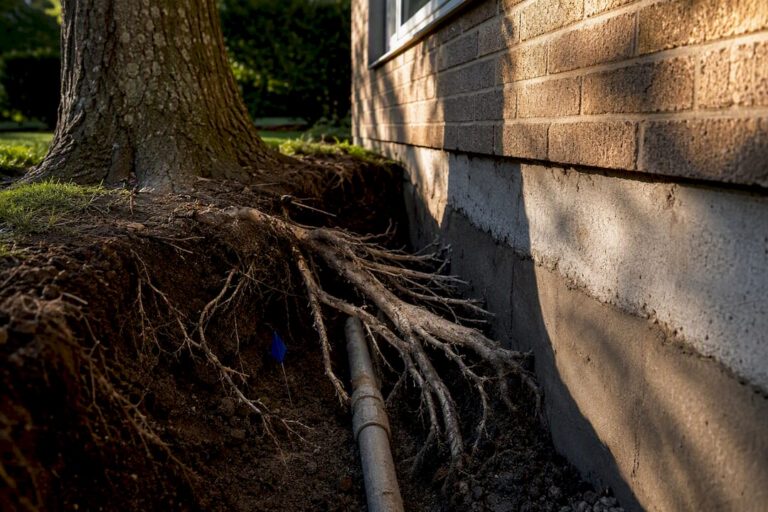
- Grade beds slightly away from the foundation to prevent pooling near your walls
- Zone your irrigation separately: drip lines for planting beds, a distinct zone for any remaining turf
- Group plants with similar water needs together so you’re not overwatering drought-tolerant species to keep thirstier neighbors alive
Drip irrigation on a timer uses a fraction of the water a sprinkler head wastes to evaporation and overspray, and it puts moisture directly at the root zone where plants actually need it.
Lighting and Finishing Touches That Lift Curb Appeal After Dark
Light function before you light mood. Steps, walkways, and any grade change need task lighting first, both for safety and because a dark front walk undercuts every other design choice you’ve made.
Space path lights every 6 to 8 feet along a walkway, staggered rather than lined up in a straight row, which reads more natural after dark. Once function is covered, add one or two accent lights on a specimen tree or architectural feature. A permanent landscape lighting system can handle both jobs year round without the hassle of seasonal setup and teardown.
Finishing touches deliver outsized impact for their cost:
- Fresh mulch in a dark, uniform color instantly makes beds look tended
- Matching entry planters flanking the front door
- A painted front door in a color that contrasts with the siding
- Larger, updated house numbers visible from the street
- Clean, freshly edged bed lines along the walkway and foundation
None of these require a big budget. Most require an afternoon.
Installation Order and Budget Tiers for Front Yard Projects
Sequence matters as much as the ideas themselves. Install hardscape before softscape, always. Pouring a walkway after you’ve planted the beds around it means crushed plants and wasted work.
The correct order runs:
- Site prep and grading
- Hardscape (walkways, retaining walls, patios)
- Structural planting (trees, evergreen anchors)
- Finish planting (shrubs, perennials, groundcovers)
- Mulch
- Lighting and irrigation
Weekend budget, around $300: fresh mulch, a couple of entry planters, and bed edge cleanup. This tier is entirely DIY.
Seasonal upgrade, around $1,200: add a handful of larger shrubs, a small paver accent path, and basic path lighting. Some of this can still be DIY, though paver base work benefits from experience.
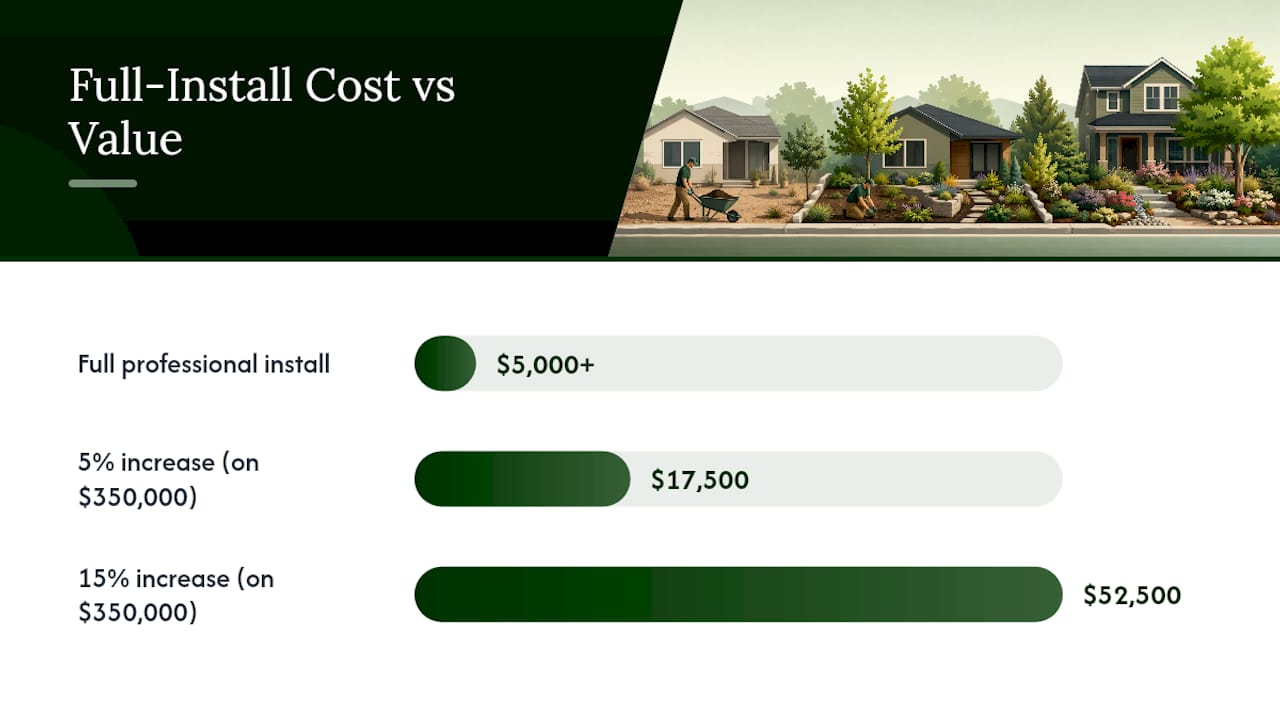
Full professional install, $5,000 and up: structural trees, a proper paver walkway or patio, irrigation, and full bed renovation. Quality landscaping at this level can raise a home’s value by roughly 5% to 15%, meaning a $350,000 home could see $17,500 to $52,500 in added value.
Hire a pro for anything involving heavy grading, drainage correction, retaining walls, or paver installation. These jobs punish mistakes with cracked patios and standing water, and they’re far cheaper to get right the first time than to redo.
Seasonal Maintenance: Mulch, Pruning, and Year-Round Upkeep
Apply mulch 2 to 3 inches deep, and keep it pulled back a few inches from tree trunks and shrub stems. Piling mulch up against a trunk, often called a “mulch volcano,” traps moisture against the bark and invites rot and disease, one of the more common and avoidable landscape mistakes homeowners make.
Prune flowering shrubs right after they bloom, not in early spring, or you’ll cut off next year’s flower buds before they get the chance to open. Cut back ornamental grasses and dormant perennials in late winter, before new growth emerges.
A lean seasonal rhythm:
- Spring: check for winter damage, refresh mulch, divide overcrowded perennials
- Summer: water deeply but less often to encourage deep roots, deadhead spent blooms
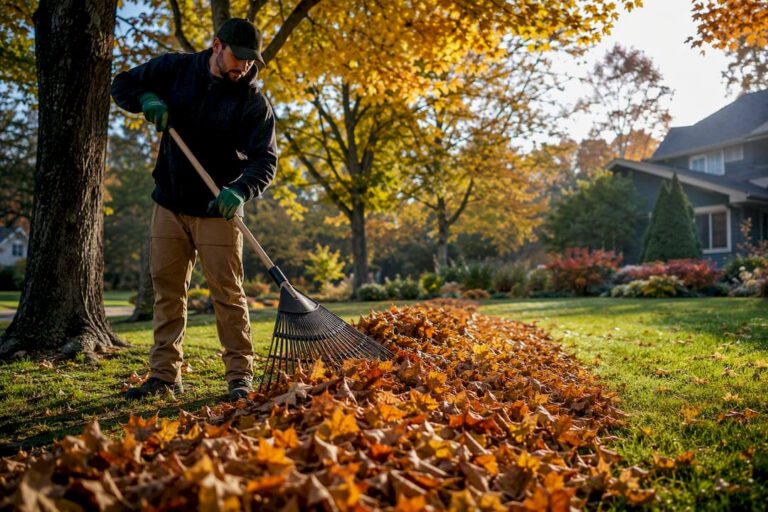
- Fall: clean up dropped leaves and debris, plant any new trees or shrubs while soil is still workable
- Winter: protect tender evergreens from salt spray if you’re near a road, plan next year’s additions
If a bed looks tired despite regular care, thinning, dividing, and mulching, it may need a full refresh rather than another round of patchwork fixes.
Soil Preparation: The Step Most Homeowners Skip
Healthy soil structure matters more to plant survival than almost any other single factor, and it’s the step most DIY projects shortcut entirely.
Start by testing your soil’s texture and drainage. Dig a hole 12 inches deep, fill it with water, and see how long it takes to drain. Water sitting for more than a few hours signals compacted or clay-heavy soil that needs amending before anything goes in the ground.
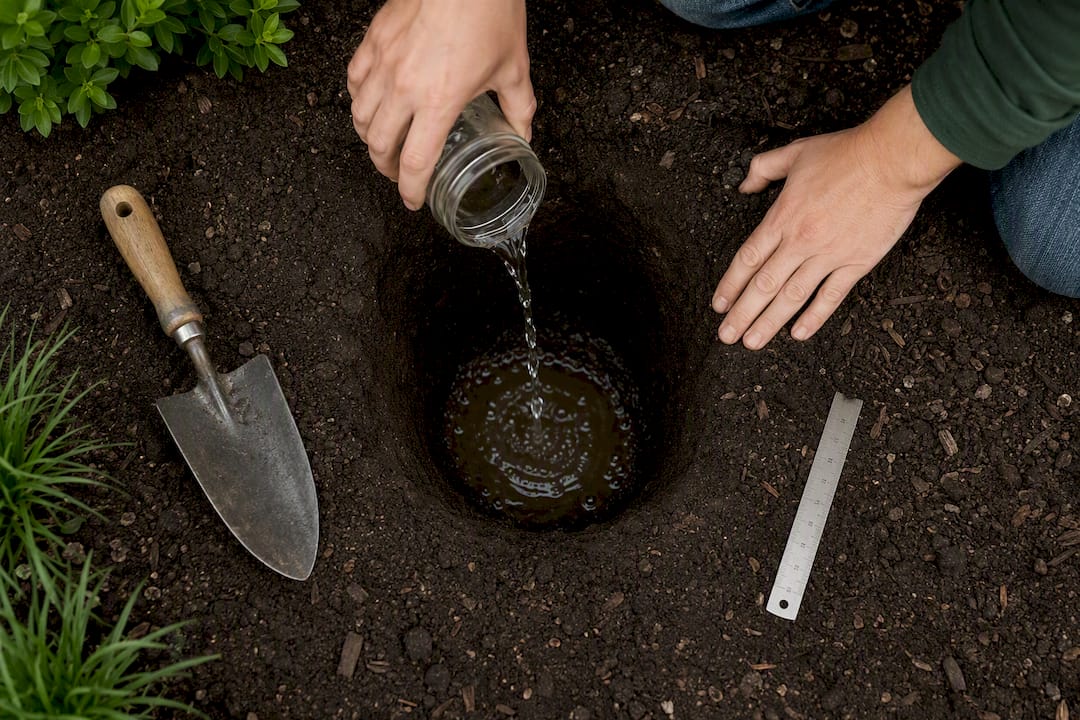
Work 2 to 3 inches of compost into the top 8 to 12 inches of soil in new beds. This improves drainage in clay soil and improves water retention in sandy soil, the opposite problem solved by the same fix. Avoid working soil when it’s wet, since walking on and tilling saturated clay compacts it further and undoes the benefit.
For existing beds, top-dress with compost annually rather than tilling it in, which disturbs established root systems. Adding a thin layer each fall lets it break down naturally and feed the soil below.
Skip the bagged “topsoil” as a total fix for poor native soil. It sits as a shallow layer on top of unchanged clay or sand below, and plant roots eventually hit that boundary and struggle anyway.
Native Plants and Wildlife-Friendly Front Yard Landscaping
Native plants need less water, less fertilizer, and less pest management than imported ornamentals, because they’ve adapted to your region’s rainfall and soil over thousands of years rather than a handful of growing seasons.
Coneflower, black-eyed Susan, and native grasses aren’t just low-maintenance choices. They also support pollinators and songbirds in a way that sterile, non-native lawns and shrubs simply don’t. A front yard planted with a mix of native perennials and shrubs can function as a small waystation for bees, butterflies, and birds passing through a neighborhood otherwise dominated by turf grass.
Check with a local extension office or native plant society for species specific to your region rather than relying on generic “wildflower mix” seed packets, which often contain species that aren’t actually native to your area and can behave aggressively once established.
Leave some seed heads standing through winter instead of cutting everything back in fall. Birds rely on them for food, and the structure adds visual interest to an otherwise bare winter landscape. This single habit shift, delaying fall cleanup by a few months, does more for local wildlife than almost any plant purchase.
Tools and Materials for a DIY Front Yard Project
A basic DIY front yard project doesn’t require a full landscaping trailer, but a few tools make the difference between a clean result and a frustrating weekend.
For planting and bed work: a sharp spade for cutting clean edges, a hand trowel, a hard rake for leveling soil and mulch, and a wheelbarrow for moving both. A soil knife or hori hori makes dividing perennials and digging small holes considerably easier than a standard trowel.
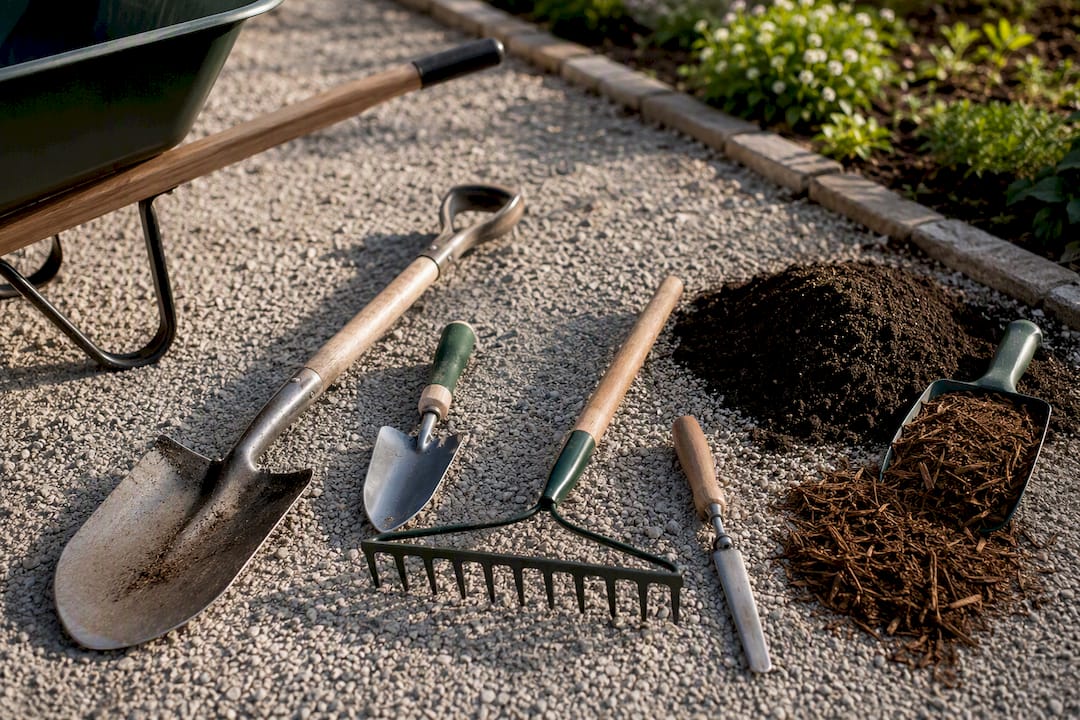
For hardscape work: a hand tamper or plate compactor for base material, a rubber mallet for setting pavers, and a level to keep pathways from pitching the wrong direction. Landscape fabric belongs under gravel paths, not under mulched planting beds, where it blocks the organic breakdown that feeds soil over time.
Materials worth budgeting for beyond plants themselves: bagged compost or bulk soil amendment, mulch (measured by the cubic yard for anything beyond a few beds), metal or paver edging, and base material like crushed gravel for any walkway. Renting a plate compactor for a single weekend usually costs far less than buying one outright, and it’s the single tool that separates a paver path that stays flat from one that shifts within a year.
Common Mistakes That Undercut Front Yard Landscaping
The most expensive mistake is planting for the size a plant is today instead of the size it will be in five years. A row of shrubs planted 18 inches apart looks tidy at purchase and becomes an overgrown wall requiring constant pruning within a few seasons.
Shallow foundation beds are the second most common issue. A 2 foot bed against a two story house looks disconnected from the architecture, while beds extended to 4 feet, or 6 to 8 feet on taller homes, visually anchor the structure the way a shallow strip never can.
Other recurring mistakes worth avoiding:
- Skipping the site inventory and guessing at sun exposure, which leads to plants that struggle or die
- Mulch volcanoes piled against trunks, inviting rot instead of preventing weeds
- Mixing too many plant species without repetition, which reads as cluttered rather than diverse
- Installing plants before hardscape, forcing you to work around (or replant) what’s already in the ground
- Ignoring drainage until water is already pooling against the foundation
Most of these mistakes trace back to skipping planning in favor of moving straight to the fun part, buying plants. A little patience up front saves a lot of digging later.
A Local Pro’s Take on Planning a Front Yard Makeover
Ivan’s Landscaping approaches every front yard project the same way this guide recommends: site assessment first, then design, then a phased installation that limits disruption to your daily routine. Since 2008, the company has built its process around landscape design, mulch installation, paver patio construction, and ongoing maintenance plans, so homeowners in McHenry County know what to expect before work starts.
If you’re vetting a contractor for your own project, ask a few direct questions: What’s included in the estimate versus billed as an add-on? Who handles plant warranties if something dies in year one? How is the site protected and cleaned at the end of each day? A transparent proposal answers all three without hedging, something worth checking closely if you’re comparing multiple bids.
A typical scope might phase hardscape (a paver walkway or small patio) in week one, structural planting in week two, and finish planting with mulch to close out the job, minimizing the mess sitting in your yard at any given time.
— Chas
Get a Free Estimate for Your Front Yard Project
Some parts of a front yard makeover reward a weekend and a trip to the garden center. Grading, drainage correction, paver installation, and large tree planting are not those parts. Get them wrong and you’re looking at a cracked patio, standing water against your foundation, or a $400 tree that dies because it went in six inches too deep.
Some companies handle the jobs where a mistake is expensive to undo: paver patios, retaining walls, drainage and grading work, sod installation, and the structural planting that anchors a design for years. Estimates may be free, with varying response times and commitment to job site cleanliness.
If you’re in McHenry County and ready to move past the planning stage, browse Ivan’s Landscaping’s full service list or check availability for Cary and surrounding communities. Request your free estimate and find out what a properly sequenced, professionally installed front yard actually costs for your specific lot.
Sources
- Purdue Extension / Horticulture & Landscape Architecture
- University of Florida IFAS Extension EP375
- UVM Extension: Beware mulch volcano
- Yardcast: How to landscape a front yard — high-level guide