The best lawn edging depends on how much work you want to do each season and how formal your home looks. A hand-cut trench costs nothing but time. Steel, brick and stone cost more up front and keep grass out for years. In northern Illinois, where the ground freezes and heaves every winter, how an edge is installed matters as much as the material.
Below are the main options, what each one costs you in effort, and how to match one to your property.
TL;DR
- A cut (trench) edge is the cheapest option and looks sharp, but it needs re-cutting once or twice per growing season.
- Steel or aluminum, brick, stone and poured concrete are permanent choices. Plastic is cheap but often sinks or heaves in cold climates.
- Pick an edge that fits your home’s style and reduces trimming time. No material is perfect.
- You can also design out edging by using mulched planting rings around trees and fences.
- Edging that is poorly installed fails fast, so a professional install is often worth it for long, visible runs.
Table of Contents
- What edging does for your yard
- Eight lawn edging ideas compared
- Metal vs. plastic, and what about fabric?
- How to choose
- Our perspective
- Let us handle the edges
- FAQ
- Sources
What edging does for your yard
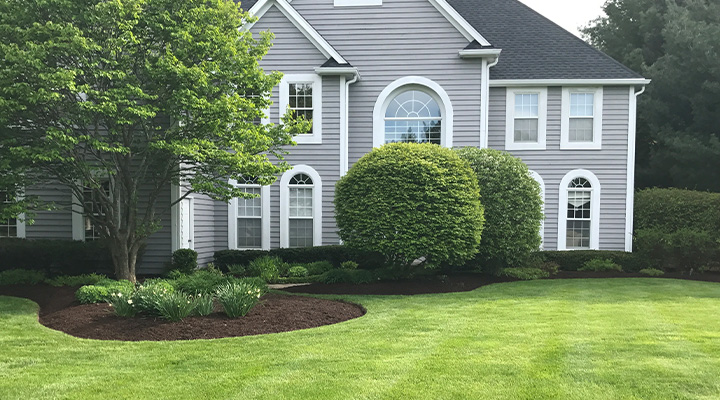
Edging draws a clear line between lawn and planting beds. According to University of Illinois Extension, it forms a neat boundary between planting areas and turf. It also holds mulch in place and keeps grass roots out of beds. Utah State University Extension points out that a lawn can look lush, but uneven or untrimmed edges make the whole yard seem unkempt.
The K-State Research and Extension guide to edging puts the goal simply: edging should harmonize with the landscape, suit your budget and help reduce maintenance. Keep those three tests in mind as you compare options.
Eight lawn edging ideas compared
| Edging type | Look | Effort | Best for |
|---|---|---|---|
| Cut (trench) edge | Natural, crisp | Re-cut 1-2 times per season | Curved beds, tight budgets |
| Steel or aluminum | Clean, almost invisible | Low once installed | Long runs, formal or modern homes |
| Brick | Traditional | Low, if laid on a stable base | Older homes, walkways |
| Natural stone | Informal to formal | Low | Garden borders, front beds |
| Poured concrete | Smooth, uniform | Very low | High-traffic, formal designs |
| Plastic | Basic | Moderate to high | Short, temporary runs |
| Mulched planting ring | Soft | Re-mulch yearly | Trees, fences, walls |
| Pavers or mow strip | Structured | Very low | Lawn-to-bed transitions |
1. The cut edge
This is the classic. You cut a V-shaped trench about 4 to 6 inches deep and wide between turf and bed. Per Illinois Extension, it needs no materials, looks professional and lets you expand the bed later. The trade-off is upkeep: plan to re-cut it once or twice each growing season.
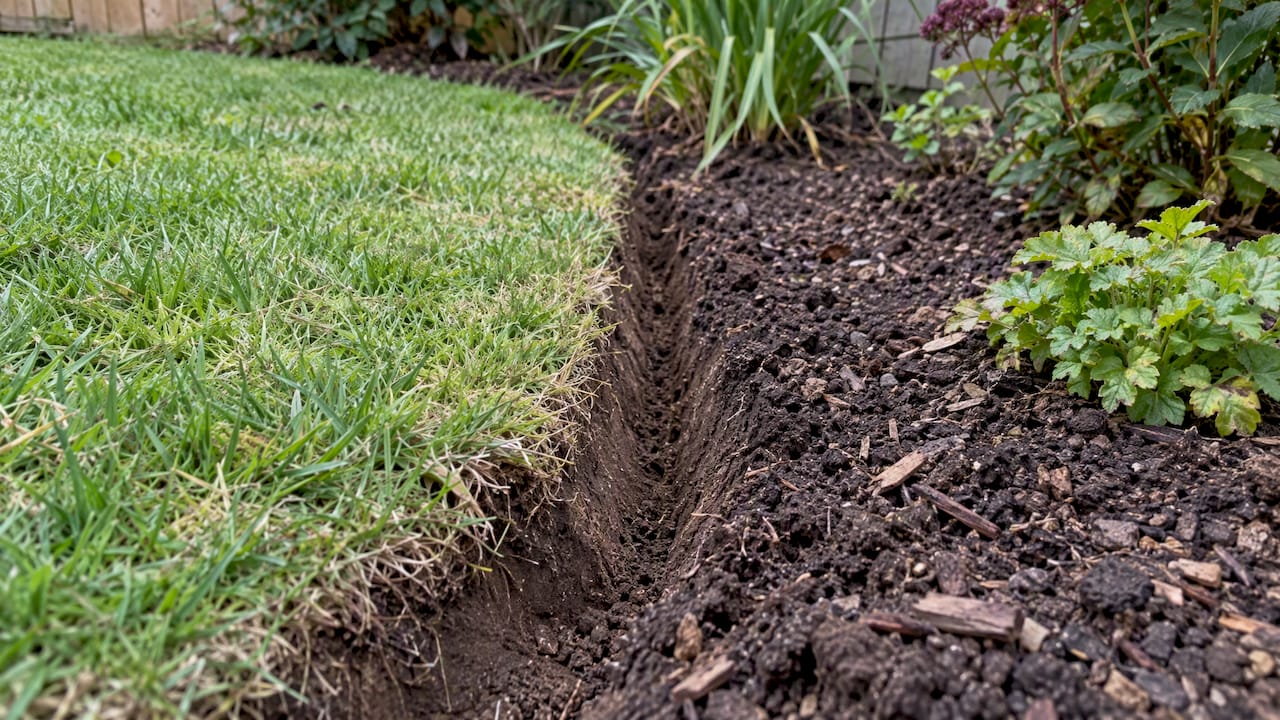
Shape is where most homeowners struggle. K-State suggests laying a heavy rubber hose or thick rope on the lawn first and adjusting it until the curves are smooth enough for your mower to follow. Only then cut into the turf.
2. Steel or aluminum edging
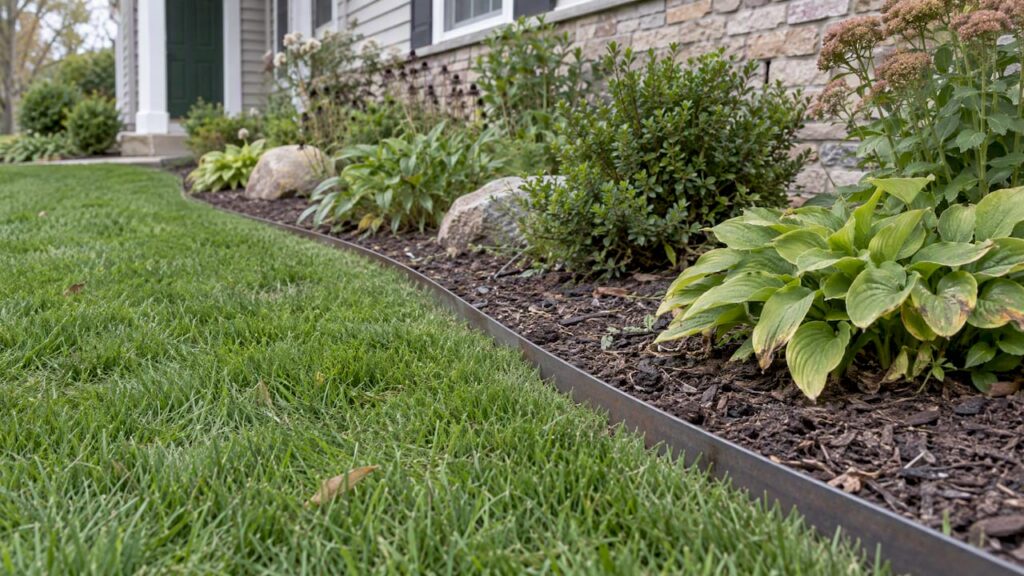
For a permanent look, Illinois Extension notes that experts favor steel or aluminum for longevity. Steel costs significantly more and can be prone to frost heaving in northern climates, so depth and anchoring matter. Metal disappears visually, which suits both modern and traditional homes. It also makes a firm barrier against turf rhizomes, the underground stems that let grass creep into beds.
3. Brick
Well-fired brick, laid on a stable base, makes a durable decorative border. The material should be waterproof, because soft brick crumbles under freeze-thaw cycles. Brick pairs naturally with a brick walkway or patio. If you are planning hardscape anyway, our guide to choosing brick or concrete pavers covers the same trade-offs.
4. Natural stone
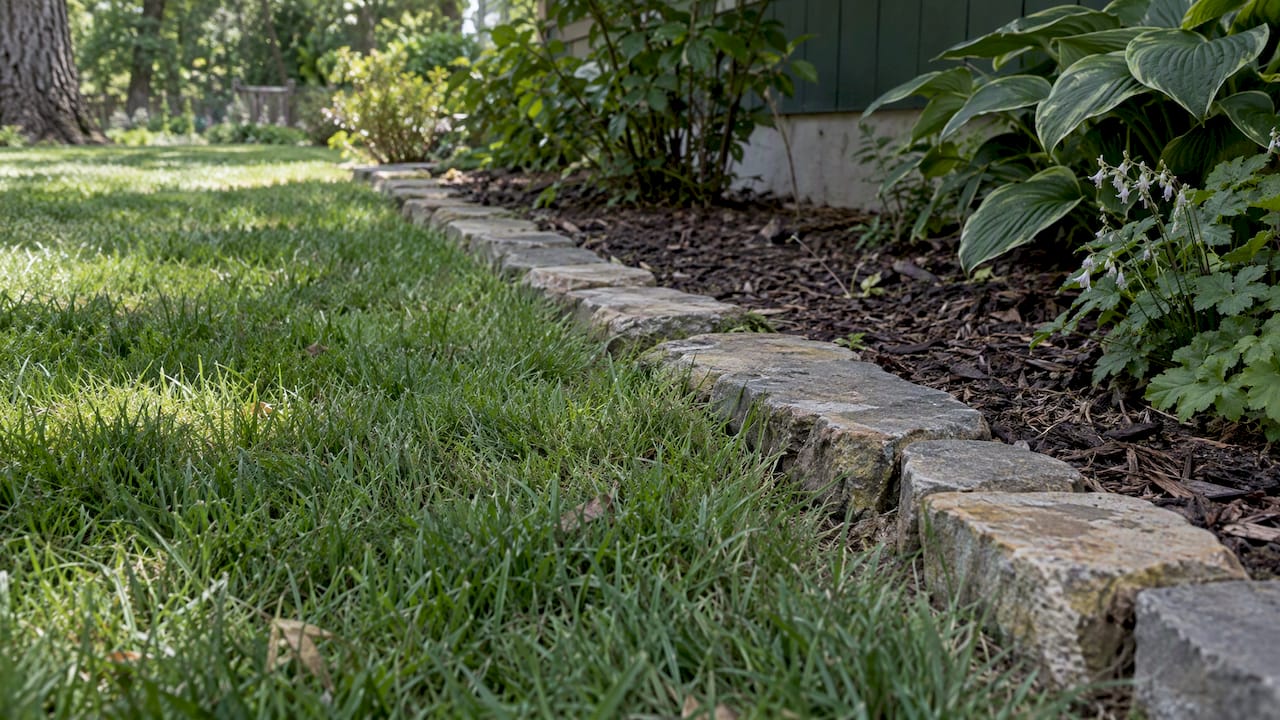
Fieldstone and cut stone suit informal garden beds and front-yard borders. A stone edge can sit slightly proud of the lawn to hold mulch in, or flush with it so the mower wheel rides along the top and you skip trimming. Stone that is set on compacted base material stays level far longer than stone set on bare soil.
5. Poured concrete
Machine-poured concrete curbing gives a continuous, uniform line with no gaps for grass to push through. It is formal, permanent and works well along high-traffic areas. If you are weighing it against modular units, see how pavers compare with concrete.
6. Plastic edging
Plastic looks economical, but Illinois Extension points out it is among the hardest products to install correctly for long-term stability. In northern climates it frequently sinks, heaves or won’t stay in the ground. If you do use flat-style plastic, the same source suggests nailing a 1×1 inch strip of treated wood along the base with galvanized nails to create an anchoring lip.
7. Mulched planting rings
The lowest-effort edge is the one you eliminate. Utah State University suggests replacing awkward lawn edges around trees, fences and walls with mulched planting rings or grass-free buffer zones. Keep the mulch at 2 to 3 inches deep for good weed suppression, according to Illinois Extension. See our mulch service if you want it done in one visit.
8. Pavers or a mow strip
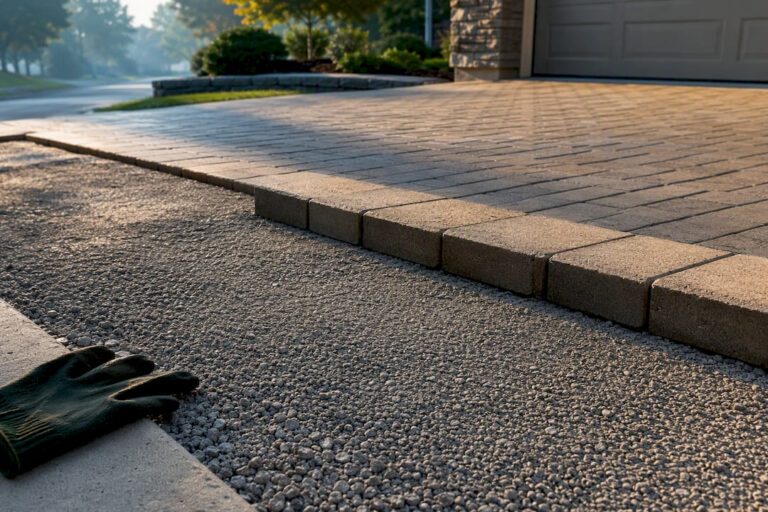
A single row of pavers or a flat stone band along the lawn gives the mower a track to ride on, so trimming is nearly unnecessary. It is a permanent, structured solution. If you are choosing durable surfaces for busy areas, this overview of paving surface material options shows how different materials behave under traffic.
Metal vs. plastic, and what about fabric?
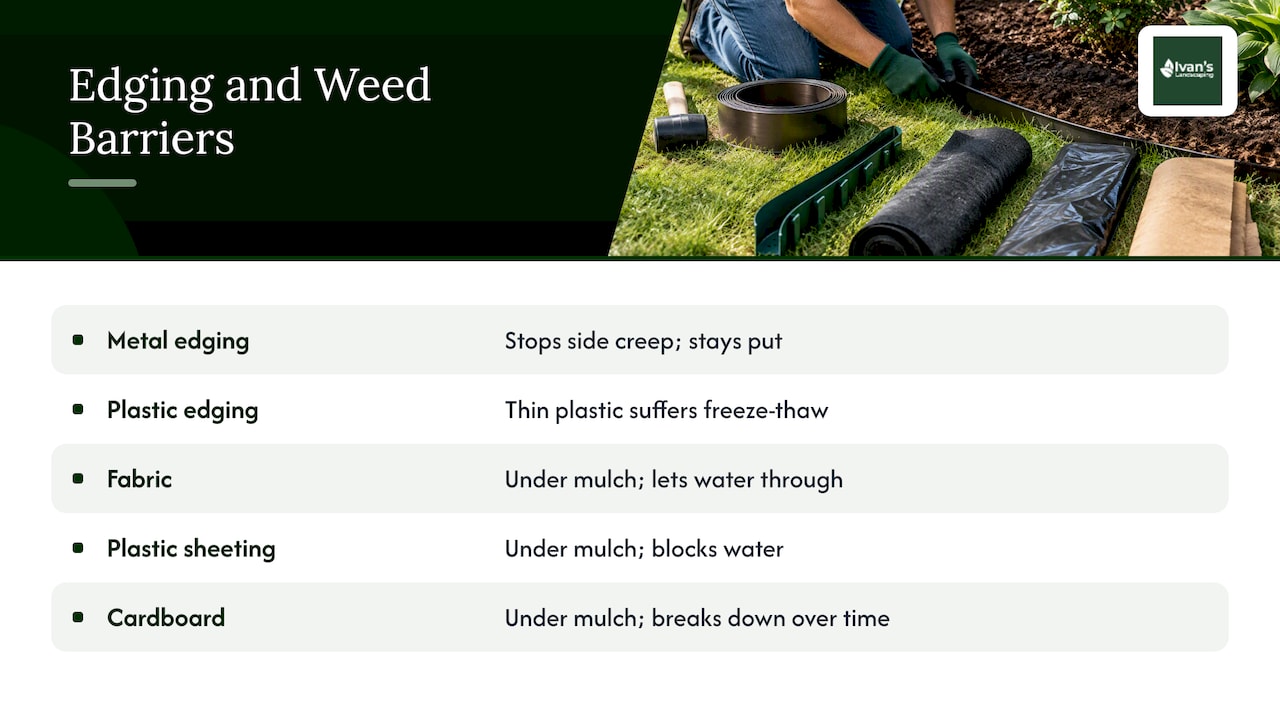
Homeowners often ask whether metal or plastic edging is better. For northern Illinois, our answer is metal, because freeze-thaw cycles punish thin plastic. Metal costs more, but it stays put and you only pay once.
The fabric question is separate. Edging stops grass creeping in from the side. A weed barrier works from below. Landscape fabric, cardboard and plastic sheeting all aim to block weeds under mulch, and none of them replaces edging. Fabric lets water through, while solid plastic does not. Cardboard breaks down over time. Whichever you use, a clean edge and a mulch layer of 2 to 3 inches do most of the work above it.
How to choose
Work through these questions in order:
- How formal is the house? Brick and concrete suit traditional or formal designs. Metal suits clean modern lines. Cut edges and stone fit informal gardens.
- How long are the runs? Long runs favor continuous materials such as steel or poured concrete. Short curves are fine for stone or a cut edge.
- How much time will you spend? A cut edge saves money but takes your weekends. Hardscape saves hours.
- What does the ground do in winter? Plan for frost. Deeper anchoring and stable base material prevent heaving.
- Is this a commercial property? Properties with weekly service typically include edge trimming along sidewalks, driveways and curbs, as a municipal landscape maintenance bid shows. A permanent edge reduces the labor that line item requires.
If you are cutting maintenance overall, our low maintenance landscaping wins cover quick changes beyond edging.
Our perspective
In our experience in McHenry County, edging usually goes wrong at installation, not at the choice of material. Homeowners pick something inexpensive, set it shallow, and by the second spring it is leaning. Clay-heavy soil and winter freezing make a stable base the most important step.
We usually tell homeowners to treat the edge as part of the whole bed. Define the line first, then set the edge, then mulch. That order keeps the finished look crisp and keeps mulch where it belongs. For properties we maintain through the season, a clean edge also makes every weekly visit faster and the result more consistent. Our approach is to document the scope in writing so you know exactly which edges are being cut, trimmed or rebuilt.
— Chas
Let us handle the edges
If you would rather not spend a weekend with a spade, we install and maintain bed borders as part of landscape design and installation, mulch work and our lawn care services across McHenry County, including Crystal Lake, Algonquin, Huntley and Woodstock. We offer free estimates, keep job sites clean and stand behind our work with a satisfaction guarantee. Planning a larger front-yard refresh? Our front yard landscaping ideas show what different budgets can accomplish.
FAQ
What is the cheapest way to edge a lawn?
A hand-cut trench is the cheapest, because it needs no materials. You cut a V-shaped ditch 4 to 6 inches deep between lawn and bed. The cost is your time, since it needs re-cutting once or twice per season.
Do I need lawn edging?
You do not strictly need it, but without a barrier, grass spreads into beds and mulch drifts onto the lawn. Edging also makes mowing faster. If you want less upkeep, a permanent edge or a mulched planting ring is worth considering.
What is the best edging for landscaping in cold climates?
Steel or aluminum, brick and stone laid on a stable base handle freeze-thaw cycles better than thin plastic. Depth and base preparation matter as much as the material. Ask your installer how they plan to anchor the edge against frost heave.
Is landscape fabric better than edging?
They do different jobs. Fabric sits under mulch to slow weeds from below, while edging blocks grass from the side. Most beds benefit from a clean edge and a 2 to 3 inch mulch layer, with or without fabric.
Sources
- Bed Edges, University of Illinois Extension
- All About Edging, K-State Research and Extension
- Tips for Edging Your Lawn, Utah State University Extension
- Request for Proposal for Landscape Maintenance Services, City of Jonesboro
- Compare Paving Surface Material Options