Modern landscape design pairs clean geometry and a restrained material palette with site-appropriate, massed plantings. It trades scattered flower beds and curved lawns for structured lines, repeated forms, and outdoor rooms that function like extra living space. If you want this look at home, the first move is not shopping for plants. It’s a quick site inventory or a design consult, since matching the right plant to the right spot from day one is what keeps a modern yard looking sharp without constant upkeep.
TL;DR:
- Modern landscape design emphasizes purposeful placement, with straight lines, repetition, and defined outdoor zones to create a coherent look.
- Choosing plants that thrive locally and grouping species in odd-numbered masses ensures a low-maintenance, visually intentional environment.
- Consistent hardscape finishes, permeable surfaces, and deliberate edge definitions are key to achieving a modern, clean aesthetic.
- Sustainable practices, including proper soil preparation, mulching, zone-specific irrigation, and native plants, reduce upkeep and water use.
- Starting with a site inventory and staged installation helps control costs and ensures the finished yard matches the modern design intent.
Table of Contents
- What Makes a Landscape Design “Modern”
- Choosing Plants for a Modern, Low-Maintenance Yard
- Hardscape and Materials That Read as Modern
- Sustainable Practices That Keep the Look Low-Maintenance
- The Design Process: From Site Inventory to Installation
- Balancing Modern Looks With How People Actually Live Outside
- Bring Your Modern Landscape Design to Life
- Where to Go Deeper
- Sources
- FAQ
What Makes a Landscape Design “Modern”
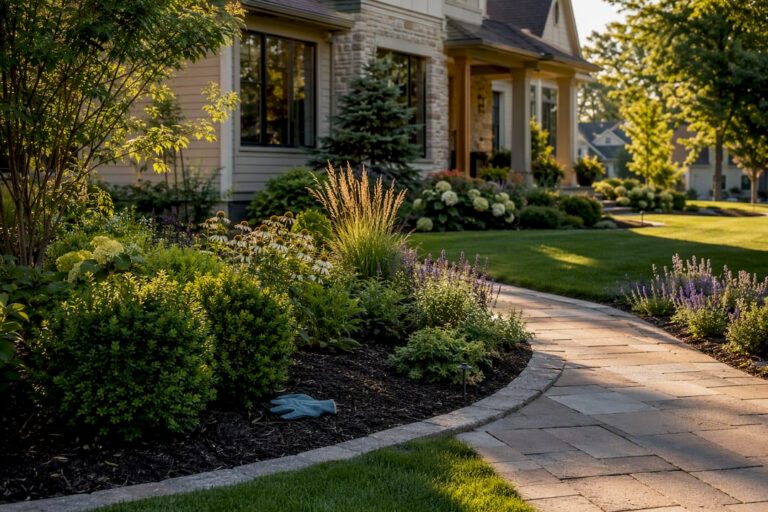
Modern landscapes read as intentional. Every line, edge, and plant grouping seems placed on purpose, which is exactly the point. The style leans on geometry, repetition, and a tighter material palette instead of the mixed borders and curved beds common in traditional landscape design.
Straight lines and 90 or 45 degree angles show up in patios, planting beds, and walkways because they echo the architecture of the house rather than fighting it. Repetition does the heavy lifting for visual calm: the same three or four plant species, the same paver size, the same edging material, used again and again instead of a new variety at every turn. Extension research on predictable patterns backs this up, noting that repeated forms and clearly defined spaces genuinely feel more comfortable to use, not just to look at.
Outdoor rooms are the third pillar. A modern front yard or backyard is broken into zones sized for actual human activity, a dining nook, a fire pit seating area, a side path, rather than one undifferentiated lawn.
A few practical habits keep the look from feeling cold:
- Limit hardscape materials to two or three that repeat throughout the yard.
- Use plant massing (grouping one species in blocks) instead of single specimens scattered around.
- Define every zone with a change in material, level, or edging, even a subtle one.
- Keep sight lines open by trimming for form, not just size.
Choosing Plants for a Modern, Low-Maintenance Yard
Contemporary garden design still lives or dies on plant choice, and that’s where a lot of ambitious yards go wrong. A minimalist landscape design only stays minimal if the plants chosen actually thrive where they’re planted. The Florida-Friendly Landscaping “right plant, right place” principle is the standard guidance here: match species to your USDA hardiness zone, your sun exposure, and your soil drainage before you fall in love with a look from a photo.
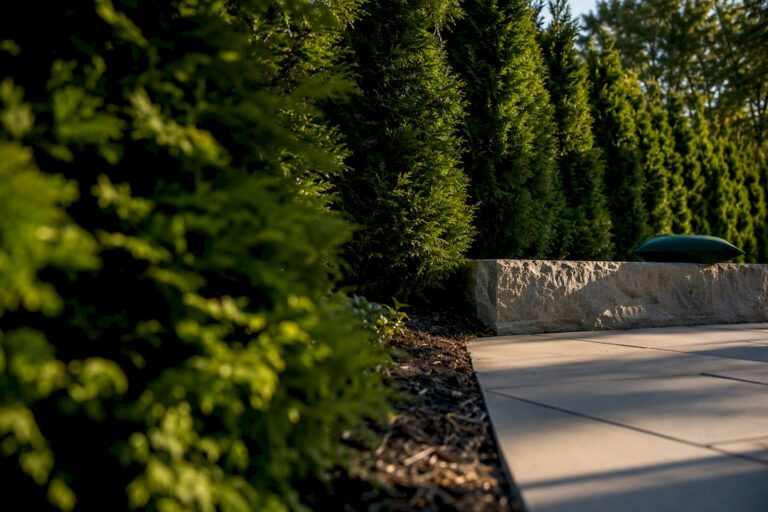
Architectural plants do most of the visual work in modern landscaping ideas. Think clipped boxwood or holly, ornamental grasses, and evergreens with a tidy, structured habit. Extension guidance on Florida-friendly design notes that a modern look doesn’t have to mean sparse or desert-like. It can be lush and layered as long as the plant forms stay orderly.
A workable palette for most yards:
- One evergreen structure plant for year-round form (boxwood, yew, holly)
- One or two ornamental grasses for movement and texture
- A layered groundcover or low perennial mass to fill the base
- A single accent tree or large shrub as a focal point per zone
Pro Tip: Plant in odd-numbered masses of three, five, or seven of the same species rather than one-of-everything. It reads as intentional instead of a plant collection.
Hardscape and Materials That Read as Modern
Hardscape carries as much design weight as plants in a modern yard, sometimes more. Getting the materials and edges right is what separates a coherent design from a patio that looks tacked on.
- Pick two or three finishes and repeat them. Large-format concrete pavers, honed natural stone, or steel edging in consistent tones create the clean look modern design is known for. Mixing five materials undoes it fast.
- Choose permeable surfaces where you can. Permeable pavers or gravel with proper base prep let stormwater soak in rather than run off, which matters more every year as extension guidance on sustainable landscape design makes clear.
- Define edges deliberately. Steel, aluminum, or poured concrete edging between lawn, beds, and hardscape keeps mulch in place and lines crisp without constant re-cutting.
- Use retaining walls to create level changes. A single low wall can turn a sloped yard into two usable outdoor rooms instead of one awkward incline.
- Layer in lighting at the design stage, not after. Path lights, uplighting on a specimen tree, and a few well-placed accent fixtures do more for a modern yard at night than any daytime plant choice.
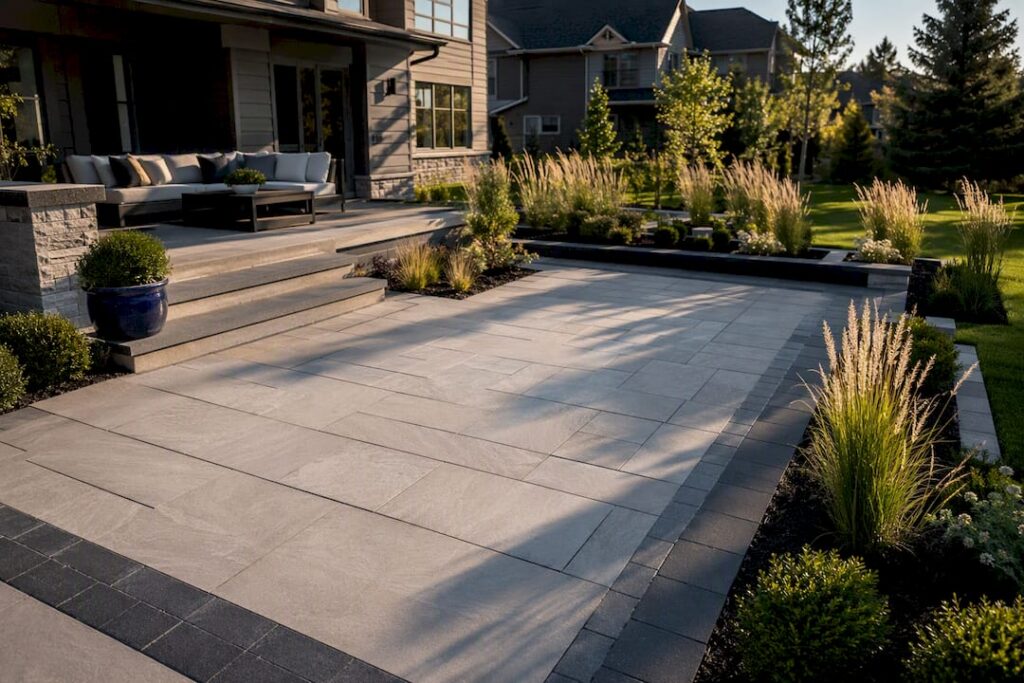
A paver patio is often the anchor hardscape feature that ties these choices together into one usable outdoor room.
Sustainable Practices That Keep the Look Low-Maintenance
A modern yard that requires constant babying isn’t actually a good design, it’s a maintenance contract disguised as landscaping. Sustainable landscaping principles from extension research show that the same choices that reduce upkeep also cut water use and chemical inputs.
Soil comes first. Extension guidance on sustainable landscapes calls soil the most undervalued resource in a build, recommending that homeowners scrape and save the top six inches of topsoil during any construction and work in compost afterward. Skip this step and even well-chosen plants struggle.
From there, a few habits carry most of the weight:
- Mulch beds two to three inches deep to hold moisture and suppress weeds.
- Zone irrigation separately for turf and shrub beds, since they need different watering schedules.
- Use microirrigation for shrub and bed zones, since it delivers water to the root zone instead of spraying it into the air.
- Route a downspout or low grade into a small rain garden to capture runoff instead of losing it to the storm drain.
Extension research also ties biodiversity to lower maintenance: a mix of native and well-adapted plants supports pollinators and tends to need fewer pesticide applications than a monoculture lawn, as explained in detail in how real estate management enhances property value. A modern design and a low-input yard are not competing goals, they’re the same goal approached with better soil and smarter irrigation.
The Design Process: From Site Inventory to Installation
Skipping the planning stage is the single most common reason a modern landscape design underdelivers. The formal five-step process that extension research recommends exists specifically to catch problems before they get expensive.
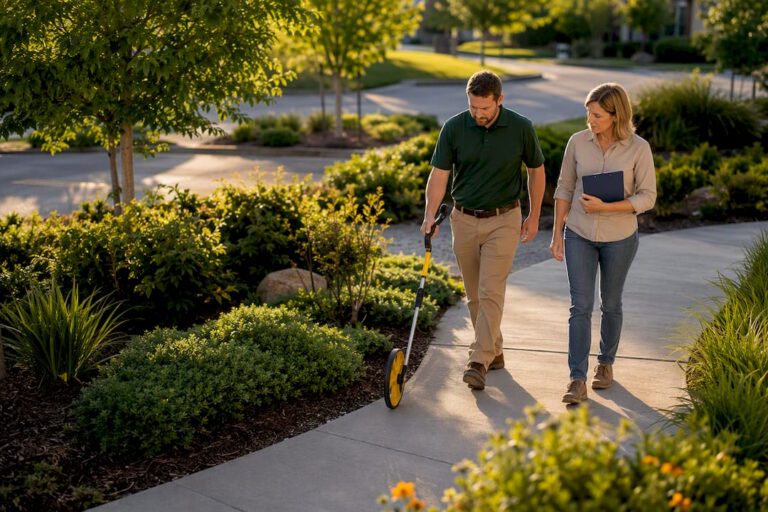
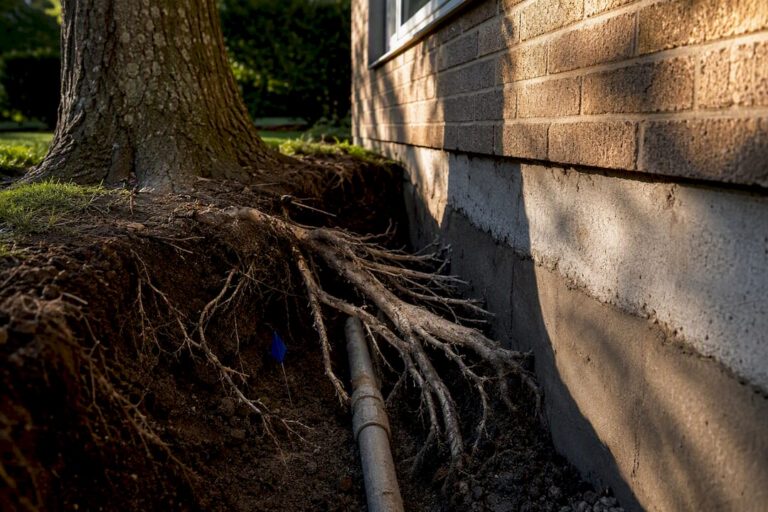
- Site inventory. Walk the property and record drainage patterns, existing utilities, sun and shade throughout the day, soil type, and any microclimates created by walls or fences.
- Needs assessment. List how you actually want to use the space, dining, play area, garden beds, and be honest about maintenance time you’re willing to give it.
- Functional diagram. Rough zones on paper before any plant or material gets chosen.
- Conceptual plan. Materials, plant palette, and hardscape layout come together into a single master plan.
- Installation. Staged or all at once, depending on budget.
Cost ranges vary by scope, but national averages put design fees between $1,944 and $7,213, with full installation costing considerably more depending on hardscape scale. Staging the build over a year or two, hardscape first, plantings after, is a legitimate way to spread that cost without sacrificing the plan.
Extension guidance is blunt about why the planning step pays for itself: a documented master plan and thorough site analysis catch drainage issues and salvageable plants before construction starts, preventing the kind of expensive mid-project redesign that blows past every budget estimate.
Before any consult, walk your own yard and note what you like and dislike about it now. It saves time and gets you a sharper landscape design consultation from the start. If you want a sense of what documented scope should look like before you sign anything, comparing contractor proposals side by side is worth doing early.
Balancing Modern Looks With How People Actually Live Outside
Clients rarely ask for “modern” in the abstract. They ask for a yard that looks sharp, doesn’t demand a weekend every Saturday, and holds up to kids, dogs, and Illinois winters. Those three priorities push most designs toward the same answer: fewer plant varieties, tougher hardscape, and lighting that gets used instead of admired once.
One yard we worked on had a homeowner set on a full minimalist rebuild in a single season. We staged it instead, patio and edging first, plantings the following spring, and the client got the clean look without the sticker shock of doing everything at once. That staged approach tends to age better than an all-at-once build rushed to fit a deadline.
— Chas
Bring Your Modern Landscape Design to Life
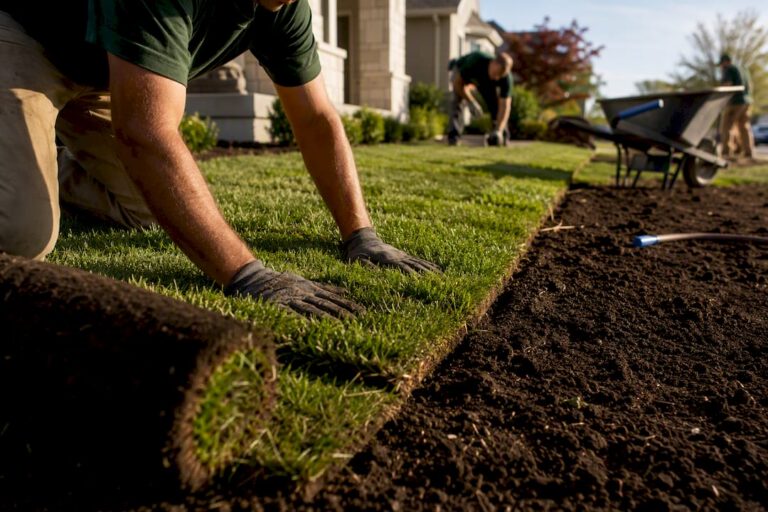
A lot of homeowners in McHenry County get stuck between Pinterest boards and an actual plan, and that gap is exactly where Ivanslandscaping steps in. Unlike hiring a separate designer and a separate installation crew, a landscape design and install service that manages design and installation as one continuous job helps ensure the plan drawn is the plan built, on a clean job site, backed by a satisfaction guarantee. Whether your project centers on a new paver patio, fresh plant beds needing tree and shrub plantings, or an ongoing mulch service to keep beds looking sharp between seasons, the same crew handles it start to finish.
When you request a free estimate, come with your site inventory notes, rough budget, and a few photos of looks you like. The company responds quickly and documents scope clearly so clients know what is included before work starts. Request your free estimate and get a real plan for your yard, not just another Pinterest board.

Where to Go Deeper
For technical detail beyond this guide, UF/IFAS Extension’s Florida-Friendly Landscaping principles cover plant selection science, the Nebraska Extension sustainability guide covers soil and water practices, and industry data from the Appraisal Institute on landscaping value covers return on investment.
Sources
- Florida-Friendly Landscaping™: The Nine Principles
- Landscape Sustainability (NebGuide)
- ASLA / appraisal value of landscaping (PR Newswire summary)
- How Much Does Landscape Design Cost? – BobVila
FAQ
How Much Does a Modern Landscape Design Cost?
Design fees alone typically run between $1,944 and $7,213 nationally, with full installation costing more depending on hardscape scope and plant quantities. Free estimates are typically provided so clients receive a scope and cost specific to their property before committing.
Can I Convert an Existing Traditional Yard to a Modern Style?
Yes, and staging the work over a year or two is a common approach: hardscape and structure first, then plantings once budgets allow. This spreads cost while still moving toward a cohesive modern landscaping result rather than a half-finished look.
Is Modern Landscape Design More or Less Maintenance Than Traditional Styles?
Generally less, because modern design relies on fewer plant species in structured masses rather than varied beds requiring different care schedules. Combined with mulch, proper irrigation zoning, and right plant, right place selection, upkeep drops significantly compared to a high-variety traditional bed.
Should I Hire a Designer or Plan It Myself?
A designer or design-build contractor performs a full site analysis, catching drainage and soil issues a homeowner might miss, which prevents costly mid-project changes. A combined landscape design and install service handling both planning and construction as one process can help keep the design faithful to what actually gets built.
What’s the First Step Toward a Modern Yard?
Start with a site inventory: note sun, shade, drainage, and how you want to use each zone before choosing a single plant or paver. From there, either build your own concept plan or schedule a design consult to turn those notes into a buildable master plan.