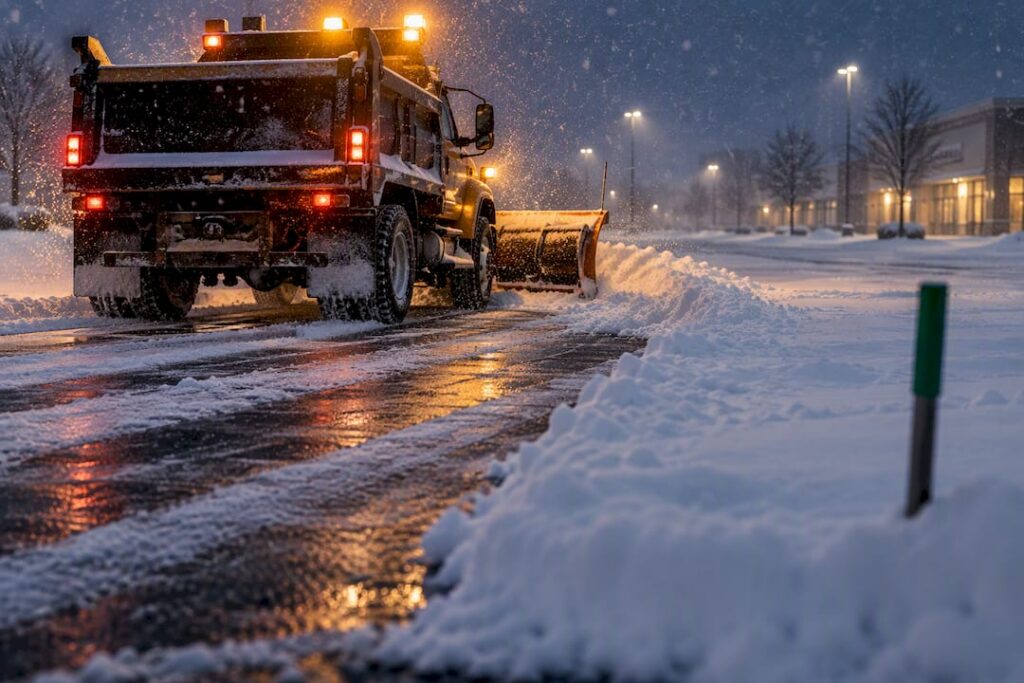
Hire a licensed commercial snow-and-ice contractor with a site-specific seasonal or per-push contract that guarantees clearing of vehicular lanes, stalls, sidewalks and accessible routes. This service can be provided by local commercial snow-and-ice contractors in McHenry County, Illinois. A solid contract spells out plowing, sidewalk shoveling, deicing, snow stacking and hauling, and protection of accessible parking, and it should never move forward without written scope and adequate insurance backing it up.
TL;DR:
- Seasonal contracts offer predictable costs and prioritized service, but require negotiations on response times and no-pile zones before signing.
- Snow removal must include plowing to bare pavement, clearing accessible routes first, and stacking snow away from traffic and drainage concerns for ADA compliance.
- Response times should be clearly defined, typically within two hours, and each service should include post-storm cleanup and final passes.
- Pricing varies based on lot size, number of entrances, sidewalk work, and storm frequency; obtaining detailed bids helps in accurate budgeting.
- Proper site planning and documented scope are crucial for smooth operations, with site maps and clear communication preventing disputes during winter storms.
Table of Contents
- What commercial parking lot snow removal covers
- Seasonal contract vs per-push: which fits your property?
- What drives snow removal pricing and how to budget
- ADA and OSHA obligations you cannot skip
- Choosing and coordinating with a snow removal contractor
- Deicing done right: effective and environmentally responsible
- Ivan’s Landscaping: how we approach commercial snow contracts
- Lessons from years of winter contracts
- Request a free estimate for your parking lot this winter
- Sources
- FAQ
What commercial parking lot snow removal covers
A complete scope of work goes well beyond pushing snow into a corner. Property managers should expect a written list that matches what actually needs clearing on their site, since lots vary by traffic pattern, curb cuts, and pedestrian flow.
- Driving lanes and parking stalls: plowed to bare pavement wherever possible, not just pushed to one side.
- Sidewalks and curb ramps: shoveled or blown clear, since these connect pedestrians to entrances and accessible routes.
- Accessible parking and access aisles: cleared first, given their ADA obligations.
- Salt or deicer application: applied after snow removal, not mixed into it.
- Snow stacking and hauling: piles placed where they will not block traffic, drainage, or accessible routes, with hauling arranged once piles grow too large for the site.
- Post-storm cleanup: a final pass once the storm ends and drifting has stopped.
Roof snow removal, private driveways connected to the lot, and snow inside landscaped islands are common exclusions. If your site needs any of those addressed, ask for them in writing rather than assuming they are covered. It also helps to hand the contractor an annotated site map marking accessible parking, EV charging stations, loading docks, and any areas where snow piles cannot go.
Seasonal contract vs per-push: which fits your property?
A seasonal, or standing, contract charges one fee for the winter regardless of how many storms hit, and it typically guarantees priority service and predictable budgeting. A per-push, or per-event, arrangement charges for each visit, usually triggered by a set snowfall amount, and can cost less in a light winter but comes with more billing variability and, at busy contractors, slower response when storms overlap across their client list.
Whichever model you choose, negotiate these terms before signing:
- Minimum number of plow passes per storm and per season.
- Response window, such as service beginning within two hours of a trigger depth.
- Priority level, meaning where your lot falls in the contractor’s route order.
- Surcharge terms for extreme events, ice storms, or back-to-back snowfalls.
- Cancellation and renewal terms, including notice periods.
- Subcontracting rules, so you know who is actually operating equipment on your property.
Seasonal contracts suit properties that cannot tolerate delays, like medical offices or retail with heavy foot traffic. Per-push arrangements can work for lower-traffic sites with flexible operating hours.
What drives snow removal pricing and how to budget
Several factors push pricing up or down, and understanding them helps you evaluate a bid instead of just comparing a bottom-line number.
- Square footage of pavement to be cleared.
- Number of curb cuts and entrances, which add plowing complexity.
- Amount of sidewalk work, often billed separately from lot plowing.
- Storm frequency in a given winter, which affects per-push totals.
- Required response time, since faster guarantees cost more.
- Hauling distance if snow must be trucked off site.
- Local labor and equipment costs, which vary by market.
Pricing models generally fall into flat seasonal fees, per-push fees tied to snowfall triggers, per-inch pricing tiers, or hourly equipment rates for unusual jobs like hauling. A small lot under 10,000 square feet with light foot traffic will cost far less on a seasonal contract than a mid-size retail lot with multiple entrances and heavy sidewalk requirements, since sidewalk labor and response-time guarantees add cost independent of pavement size.
A properly designed site plan matters as much as the contract terms, according to federal pedestrian facility guidance, which notes that a contract alone is not sufficient if the contractor does not understand the site’s accessible routes and curb ramps.
ADA and OSHA obligations you cannot skip
Snow removal is not just a maintenance task, it is a compliance issue. Accessible parking spaces and their connected access aisles must stay usable, and Access Board guidance specifies that access aisles need to remain at least 60 inches wide and connected to an unobstructed accessible route. Piling snow in an access aisle, even temporarily, can create a barrier that violates that standard.
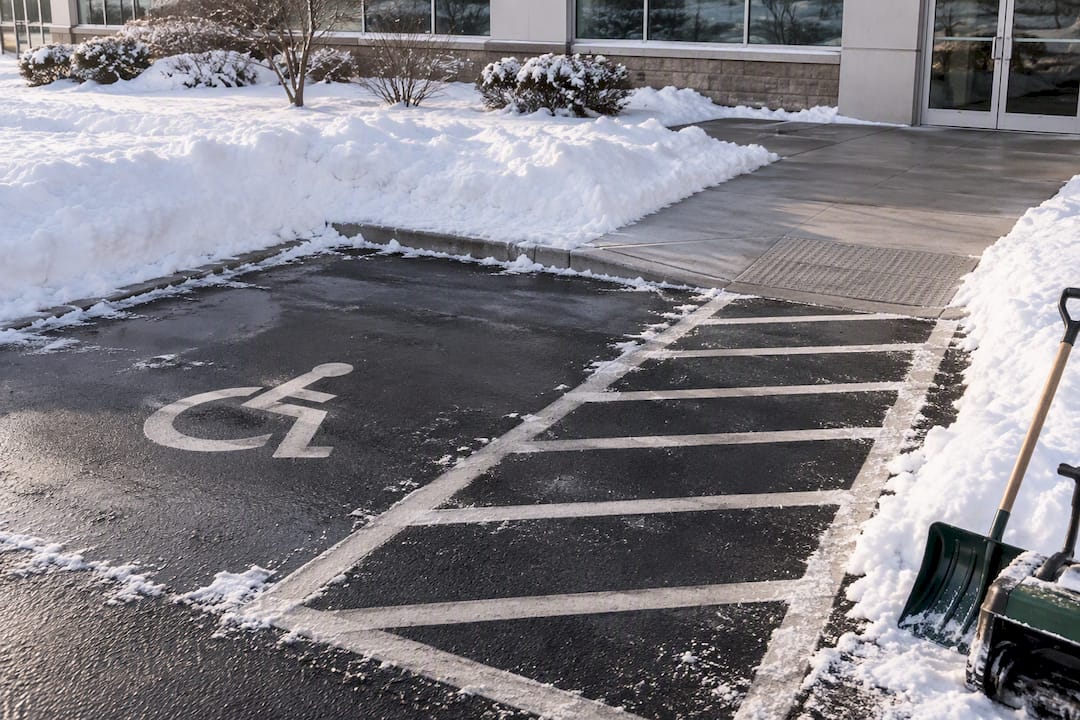
Worker and visitor safety carries its own set of obligations. OSHA expects employers to maintain safe walking surfaces and to clear snow and ice and apply deicers as quickly as possible after a storm, and its accident records include a documented case of an employee suffering a hip fracture after slipping on snow and ice in a commercial parking lot in December 2020.
Build these checks into your winter routine:
- Clear access aisles and accessible routes first, before general lot plowing.
- Never stack snow in accessible zones, curb ramps, or fire lanes.
- Photograph conditions before and after each service visit to document your due diligence.
Choosing and coordinating with a snow removal contractor
Vetting a contractor properly before the first snowfall saves you from disputes once the season starts.
- Verify insurance limits and ask for a certificate naming your property.
- Ask about equipment inventory to confirm they can service your lot size within the promised window.
- Check references from similar commercial properties, not just residential clients.
- Confirm local experience, since a contractor familiar with your area’s storm patterns plans routes more reliably.
- Review worker training and safety policies, particularly around slip hazards and cold stress.
Once you have a contractor, put these clauses in writing: response time, minimum passes per storm, defined snow-pile locations shown on a shared map, which deicing materials are approved for use on your property, and a clear process for reporting and resolving any pavement or landscape damage.
Pro Tip: Exchange an annotated site map before the first snowfall, showing accessible routes, no-pile zones, and your point of contact, so there is no confusion when the crew arrives at 2 a.m.
Walk the property with the contractor before winter begins, then verify service and invoices after each storm against the agreed scope.
Deicing done right: effective and environmentally responsible
Salt spread over snow rather than cleared pavement is wasted product. UMN Extension guidance recommends removing snow first, then applying deicer to the cleared surface.
- Apply a small amount of salt, roughly equivalent to a coffee mug full per 1,000 square feet of cleared pavement, per UMN Extension.
- Use sand or calcium magnesium acetate near plantings, storm drains, or other salt-sensitive areas.
- Sweep up excess crystals on dry pavement for reuse instead of letting them wash into storm drains.
Pile placement matters after the salt goes down, too. The National Weather Service warns that meltwater can refreeze into black ice even when air temperatures rise above freezing, so piles and drainage routes should be planned to keep meltwater away from travel lanes.
Ivan’s Landscaping: how we approach commercial snow contracts
Some commercial landscaping companies in McHenry County offer snow and ice removal among their maintenance services, often providing satisfaction guarantees, prompt estimates, clean job sites, and customized maintenance plans. Details on scope and sample agreements are available on the snow removal service page and the seasonal versus per-push comparison.
Lessons from years of winter contracts
Two things separate a smooth winter from a stressful one: a map showing exactly where snow can and cannot go, and a contract that states a real response window instead of a vague promise. If you want both spelled out for your property, ask for a site visit and a written scope.
— Chas
Request a free estimate for your parking lot this winter
Before you call for a quote, have your lot’s square footage, a few photos or a site map, your expected priority level such as a two-hour response, and your preferred contract model ready. That preparation lets a contractor give you an accurate number instead of a rough guess.
- Lot square footage and number of entrances or curb cuts.
- Photos or a hand-drawn map showing accessible parking and no-pile zones.
- Expected response time, such as two hours after a trigger depth.
- Preferred contract type, seasonal or per-push.
Reputable snow removal services usually offer insurance coverage and satisfaction guarantees, with estimates that are provided promptly. Request a quote through the snow removal page or browse the full services landing page if you are considering an annual maintenance plan that bundles snow removal with other seasonal work.
Sources
These sources cover the regulatory and technical detail behind the guidance above.
- OSHA accident detail
- Chapter 5: Parking Spaces (Access Board ADA guidance)
- The effects of deicing salts on landscapes | UMN Extension
- Caution! Winter storm dangers linger | NWS
- Guide: Maintaining pedestrian facilities
FAQ
How much is snow removal for a parking lot?
Pricing depends on lot size, number of curb cuts, sidewalk work, and required response time, so a small lot on a seasonal contract will cost far less than a mid-size lot with heavy pedestrian traffic. Ask contractors for a breakdown of their pricing model, whether flat seasonal, per-push, or per-inch, so you can compare bids on equal terms.
What is the best way to remove snow from a parking lot?
The most reliable approach plows lanes and stalls to bare pavement, clears sidewalks and accessible routes first, and applies deicer only after snow is removed rather than on top of it. This sequence matches UMN Extension guidance on efficient salt use and keeps accessible zones compliant with ADA requirements.
How much to plow a 1000 ft driveway?
Pricing for a driveway of that length depends on width, surface condition, and whether it is billed per push or as part of a seasonal contract, so costs vary significantly by contractor and market. Getting a written quote based on your specific driveway dimensions is the most reliable way to know the actual cost.
Is it illegal to not wipe snow off your car?
Rules on clearing snow from a vehicle vary by state and are generally handled through local or state traffic law rather than a single federal standard. Check your state’s vehicle code or your local police department’s guidance for the specific requirement in your area.