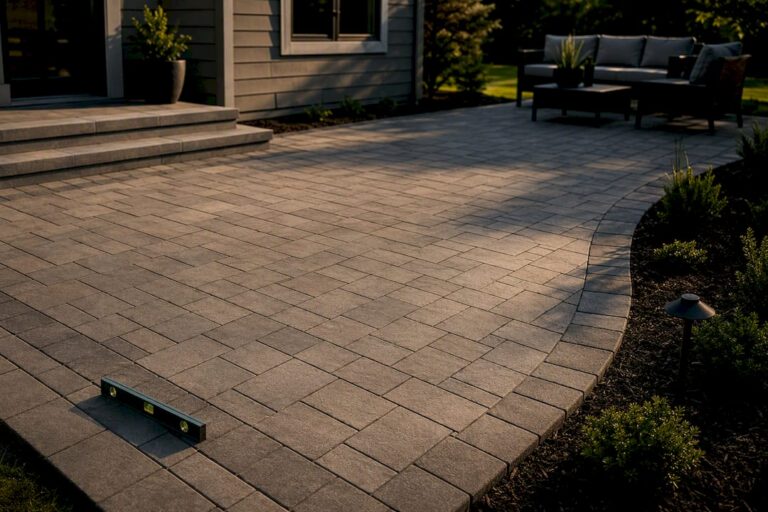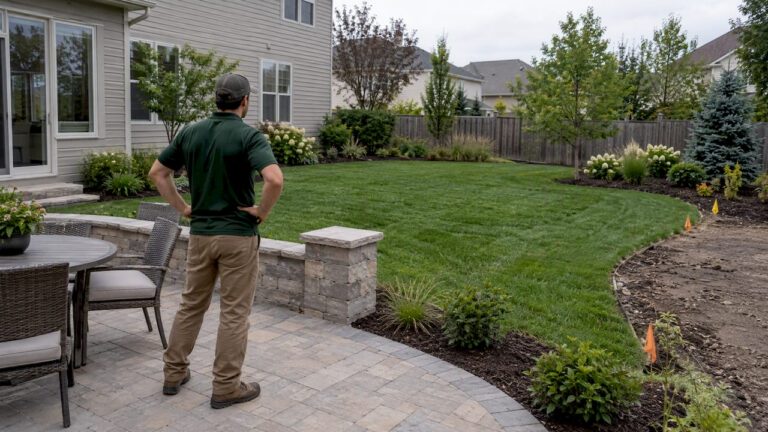
Paver edge restraints are the border that holds a patio, walkway or driveway together. Without one, the outer pavers drift outward, the joints open, and the surface loosens. For most home patios, a properly anchored plastic or aluminum restraint is enough. For driveways, a concrete edge is the stronger choice. The details below help you pick the right one and spot a poor installation before it costs you a rebuild.
TL;DR
- Every paver surface needs an edge restraint: patios, walkways and driveways. CMHA’s technical guidance says restraints are required on all segmental concrete pavements.
- Manufactured restraints (plastic, aluminum, steel, precast concrete, cut stone) and poured-in-place concrete are the two families. Concrete curbs are preferred for vehicle traffic.
- Garden-bed edging is not a paver restraint, and timber should be avoided because it warps and rots.
- Anchoring matters as much as material: spikes belong in the compacted aggregate base, not the loose soil below.
Table of Contents
- What an edge restraint actually does
- Edge restraint types compared
- Paver edging is not landscape edging
- What a good installation looks like
- How to choose for your project
- Our perspective on edges
- Have us build or repair your paver edge
- FAQ
- Sources
What an edge restraint actually does
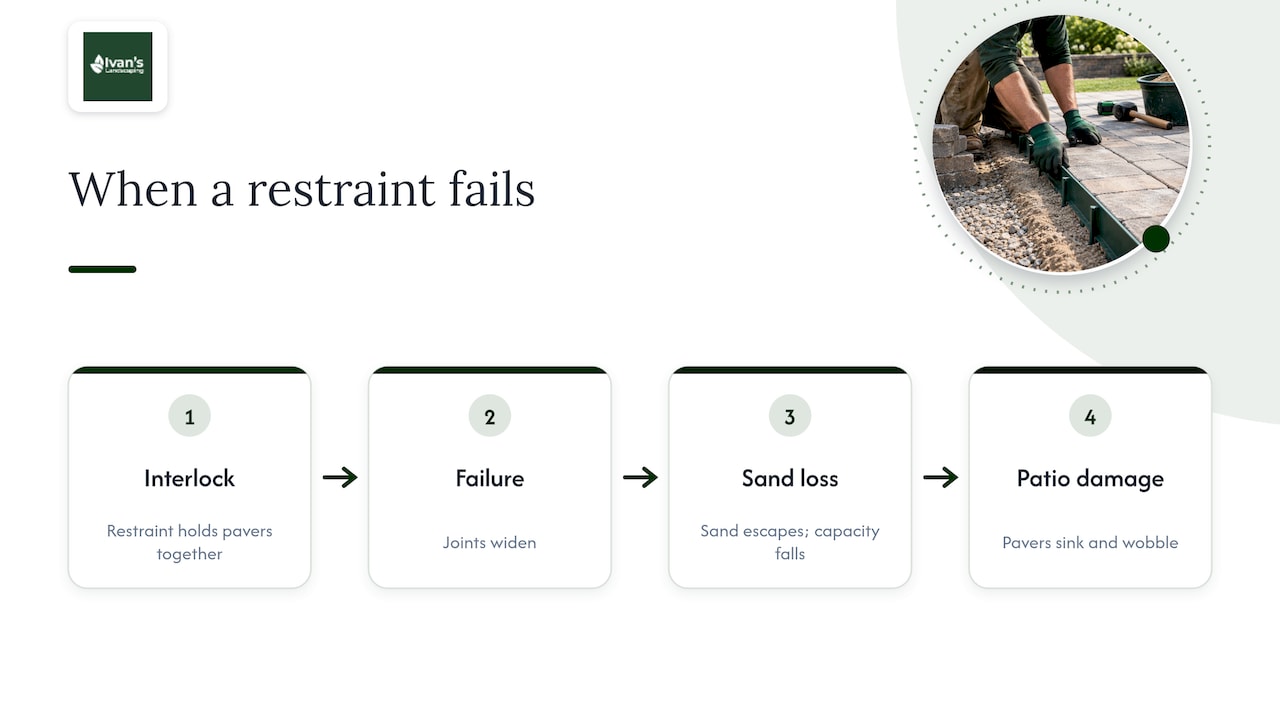
Pavers hold up because they lock together. Tight joints filled with sand let each unit share load with its neighbors. The restraint is the wall that keeps that lock in place.
According to CMHA, restraints hold the pavers tightly together so the units interlock consistently across the whole pavement. When one fails, the joints widen, joint sand escapes, and the pavement loses much of its structural capacity. That is why a small gap at the border often shows up months later as sunken, wobbly pavers across the middle of the patio.
In northern Illinois, winter adds freezing, thawing and plowing or shoveling loads to everyday foot traffic. Those are conditions where a weak border gets found out.
Edge restraint types compared
CMHA sorts restraints into two groups: manufactured units installed on site (precast concrete, plastic, cut stone, aluminum and steel) and concrete poured in place. Here is how they compare for a typical home project.
| Type | Best for | Watch out for |
|---|---|---|
| Plastic (spiked) | Patios and walkways | Needs deep, correctly spaced spikes and a straight, tight fit |
| Aluminum | Patios, curved paths, light-duty use | Must be anchored into the base, not the soil |
| Steel | Rigid, straight runs | Never use on flexible bases, because it lacks the flexibility |
| Precast concrete or cut stone | Visible borders, a finished look | Needs a solid, compacted bed |
| Poured concrete (polymer-modified or fiber-reinforced) | Driveways, vehicle areas, heavy use | Basic bag-mix concrete can crack in freeze-thaw |
| Timber | Nothing paver-related | Warps and rots, so avoid it |
The steel and timber cautions come from the same CMHA guidance.
Plastic and aluminum
These are the usual choices for residential patios. Polycor’s overview calls metal edging the most common restraint for both residential and commercial paver work. Both can perform well when the installation is right. The common failure is poor anchoring: spikes driven into soft ground rather than the compacted base let the outer row shift and sit higher or lower than its neighbors.
Poured concrete
For driveways and other vehicle areas, CMHA names concrete curbs as the preferred restraint. Plain poured concrete has a reputation for cracking in cold climates. Unilock notes that fiber-reinforced, polymer-modified mixes offer better flexibility and moisture resistance than basic bag-mix concrete, which is the relevant upgrade for our winters.
If you are also weighing materials for a deck next to the patio, a guide on PVC versus composite decking covers the same durability trade-offs from a different angle.
Paver edging is not landscape edging
The question we hear most is whether the black edging used around flower beds can border a patio. It cannot. Bed edging separates mulch from lawn. It has no structure to resist the sideways push of a paver field. CMHA’s guidance is clear that restraints must resist that lateral force, and light garden edging does not.
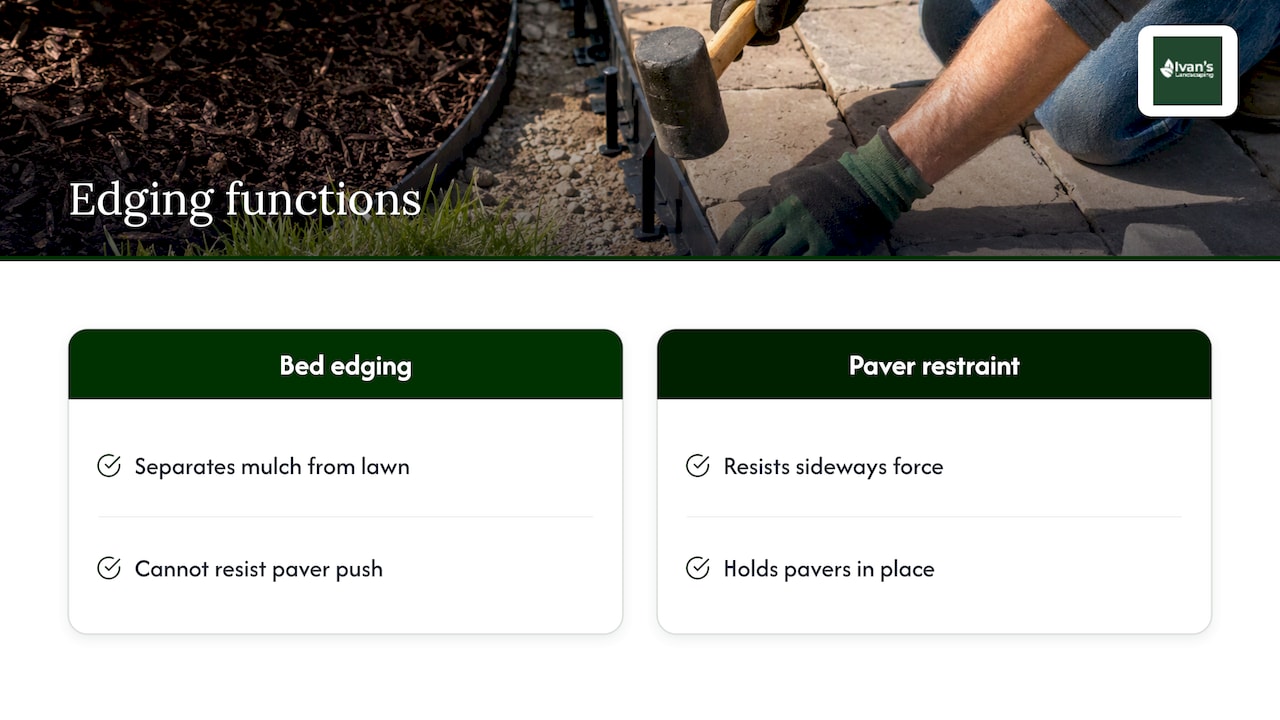
A simple check: if you can bend it with your hands or pull it up easily, it will not hold pavers. If you want a clean line between the patio and a mulched bed, install the true restraint first and add decorative edging beyond it. Our mulch service can finish those beds once the patio is set.
What a good installation looks like
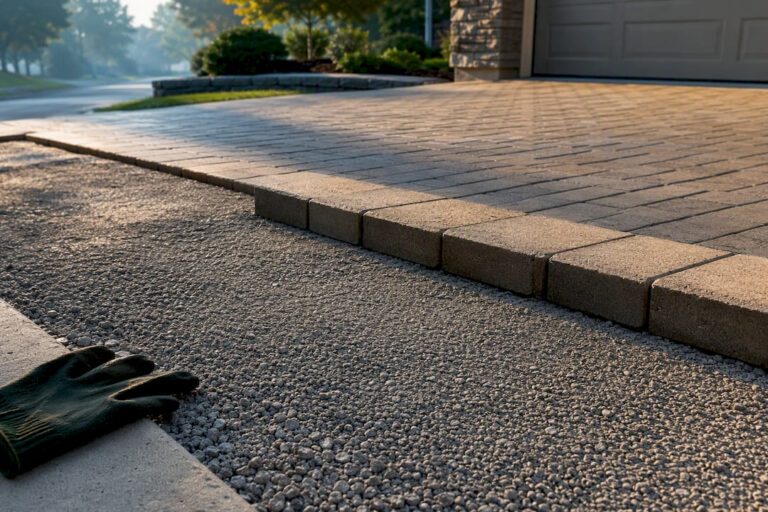
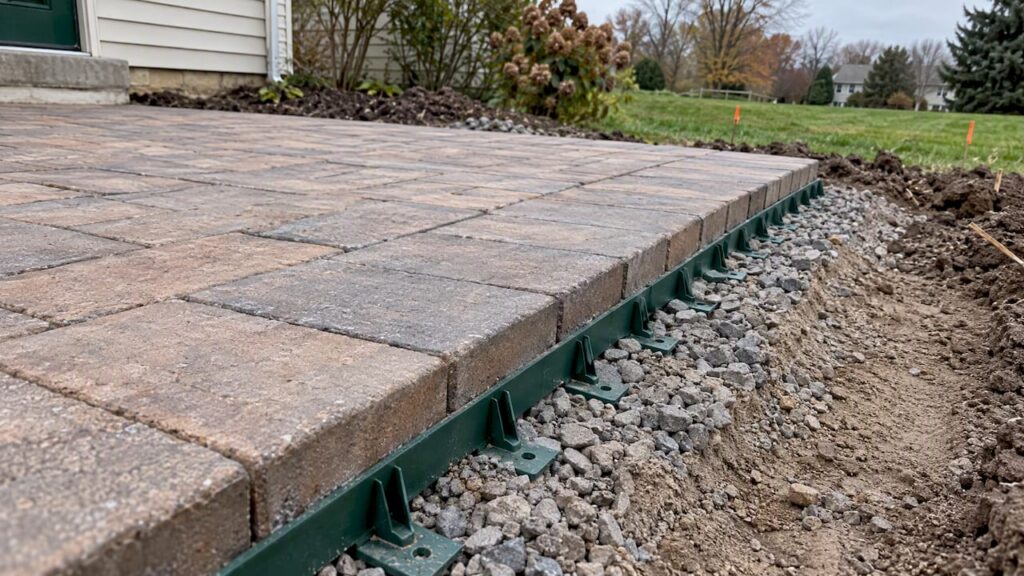
- The base comes first. The restraint sits on the compacted aggregate base, so the base must be built and checked before anything is fastened. Belgard’s technical guide tells installers to place restraints on a compacted base, and it lists spiked plastic, steel or aluminum as options.
- Elevations are set with settlement in mind. Belgard’s example: with 2 3/8-inch pavers and 1 1/4 inches of bedding sand, the base elevation sits 3 inches below the finished elevation, which allows for compaction and later settling. The restraint height has to match that plan.
- The face is smooth and tight. The vertical face should touch the paver sides fully. Gaps from warped material or sloppy fitting let joint sand escape and destabilize the surface.
- Spikes go into the base. Use heavy-duty spikes driven through the restraint into the aggregate. Ask your installer how they space them, especially on curves.
- Backfill and compact. Soil or stone packed behind the restraint keeps it from moving outward once the patio is in use.
Drainage also affects the border. Water pooling behind or beneath the edge softens the support. Our guide to paver patio drainage explains slope and base specs that keep water moving away.
How to choose for your project
- Walkway or patio, moderate budget: spiked plastic or aluminum, installed into a compacted base.
- Curved patio: flexible plastic or aluminum, with closer spiking on the curves.
- Driveway or apron: a concrete restraint. See our checklist for a paver driveway apron base.
- Outdoor kitchen or heavy furniture: treat it like a structural job and focus on base depth and compaction, as covered in our outdoor kitchen paver guide.
- Freeze-thaw exposure with a poured edge: ask for a fiber-reinforced, polymer-modified mix rather than bagged concrete.
If you are still comparing surfaces, pavers versus poured concrete and flagstone versus pavers both change which restraint makes sense. Flagstone laid in a different way needs a different border plan.
Our perspective on edges
We build paver patios across McHenry County, and the border is where we see the most avoidable trouble on patios built by others. A homeowner calls about sinking corners or a wavy outer row, and the pavers are rarely the problem. The restraint was often a light product, pinned into loose soil, with no backfill behind it.
Our view is simple. Pick the restraint for the use, not the lowest price per foot. Treat the base and the edge as one system. And put the scope in writing: material, how it is anchored, and what is backfilled. We document scope for every job, carry insurance, and stand behind our work with a satisfaction guarantee, so you know what you are getting before we start.
— Chas
Have us build or repair your paver edge
If your patio border is shifting, or you are planning a new patio, walkway or driveway apron, we can walk the site and give you a free estimate. Our pavers and patios service covers design, base, pavers and restraint in one scope. You can also see how we approach paver patio installation in McHenry County. Once it is built, our seasonal paver maintenance schedule helps keep joints full and edges tight.
FAQ
Do all paver projects need an edge restraint?
Yes. CMHA guidance says restraints must be used for all segmental concrete pavements, including patios, walkways and vehicle driveways. Skipping one is how pavers spread and joints fail.
Can I use plastic spikes or garden edging for pavers?
Garden edging is not a substitute, because it lacks the strength to hold a paver field. For plastic or aluminum restraints, use heavy-duty spikes driven into the compacted aggregate base. Spikes that only reach loose soil let the outer rows shift.
What is the difference between paver edging and landscape edging?
Paver edging is structural. It resists the sideways push of the paver field and keeps joints locked. Landscape edging only separates materials such as mulch and turf, and it will not keep a patio together.
Is poured concrete or plastic better for a home patio?
Both can work. Plastic or aluminum is common and practical for patios and walkways. Concrete is preferred for vehicle areas, and a fiber-reinforced, polymer-modified mix handles freeze-thaw better than basic bag-mix concrete, according to Unilock.
Sources
- Edge Restraints for Interlocking Concrete Pavements, CMHA
- Technical Resource Guide, Belgard
- Plastic vs. Concrete Paver Edge Restraints, Unilock
- Paver Edge Restraints Guide, Polycor