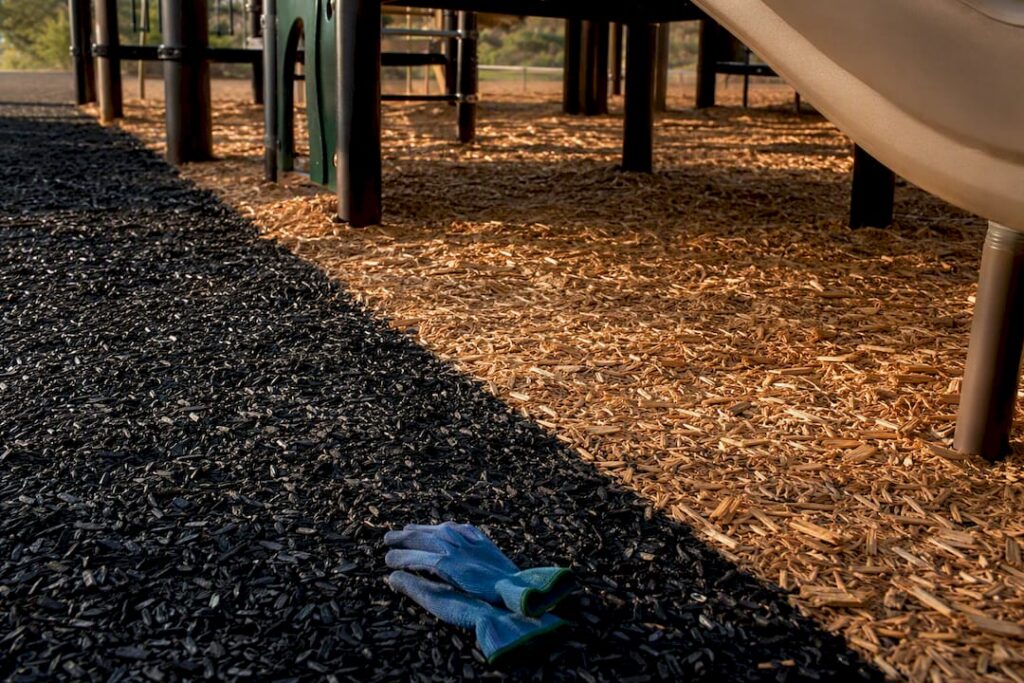
For playgrounds, choose ASTM-tested rubber mulch or engineered wood fiber that meets ASTM F2075. For planting beds, wood mulch wins on soil health and cost. For pet runs and high-traffic paths, it depends on whether you value durability (rubber) or long-term soil quality (wood). Installation depth, safety testing, and upkeep expectations all shape which one actually earns its price. That’s what the rest of this comparison unpacks.
TL;DR:
- Rubber mulch offers a lifespan of over ten years and resists rot and insects, but it can retain heat and provides no benefit to soil health.
- Wood mulch decomposes faster, typically needing replacement every one to two years, but it improves soil quality and supports microbial activity.
- Safety standards require both materials to meet impact attenuation certifications, with rubber needing ASTM F1292 or F3012 testing for impact safety.
- Proper installation involves assessing depth, drainage, and containment, with professional help recommended to ensure longevity and safety.
- Rubber mulch is best avoided near vegetable gardens, while wood mulch should come from sustainable sources and be regularly raked to maintain effectiveness.
Table of Contents
- Rubber Mulch vs Wood: A Quick Side-By-Side Comparison
- Wood Mulch: Types, Planting Benefits, and What to Watch For
- Rubber Mulch: Composition, Durability, and Key Concerns
- What Do CPSC, ASTM, and EPA Actually Require?
- Rubber vs Wood: Which Breaks Down Better Over Time?
- How Much Does Each Mulch Cost Over 10 Years?
- Which Mulch Should You Use Where?
- What Ivan’s Landscaping Sees in the Field
- Get Professional Mulch Installation Done Right the First Time
- Sources
- FAQ
Rubber Mulch vs Wood: A Quick Side-By-Side Comparison
Rubber and wood mulch solve different problems, and the differences show up fastest when you line them up factor by factor.
- Lifespan: Rubber mulch can last a decade or longer without replacement; wood mulch typically needs a fresh layer every 1 to 2 years as it breaks down.
- Soil impact: Wood mulch biodegrades and feeds organic matter back into the soil; rubber mulch doesn’t break down, so it offers zero soil benefit.
- Safety: Both can meet playground impact standards, but only ASTM-tested products certified for impact attenuation should go under play equipment. Wood carries no chemical exposure concerns; rubber requires product-specific testing to rule out contamination.
- Heat and drainage: Rubber absorbs and holds heat, which can make it uncomfortably warm for bare feet or paws in direct sun. Wood stays cooler and drains predictably.
- Maintenance: Wood needs annual top-ups and occasional raking. Rubber mostly needs debris removal and periodic redistribution in high-wear zones.
Durability favors rubber. Soil health, cost flexibility, and comfort tend to favor wood.
Wood Mulch: Types, Planting Benefits, and What to Watch For
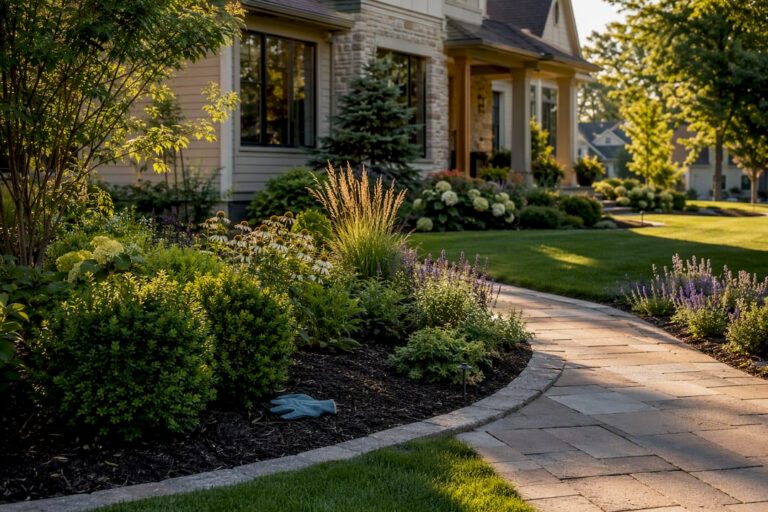
Wood mulch isn’t one product. Shredded bark mulch is the go-to for garden beds because it locks in moisture and looks tidy around shrubs and perennials. Wood chips work well on pathways and larger commercial beds where a coarser texture holds up to foot traffic. Engineered wood fiber (EWF) is a different animal entirely, manufactured and tested specifically for playground surfacing.
As wood mulch decomposes, it feeds organic matter back into the soil, improving structure and moisture retention over multiple seasons. For planting beds, aim for 2 to 3 inches of depth. For playground applications, only EWF that meets ASTM F2075 should be used, and it needs a deeper fill than bed mulch.
Downsides worth knowing:
- Wood breaks down and needs replacing far more often than rubber.
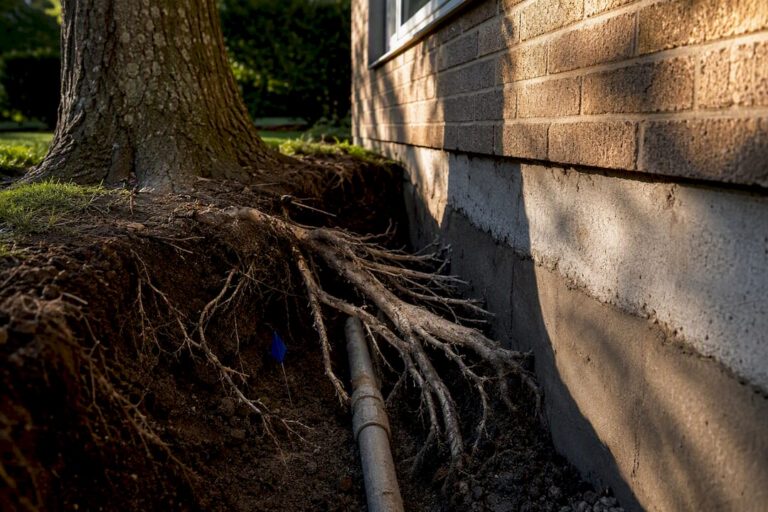
- Untreated wood can attract termites or carpenter ants near structures.
- Never use wood mulch with chromated copper arsenate (CCA) treatment, which the CPSC explicitly warns against for any surfacing near children.
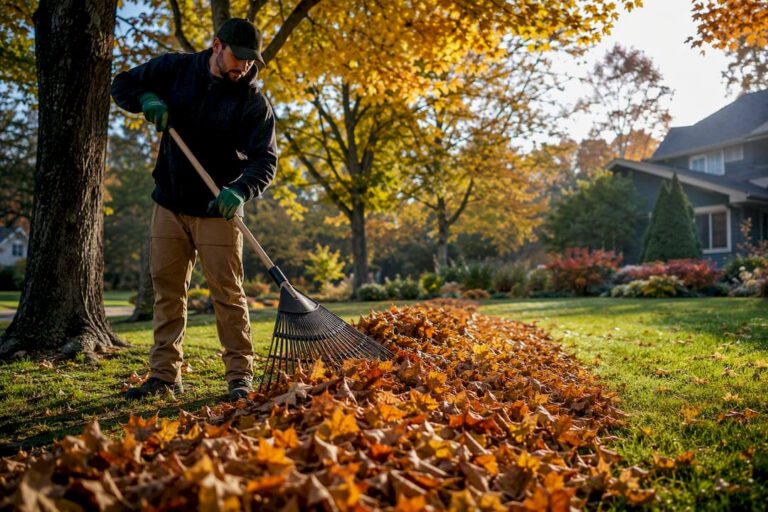
Pro Tip: Rake wood mulch lightly every spring before adding new material. Compacted old mulch blocks water from reaching the soil, undoing half the benefit you’re paying for.
Rubber Mulch: Composition, Durability, and Key Concerns
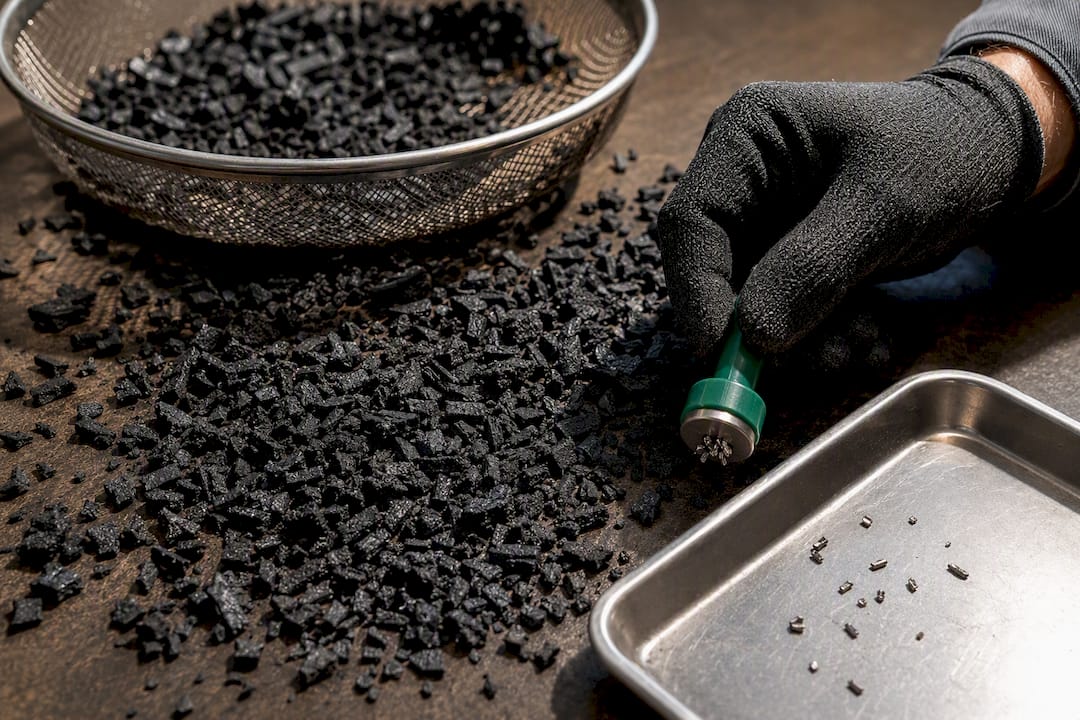
Recycled rubber mulch is made by shredding old tires and running the material through magnetic separation to pull out steel wire. That process helps, but it isn’t perfect. Some fragments of tramp metal can remain in the finished product, which is one reason playground safety professionals push buyers toward documented testing rather than assuming all rubber mulch is equal.
Durability is where rubber earns its reputation. It resists rot, repels insects, and rarely needs replacing, which is part of why EPA’s own archived guidance points out strong shock absorption and low maintenance demands as its core advantages. For playgrounds specifically, that impact attenuation only counts when the product carries ASTM F1292 or ASTM F3012 certification. Landscaping-grade rubber mulch sold at a garden center is not built or tested to that standard.
Key considerations:
- Rubber mulch retains heat, which can make surfaces too hot for bare feet or pets during peak summer sun.
- It won’t feed your soil or support beneficial microbial activity the way wood does.
- Chemical exposure research shows measured releases in field testing were generally limited, but that finding depends on the specific product tested, not rubber mulch as a category.
Pro Tip: Keep rubber mulch away from vegetable gardens and edible plantings. There’s no upside to the risk when wood mulch does the job better in those beds anyway.
What Do CPSC, ASTM, and EPA Actually Require?
The CPSC Public Playground Safety Handbook is the document to check before installing any surfacing under play equipment. It lists shredded rubber and non-CCA wood mulch as acceptable loose-fill options, provided they meet impact attenuation requirements, and it recommends minimum fill depths based on the equipment’s fall height.
The CPSC accounts for this by recommending you install more material upfront than the bare minimum depth suggests, then check and top up regularly, especially under swings and slide exits.
When you’re shopping for rubber mulch or engineered wood fiber for a play area, ask suppliers for three specific documents:
- ASTM F1292 test results for impact attenuation.
- ASTM F3012 certification if the product is loose-fill rubber, which limits hazardous metal concentrations and tramp metal size.
- ASTM F2075 documentation for engineered wood fiber, plus ASTM F1951 if accessibility for wheelchairs is a requirement.
On chemical exposure: federal researchers at EPA and CDC/ATSDR found in 2024 that measured exposures from tire crumb in field studies were generally limited, with only small fractions of metals released into biological fluids under the tested conditions. That’s reassuring, but it isn’t a blanket clearance. It’s a reason to demand product-specific test data rather than assume every bag of rubber mulch performs the same in a lab.
Rubber vs Wood: Which Breaks Down Better Over Time?
Wood mulch biodegrades by design. It returns organic matter to the soil, supports microbial life, and improves moisture retention season after season. The trade-off is sourcing: check that the wood comes from sustainably managed suppliers, and never use anything with unknown CCA treatment history.
Rubber mulch takes the opposite path. Recycling old tires into mulch keeps them out of landfills, which is a genuine environmental upside. But processing rubber takes energy, and the material itself never breaks down in your yard. When it finally needs removal, disposal isn’t as simple as raking it into a compost pile. It has to go somewhere, and that somewhere usually isn’t free.
A few ways to manage the trade-offs on either side:
- Keep rubber mulch away from vegetable and edible gardens as a precaution.
- Use a geotextile liner under rubber mulch to simplify eventual removal.
- Choose wood mulch certified from sustainable forestry sources when available.
- Plan your disposal or recycling path for rubber mulch before you install it, not after.
How Much Does Each Mulch Cost Over 10 Years?
Wood mulch typically runs cheaper per cubic yard upfront, but you’re buying it again and again. Rubber mulch costs more per yard initially, often two to three times as much, but its long lifespan can offset that gap once you look past year one.
Here’s a simple way to estimate your real 10-year cost for a 1,000 square foot bed or play area:
- Calculate the cubic yards needed at your target depth (a 3 inch depth over 1,000 square feet runs roughly 9.3 cubic yards).
- Multiply by the price per yard for your chosen material.
- For wood, multiply that installed cost by the number of times you’ll replace it over 10 years, typically 5 to 8 refreshes.
- For rubber, add one installation cost plus occasional top-up material for high-wear spots.
- Compare the totals side by side, not just the sticker price on day one.
Wood usually wins for beds you’re willing to maintain annually. Rubber tends to win for permanent, high-traffic installations where labor and disruption cost more than material.
Pro Tip: Get a quote for professional installation before you commit to either material. Labor costs for repeated wood mulch refreshes can quietly erase the savings you thought you were getting over rubber.
Which Mulch Should You Use Where?
Match the material to the job, not the marketing claims on the bag.
- Playgrounds: ASTM F1292/F3012 tested rubber or F2075 tested engineered wood fiber. Nothing else belongs under play equipment.
- Planting beds: Wood mulch, for the soil benefits and lower upfront cost.
- Pet runs: Rubber if you want fewer replacements and less digging disruption; wood if you’d rather support the soil underneath.
- High-traffic pathways: Rubber holds its shape better under repeated footsteps, but check drainage and heat before choosing it for sun-exposed walkways.
Before installing either, run through this checklist:
- Confirm the recommended depth for your use case and add extra for compression.
- Plan drainage so water doesn’t pool under the surfacing.
- Install containment edging to keep material from migrating.
- Add a geotextile barrier if weed suppression or later removal matters to you.
- Request the manufacturer’s ASTM test documentation before buying.
Three questions worth asking any supplier: Do you have ASTM test data for this specific product? What depth and maintenance schedule do you recommend? What’s the end-of-life or disposal plan once this material needs replacing?
What Ivan’s Landscaping Sees in the Field
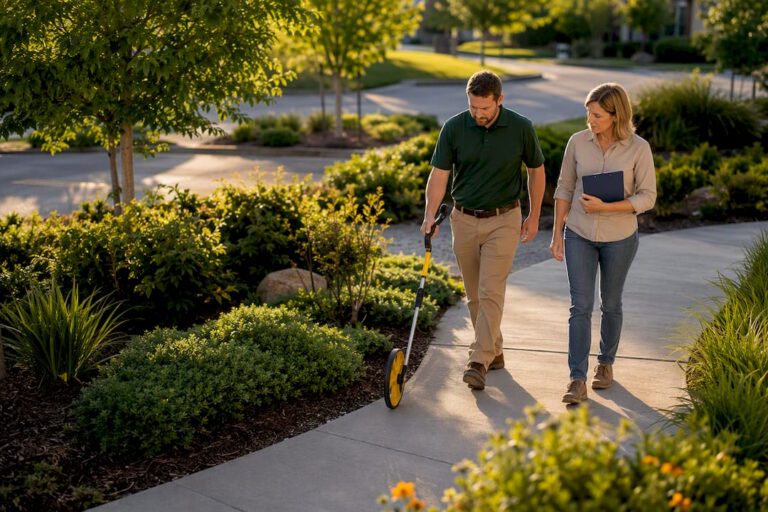
Most of the yards we work in across McHenry County call for wood mulch in beds and rubber only where kids or pets put real wear on a space. The most common mistake homeowners make is skipping proper depth and containment, so material washes out after the first hard rain. A professional installation accounts for drainage and edging before the first bag ever gets opened.
— Chas
Get Professional Mulch Installation Done Right the First Time
Professional landscaping services offer expertise in determining proper depth, drainage, and containment for mulch installation. Mulch installation and playground surfacing preparation include site prep, recommended depths, and edging to keep material in place. A professional visit typically includes soil and drainage assessment and proper containment. For crews handling the physical labor safely, these landscaping safety practices reflect the same standards we hold our own installations to. If your beds or play area need fresh material this season, request a free estimate for mulch installation and get a clear plan before anything gets delivered.
Sources
- Public Playground Safety Handbook
- Federal research: recycled tire crumb used on playing fields and playgrounds (EPA/CDC summaries, 2024)
- Federal Register, Volume 90 Issue 154 (Wednesday, August 13, 2025)
- EPA synthetic turf tire crumb characterization (Part 1)
FAQ
Is there a downside to using rubber mulch?
Yes. It retains heat, offers no soil benefit since it never biodegrades, and untested products can carry residual tramp metal that magnetic separation doesn’t fully remove.
What happens to rubber mulch after 10 years?
Quality rubber mulch generally still holds up structurally after a decade, but it will eventually need removal and disposal, which requires more planning than composting wood mulch does.
Does rubber mulch attract mice?
No. Rodents and insects generally avoid rubber mulch because it offers no organic material to nest in or feed on, unlike wood mulch, which can occasionally attract pests as it breaks down.
What is the healthiest mulch to use?
For soil health, wood mulch is the stronger choice because it biodegrades and returns organic matter to the ground. For playground safety specifically, “healthiest” means whichever material, rubber or engineered wood fiber, carries current ASTM test certification for your equipment’s fall height.