A good snow removal contract answers five questions in writing: what snow depth starts service, how fast the crew arrives, which areas and tasks are covered, how you pay, and who is responsible when something goes wrong. If your agreement is vague on any of them, you will find out in the middle of a storm. This guide walks through each point for property managers, HOA boards, business owners and homeowners in McHenry County and anywhere winters get serious.
TL;DR
- Choose a pricing model first: per-event, per-push, seasonal fixed fee, or time and materials. Each shifts risk differently between you and the contractor.
- Write down the trigger (for example, a plowing depth), who measures it, and the response window after snow stops.
- Map the service area and list exclusions, so “parking lot” or “walkways” never means two different things.
- Require insurance, a damage process and a service log with every invoice.
- Compare proposals line by line, not on the bottom-line number alone.
Table of Contents
- The four pricing models you will be offered
- What a snow removal contract should include
- Triggers, response times and service areas
- Liability, damage and records
- Before you sign: a checklist
- Our perspective
- Snow removal contracts with Ivan’s Landscaping
- FAQ
- Sources
The four pricing models you will be offered
Most commercial proposals fall into one of four structures. The Snow & Ice Management Association’s purchasing guidance describes per-event, per-occurrence, seasonal and time-and-materials pricing, and notes that caps, floors and all-inclusive terms can modify them.
| Model | How you are billed | Works best when |
|---|---|---|
| Per-event | A defined service package after each storm that meets the contract’s stated accumulation and conditions | You want a predictable price per storm |
| Per-push (per-occurrence) | Each plow pass or salt application | Your property tolerates some snow and you want to pay only for what happens |
| Seasonal fixed fee | A set fee spread across the season, regardless of how many storms | You need a fixed budget and a high service level |
| Time and materials | Actual labor, equipment and material used | The scope is hard to define in advance |
Time and materials deserves extra care. The Vermont-based VSBIT contract guide advises that an hourly agreement list the hourly rate for each piece of equipment and its operator at bid time, because hourly billing can get expensive fast.
We go deeper on the trade-offs in our comparison of seasonal vs. per-push commercial snow removal contracts. In short: a seasonal fee buys budget certainty, and per-push buys flexibility in a light winter. Neither is automatically cheaper over a full season.
What a snow removal contract should include
A complete agreement covers the basics of any service contract, plus the details that are unique to winter work. A contractor-oriented checklist from Jobber lists contact details, service address, service dates, detailed scope, serviced and excluded areas, payment terms, extra charges, insurance, guarantees, termination rules and signature blocks. It also recommends addressing heavy storms, holidays and emergency or added services.
In practice, we would want to see these items in any agreement:
- Parties and property. Legal names, the service address and a property map.
- Term. Start and end dates, renewal rules and how either side can cancel.
- Scope. Plowing, sidewalk clearing, salting, hauling or stacking snow, and any on-call work.
- Exclusions. Areas or tasks that are not covered, written out plainly.
- Pricing and extras. The model, the rates, and what triggers additional charges.
- Insurance and damage. Coverage the contractor carries and how damage claims are handled.
- Records. What the contractor documents and when you receive it.
Triggers, response times and service areas
This is where disputes start. An SIMA article by attorney Brendan D. O’Brien advises that a contract specify when service is triggered, whether snow or ice is measured, who monitors, and exactly which areas and activities are covered. It also warns that vague terms like “property” or “walking areas” should be defined or avoided.
Real agreements show how specific this can get. A sample contract from The Silver Lining uses a mapped service area, a ½-inch plowing trigger, rock salt on drive lanes, fire lanes and parking lots, and calcium chloride on concrete sidewalks. It also requires notice to the property manager if the property cannot be fully plowed within four hours after snow or ice stops falling.
A public-sector example looks different. A 2026 Cook Inlet Housing Authority solicitation calls for automatic plowing above 2 inches or on call, a six-hour response to requested service, a three-hour emergency response and a 24-hour contact number. It also requires access routes, hydrants, dumpsters and entrances to stay clear.
You do not need to copy any of these numbers. The point is the structure, and the right trigger depends on your property:
- A medical office or a retail center with constant traffic usually wants a lower trigger and a tighter response window.
- A low-traffic industrial lot may accept a deeper trigger.
- An apartment community needs fire lanes, hydrants and building entrances named explicitly.
Deicing and refreeze
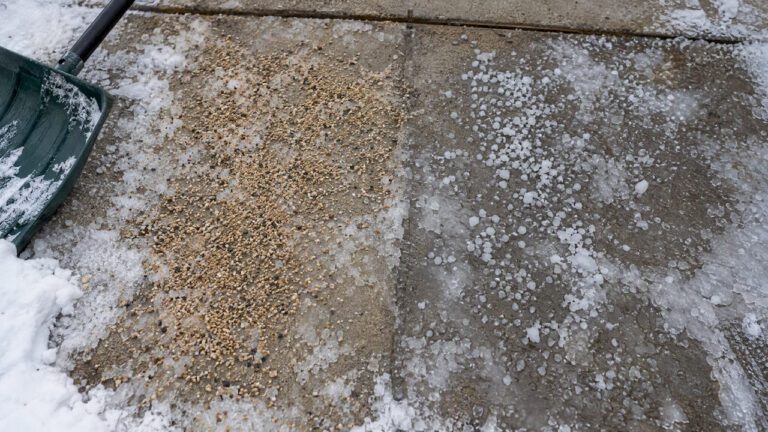
Plowing is only part of the job. SIMA’s guidance says contracts should define monitoring frequency, who monitors after an event, anti-icing and pretreatment, return visits, refreeze inspections and authorization for extra applications. If the contract is silent, you and the contractor may each assume the other is responsible for the ice that forms overnight on a melted lot.
Snow-and-ice management, not just removal
The Associated Landscape Contractors of Colorado points out that contractors usually relocate snow rather than remove it entirely, so it recommends the more accurate term snow-and-ice management. That matters because it sets expectations. Piles will exist, and the contract should say where they go and who pays if they must be hauled away.
Liability, damage and records
Three clauses protect both sides when a claim comes in.
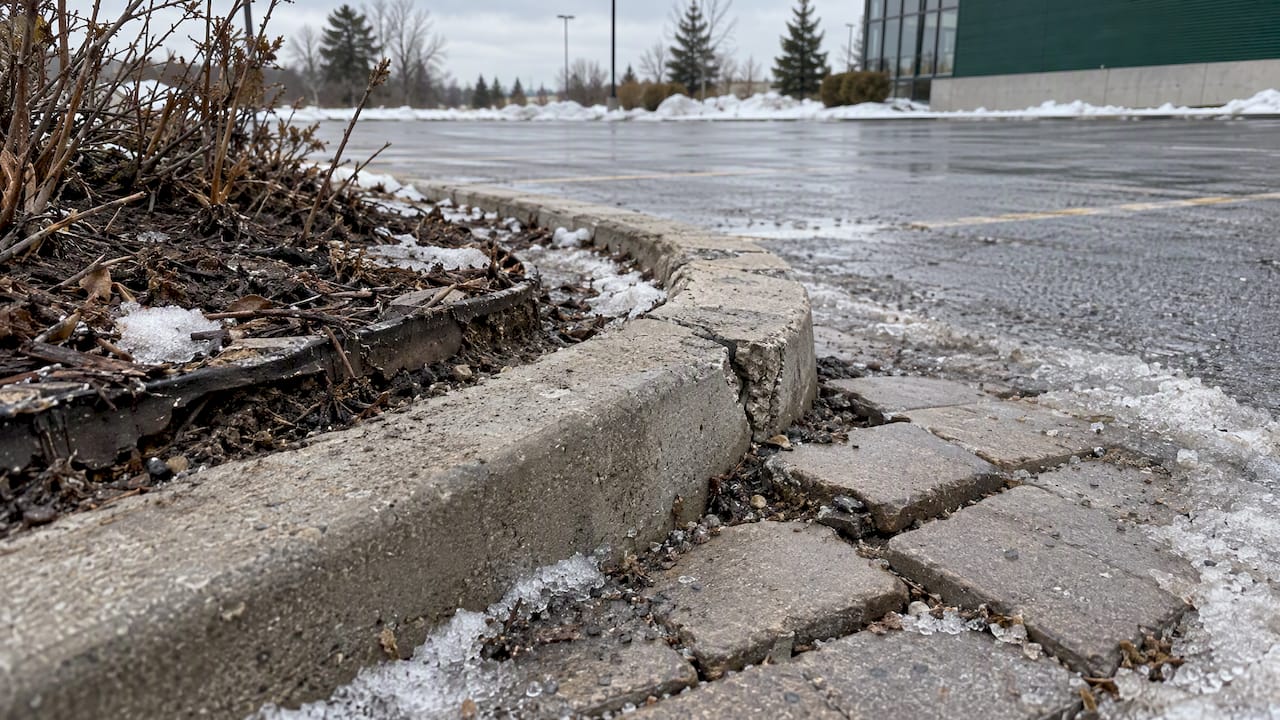
Damage. The Silver Lining sample makes the contractor responsible for property damage caused by snow-removal operations. The Colorado contractors’ association suggests defining liability, limiting indemnification to the contractor’s own negligence, and documenting preexisting damage. In practice, walk the lot together before the first storm and note cracked curbs, loose pavers, mailboxes and landscape edges.
Materials. The Minnesota Pollution Control Agency’s model contract for snow and ice management calls for appropriate materials at the proper amount and rate, procedures suited to temperature and conditions, and accurate, regular recordkeeping. Overapplied salt costs you money and harms turf and concrete.
Records. SIMA treats documentation as part of the service itself and as a critical defense when a later claim cannot otherwise be disproved. It lists GPS data, times, weather observations, material rates, photographs and inspection notes as examples. The Silver Lining sample goes further and requires the snow-and-ice control log to be attached to the invoice before payment. Asking for a log with each invoice is reasonable and easy to enforce.
If you manage a residential community in Illinois, note that the state’s Snow and Ice Removal Act gives residential property owners and those they hire immunity for negligent clearing of abutting sidewalks unless conduct is willful or wanton. That rule is specific to residential property. Commercial sites face a different standard, and for any liability question you should speak with an Illinois attorney or your insurance broker before you rely on contract wording alone.
Before you sign: a checklist
Whether you are reading a template or a contractor’s proposal, check each point:
- Is the pricing model named, with rates for every service, including extra salt applications and hauling?
- Is the trigger defined, and does the contract say who measures it?
- Is there a response window after snow stops, and what happens if it is missed?
- Does a property map show every lot, walk, dock and entrance, with exclusions listed?
- Is refreeze addressed, including who monitors and who authorizes added deicing?
- Are insurance requirements and the damage process written down?
- Will you receive service records with every invoice?
- Can you cancel, and under what terms?
It also helps to ask any contractor the same questions to ask contractors before you hire: who is responsible on site, how delays get reported to you and how work is coordinated. When you receive several bids, our guide on comparing commercial landscaping proposals applies equally to snow work. The lowest price often leaves out the line items that cost you later.
Our perspective
We have worked in McHenry County since 2008, and most snow disputes we see come from the same place: two people remembering a handshake differently. A contract fixes that. We prefer to put the scope, the property map, the trigger and the documentation in writing before the season starts, and to explain each line in plain terms so a property manager can defend it to a board or an owner.
We also believe the cheapest bid is rarely the best one. Compare what is covered, how quickly the crew responds, how clean the site is left, and whether the contractor carries insurance and documents its work. Those are the things we stand behind with a satisfaction guarantee and a commitment to clean job sites.
— Chas
Snow removal contracts with Ivan’s Landscaping
We provide snow and ice removal for homeowners, HOAs, retail centers, apartment communities and other commercial properties across McHenry County. If you manage a business or multi-unit property, start with our commercial snow removal page, or see how we handle parking lot snow removal with a focus on fast response. Homeowners can look at our McHenry County snow removal service. We offer free estimates and a written scope for your property, and we can pair snow service with a year-round maintenance plan through our main site.
FAQ
How much does a typical snow removal contract cost?
It depends on lot size, access, the pricing model, the trigger and the materials involved. Because every property differs, a reliable number comes only from a site visit and a written scope. Ask each contractor to price the same trigger, the same areas and the same deicing assumptions so the bids are comparable.
What is the difference between a seasonal and a per-push contract?
A seasonal contract is a fixed fee for the winter, which makes budgeting simple. A per-push contract bills each time the crew plows or treats the property, so your cost rises and falls with the weather. Many property managers choose seasonal for high-traffic sites and per-push for sites that can wait out small storms.
Should a homeowner sign a snow removal service agreement?
If you want guaranteed service for a driveway, yes, a short written agreement helps. It should state the trigger depth, which areas are cleared, how you pay and what happens if the crew damages something. Illinois law offers residential owners and those they hire some protection for sidewalks, so ask an attorney if you have a specific liability concern.
Who is responsible if someone slips on my lot?
That depends on the contract language, the property type and Illinois law, so there is no single answer. A well-written agreement spells out each party’s duties and requires documentation of service. Talk to your insurance broker and an attorney about your specific property.
Sources
- How to Get Snow Removal Contracts, Jobber
- Purchasing Snow & Ice Management, SIMA
- Snow removal contract guide, VSBIT
- The devil is in the (contract) details, SIMA
- Every word matters in snow contracts, SIMA
- Sample contract language for snow and ice control, The Silver Lining
- Snow plowing sample contract, Cook Inlet Housing Authority
- 8 things your snow contract should cover, ALCC
- Model contract for snow and ice management, Minnesota Pollution Control Agency
- The Illinois Snow and Ice Removal Act, DuPage County Bar Association