Use a swale for visible surface runoff and a French drain for groundwater or foundation seepage. Sometimes you need both. The quick test: watch your yard during a storm. If water runs across the lawn in a visible sheet, that’s a swale problem. If the ground stays soggy and spongy for days after the rain stops, that points to French drain territory. Soil type, slope, and how high your water table sits can shift that answer, so treat this as a starting point—not a final diagnosis.
TL;DR:
- French drains work best for chronic soggy spots and foundation seepage when soil saturation elevates the water table above 18 inches deep.
- Swales are effective for handling surface runoff from roofs, driveways, and sloped lawns, especially when water sheets across the yard during storms.
- Budget and maintenance needs differ, with swales costing between $2,000 and $8,000 and requiring regular mowing, while French drains cost $3,000 to $15,000 and need occasional flushing.
- Proper diagnosis involves observing water flow during storms and testing soil saturation to determine whether surface runoff or groundwater is the primary issue.
- Local expertise and site-specific assessment are essential to avoid costly mistakes and select the correct drainage solution for your yard.
Table of Contents
- Swale vs. French Drain: How Each System Actually Works
- Swale vs French Drain: The Trade-Offs That Matter
- When to Choose a Swale or French Drain for Your Yard
- Swale vs French Drain: Costs and Permit Considerations
- What Installation and Maintenance Actually Involve
- Why Local Experience Still Matters for Drainage Work
- The Real Lesson Behind Every Drainage Complaint
- Get a Drainage Diagnosis Before You Guess Wrong
- Sources
- FAQ
Swale vs. French Drain: How Each System Actually Works
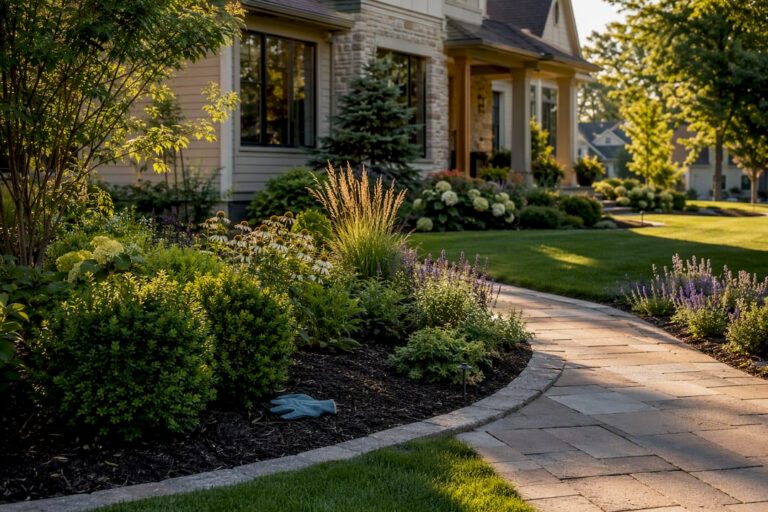
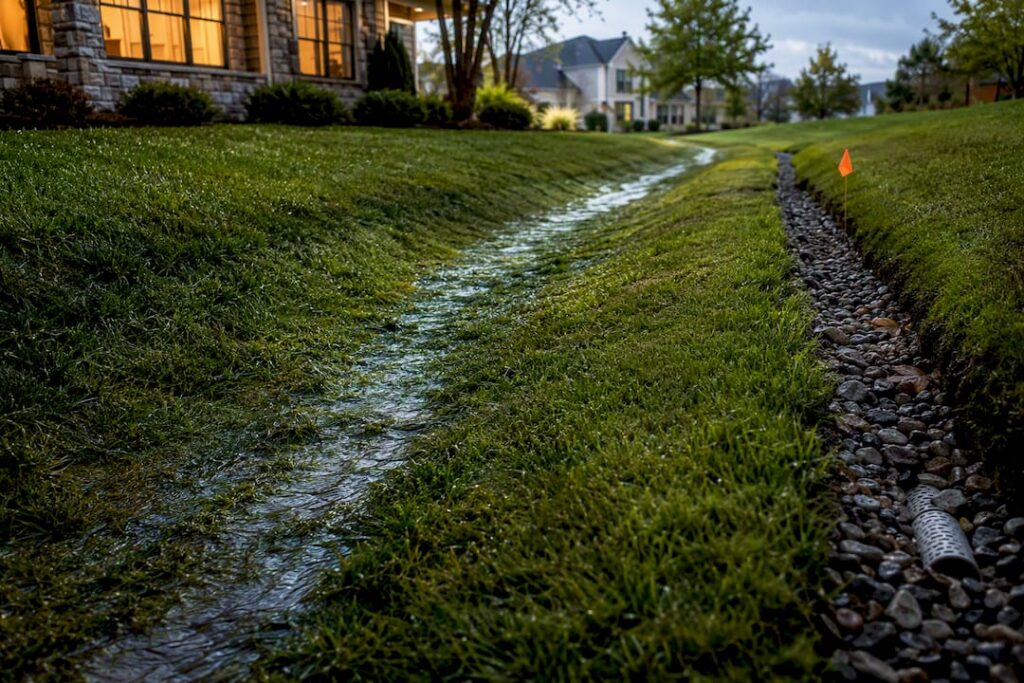
A swale is a shallow, graded channel that redirects surface water across your yard toward a safe exit point. It’s usually lined with turf grass or deep-rooted native plants, shaped like a wide, gentle bowl rather than a ditch, and it works entirely above ground. Water enters as sheet flow, meaning it moves across the surface rather than soaking downward, and the vegetation slows it down enough to filter out sediment while some of it infiltrates into the soil.
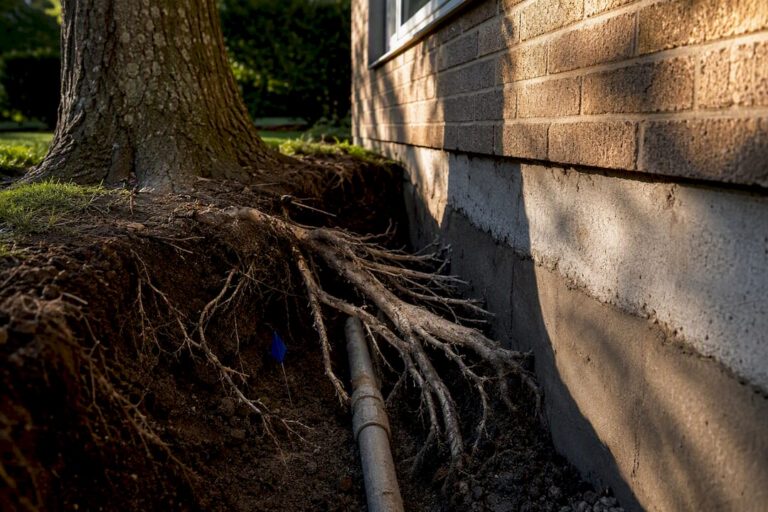
A French drain works below the surface. It’s a trench filled with gravel, wrapped in filter fabric, with a perforated pipe running along the bottom that carries water to an outlet. Groundwater and subsurface seepage enter through the perforations and gravel, then travel by gravity to wherever the pipe discharges.
The mechanics differ enough that they solve different problems:
- Swales handle sheet flow from roofs, driveways, and sloped lawns, moving water before it has a chance to pool.
- French drains intercept water already in the soil, which makes them the better tool for chronic wet spots and foundation seepage.
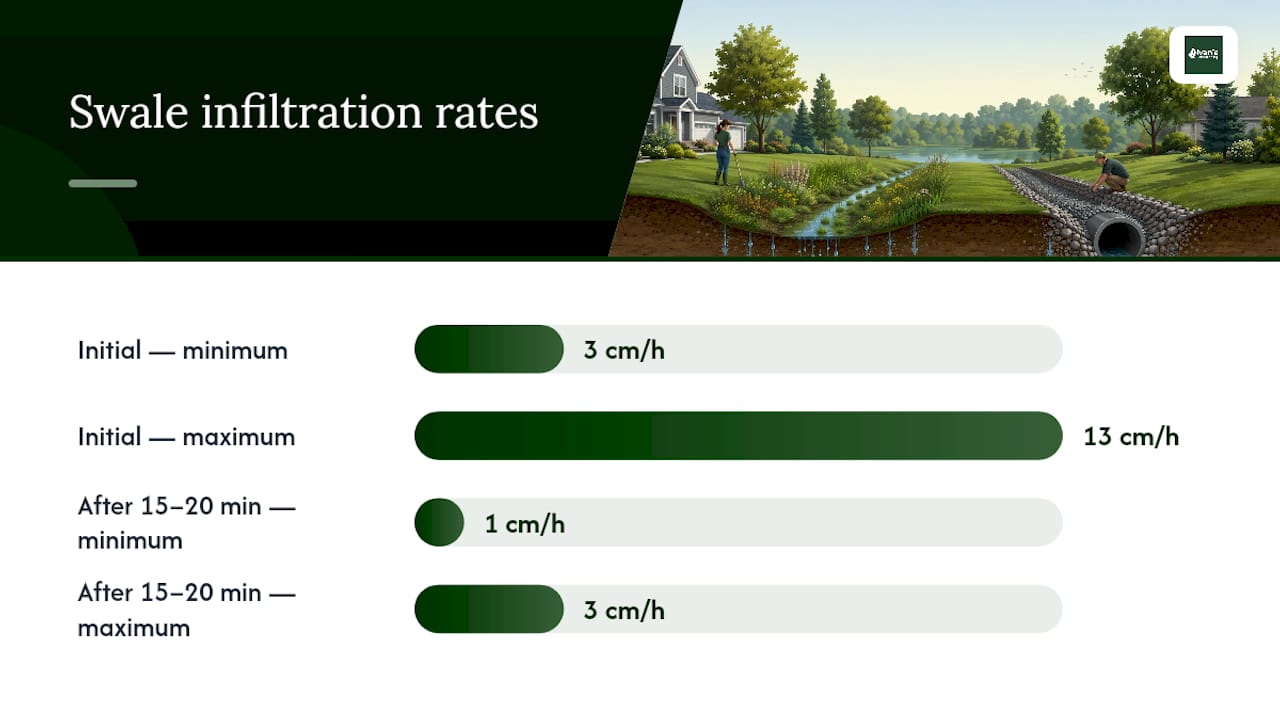
- Grassed swales have shown initial infiltration rates of 3 to 13 centimeters per hour in testing, dropping to 1 to 3 centimeters per hour after 15 to 20 minutes as the soil saturates.
- Both systems rely on gravity, so placement and slope determine whether either one will function at all.
Swale vs French Drain: The Trade-Offs That Matter
The two systems handle different kinds of water, and that single fact drives almost every other difference between them.
- Water type handled. Swales move surface runoff. French drains intercept subsurface water and groundwater.
- Visibility. A swale is a landscape feature you can see and mow. A French drain disappears underground once the trench is backfilled.
- Installation cost. Swales typically run $2,000 to $8,000, while French drains typically run $3,000 to $15,000, depending on length, depth, and outlet distance.
- Maintenance. Swales need regular mowing and periodic erosion checks. French drains need occasional flushing and inspection at cleanouts, if any were installed.
- Slope and depth constraints. A swale needs a minimum 0.5% slope to move water without stagnating, with 1 to 2% preferred to avoid erosion. A French drain needs a positive slope toward its outlet, and its trench must sit above the seasonal high water table.
- Permits. Altering drainage that affects a neighboring property or a public storm sewer connection often triggers a permit requirement in many municipalities.
Water table depth is the constraint homeowners underestimate most. In areas with a high seasonal water table, French drain trenches are often limited to about 18 to 20 inches deep. Dig deeper than that, and the trench sits in standing groundwater instead of draining it, which defeats the entire system.
The most common failure mode for French drains is a clogged pipe from silt intrusion, usually caused by skipping the filter fabric or choosing corrugated pipe over smooth-walled pipe. For swales, the most common failure is erosion from a slope that’s too steep or vegetation that never established.
When to Choose a Swale or French Drain for Your Yard
Your lawn stays wet and mushy for days after it rains, even in dry-looking areas. That’s a groundwater signal, not a runoff signal, and a French drain is almost always the right call. Digging a small test hole and filling it with water is a fast way to confirm this: slow drawdown means the soil is already saturated below the surface, which is exactly the kind of problem a swale can’t fix because there’s no surface flow to redirect.
You can watch water sheet across your lawn during a storm, especially from a downspout, a sloped driveway, or a neighbor’s yard draining onto yours. That’s a textbook swale scenario. A properly graded swale intercepts that flow and carries it to a safe discharge point before it reaches your foundation or a low spot in the yard.
- Flat lots with little natural grade often can’t support a swale at all, since there’s no slope to work with.
- HOA communities sometimes maintain shared swales along property lines, and altering them without approval can violate community rules.
- Limited yard space or a flat lot often calls for a catch basin, which collects water at a low point and pipes it away, functioning as a French drain alternative when trenching the full distance isn’t practical.
Some yards have both problems at once: visible surface runoff feeding into a chronically soggy low spot. That calls for a hybrid design, where a swale channels surface water directly into a French drain’s underdrain system, combining both mechanisms into one integrated fix. Combination systems that pair swales, catch basins, and French drains are common precisely because most real yards don’t have a single, clean drainage problem.
Pro Tip: Before you commit to either system, run the sponge test in three or four spots around the trouble area, not just one. A single soggy patch surrounded by dry soil often points to a localized grading issue, not a full-yard water table problem, which changes the entire fix.
Swale vs French Drain: Costs and Permit Considerations
Budget expectations matter as much as the engineering. Swales typically cost less because they involve grading and planting rather than trenching and piping, while French drains cost more due to excavation, materials, and labor.
- Swale installs commonly run $2,000 to $8,000.
- French drain installs commonly cost several thousand dollars, with price depending on length, depth, and outlet distance.
- Combined systems cost more upfront but often solve problems neither fix handles alone.
Permits become a factor the moment your drainage plan crosses a property line or ties into a public system. Connecting a French drain outlet to a municipal storm sewer, altering a shared community swale, or discharging water toward a neighbor’s yard can all require a permit or at least a conversation with your local building department. Where you send the water matters just as much as how you move it. Daylighting to a low, unused part of your own property is usually the simplest option. A dry well can work where daylighting isn’t possible, though it needs enough soil permeability to accept the volume. Tying into a storm sewer is the most regulated option and usually requires municipal approval.
What Installation and Maintenance Actually Involve
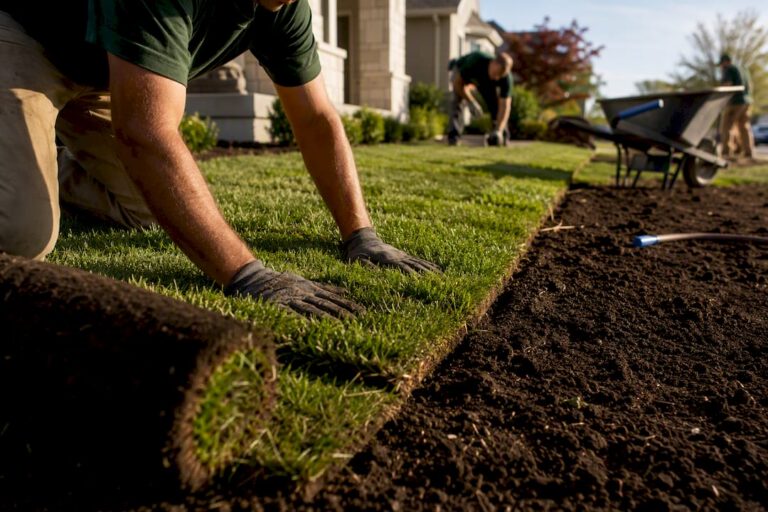
Swale installation is mostly a grading and planting job. A contractor shapes the channel to the correct slope, seeds or sods it, and the system is functional within a few days once vegetation takes root. French drain installation involves more disruption: trenching, laying pipe and gravel, wrapping it in filter fabric, and backfilling, often taking a full day or two depending on length.
- Mow swales regularly and check the channel after heavy storms for erosion or bare spots where water has scoured the vegetation.
- Inspect French drain outlets each spring to confirm water is actually exiting the pipe and not backing up.
- Flush French drains periodically if you notice slow drainage, since sediment buildup inside the pipe is the most common cause of reduced flow.
- Choose smooth-walled PVC pipe over corrugated pipe when installing or replacing a French drain. Corrugated pipe’s ridges trap silt faster, which shortens the system’s working life.
A well-built swale can last indefinitely with routine mowing, since it’s essentially a landscape feature rather than a mechanical system. A French drain typically lasts 20 to 30 years before pipe or fabric degradation calls for a replacement. If your yard already has irrigation lines running near a planned drain path, it’s worth coordinating that work with a seasonal irrigation startup check so nothing gets crossed or damaged during excavation.
Why Local Experience Still Matters for Drainage Work
Drainage problems rarely match the textbook diagrams. McHenry County’s mix of heavy clay and sandy pockets means two yards a mile apart can need opposite solutions. Chas has spent years watching homeowners try a one-size-fits-all fix, only to relocate the same puddle to a different corner of the yard. Local companies have built drainage and grading solutions across residential and commercial properties in the area since 2008, often backed by satisfaction guarantees and fast turnaround on free estimates. That local grading experience, paired with real projects across the county, is what separates a guess from a working fix.
The Real Lesson Behind Every Drainage Complaint
Most homeowners reach for a French drain first because it sounds like the more serious, permanent fix. That instinct is often backward. A surface runoff problem solved with an underground trench is money spent solving the wrong problem, and it usually shows up again the next heavy storm because the water never made it underground in the first place.

The sponge test and the sheet-flow observation matter more than any product name. Spend fifteen minutes actually watching your yard during a storm, or digging a test hole and timing the drawdown, before you spend thousands on excavation. That single diagnostic step prevents the most expensive mistake in residential drainage: installing the wrong system entirely.
The trade-off homeowners underestimate is maintenance temperament, not cost. A swale demands your ongoing attention (mowing, watching for erosion) while a French drain demands almost none until the day it clogs, and then it demands a lot. Choose based on which kind of upkeep you’ll actually keep up with, not which system sounds more advanced.
— Chas
Get a Drainage Diagnosis Before You Guess Wrong
Guessing between a swale and a French drain is how homeowners end up paying twice: once for the wrong fix, and again for the right one. Some landscaping providers offer drainage and grading solutions built around an actual site walkthrough rather than generic recommendations, so the diagnosis can match your soil, slope, and water table rather than a one-size-fits-all guess. That site-specific approach is the real advantage over trial-and-error DIY fixes: you get an answer grounded in what your yard is actually doing, not what a general guide assumes it’s doing.
A free estimate includes an on-site look at where water is pooling or sheeting, a read on your soil and slope, and a straightforward recommendation, whether that’s a swale, a French drain, or a combination of both. If your property sits in Lake in the Hills or elsewhere in McHenry County, request your free quote and get a real answer before your next storm.
Sources
For deeper design specifics, see CivilSmart’s breakdown of French drains, swales, and catch basins, the PNNL Building America Solution Center on grading and site drainage, the University of Minnesota’s review of grassed swale performance, StructureSmart’s cost comparison guide, and Angi’s consumer overview of both systems.
- French Drain vs Swale vs Catch Basin: Which Drainage Solution Is Right for You? | CivilSmart
- Performance of grassed swales as infiltration and pollution prevention practices (Weiss et al. / review)
- Swales, drains and site grading — Building America Solution Center (PNNL/BASC)
- French Drain vs Swale: Which Drainage Solution for Your Florida Property? | StructureSmart Engineering
FAQ
Is a Swale Better Than a French Drain?
Neither is universally better. Swales are better for visible surface runoff, and French drains are better for groundwater or chronic soggy spots, so the right choice depends on which type of water problem you actually have.
What Is the Most Effective Drainage System?
The most effective system is the one matched to your specific water problem. Many properties get the best results from a combined swale and French drain design that handles both surface flow and subsurface seepage.
What Are Common Problems With Swale Drains?
The most frequent issues are insufficient slope, which causes standing water instead of flow, and erosion from vegetation that never established properly along the channel.
When Should You Not Use a French Drain?
Avoid a French drain when your property has a high seasonal water table that limits trench depth to roughly 18 to 20 inches, or when your main issue is visible surface runoff rather than groundwater, since a swale addresses that more directly and at lower cost.