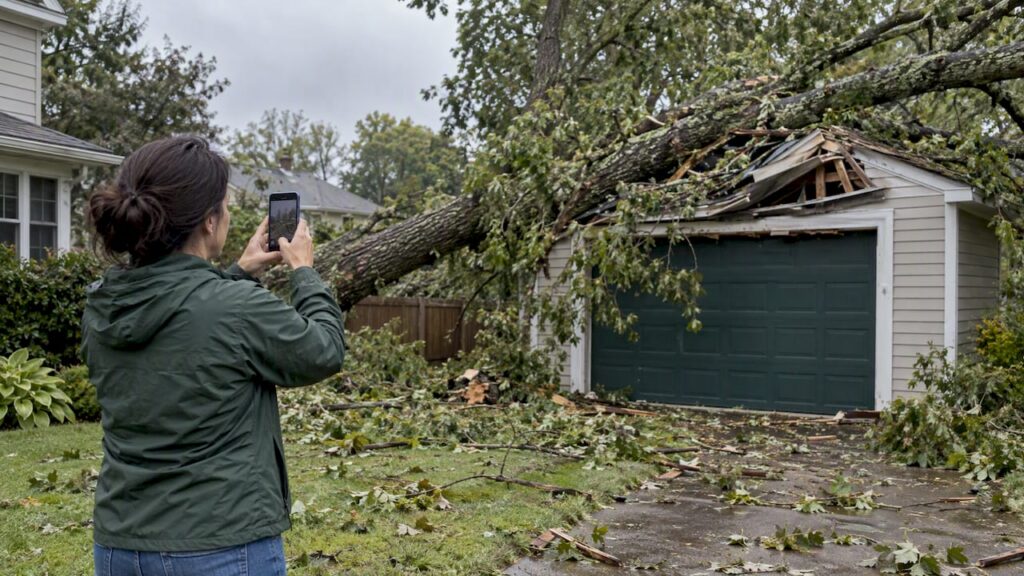
Homeowners insurance usually pays for tree removal only when a tree damages an insured structure, such as your roof or garage. If a tree falls in your yard and hits nothing, removal is generally not covered unless it blocks a driveway or ramp. Insurers often cap removal payouts at roughly $500 to $1,000, and your deductible still applies.
TL;DR:
- A fallen tree that blocks a driveway or access ramp may qualify for removal coverage even without structural damage; ordinary yard cleanup generally does not.
- Storm damage to a healthy tree is more likely covered than failure of a dead or neglected tree, which insurers may classify as gradual deterioration.
- Before cleanup, photograph the damage, get an itemized written estimate, and ask your adjuster to confirm removal, debris, and stump grinding coverage in writing.
- When a neighbor’s tree falls on your property, file with your insurer first; it may pursue the neighbor’s insurer afterward.
Table of Contents
- What does homeowners insurance cover for tree damage and removal?
- Which tree scenarios usually qualify for coverage?
- How do you document damage and file a claim?
- How do costs, limits and deductibles affect what you pay?
- What should you look for when hiring a tree pro?
- What happens when a neighbor’s tree falls on your property?
- A local contractor’s perspective on timelines and documentation
- How does Ivan’s Landscaping help with insured tree removal?
- FAQ
- Sources
What does homeowners insurance cover for tree damage and removal?
Coverage follows the cause of the loss. Standard policies treat a tree that damages your home as a covered loss when a covered peril, such as wind, lightning or hail, brought it down. The Insurance Information Institute notes that insurers don’t usually investigate who owned the tree once it hits a house. Here is how that breaks down in practice:
- Covered perils: wind, lightning or hail can trigger a claim when the tree damages a structure.
- Structural repairs: the policy pays to fix the roof, wall or garage, minus your deductible.
- Limited removal: the insurer typically pays to remove the tree that did the damage, within a cap.
- Contents: Check your policy to see whether it covers belongings damaged inside the home.
- Vegetation only: trees, shrubs and lawn damaged on their own are commonly excluded, with narrow exceptions for blocked access.
Some policies also set a separate vegetation limit, often cited at up to 5% of dwelling coverage, for losses like fire or theft.
If a tree hits an insured structure, standard homeowners policies generally cover the damage and tree removal up to about $500 to $1,000, depending on the insurer and policy. Your declarations page shows the exact figure for your policy.
Which tree scenarios usually qualify for coverage?
Mapping your situation to a few common cases saves time before you call your insurer.
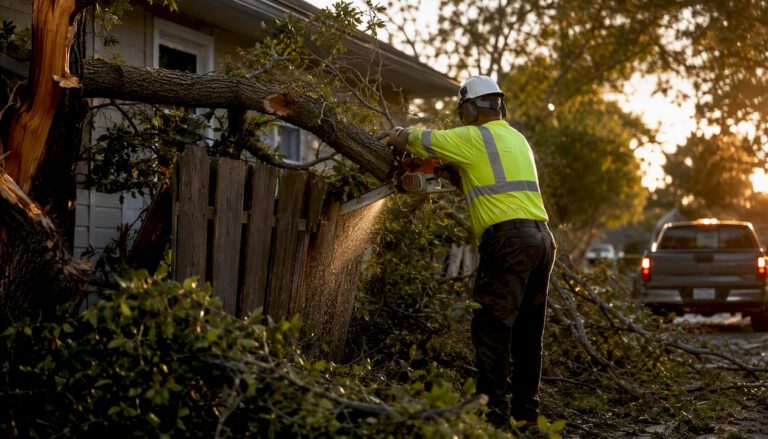
- Tree through the roof or onto the garage. This is the classic-covered claim. Your insurer pays for repairs and, within its cap, removal of the tree.
- Tree down in the yard, no structural damage. This is usually not covered. The exception is a tree blocking a driveway or handicap ramp, where removal may qualify because it cuts off access to your home.
- A neighbor’s tree falls on your property. File with your own insurer first. They may later pursue the neighbor’s insurer to recover costs.
- Decay versus sudden damage. A storm that snaps a healthy tree is far more likely to be covered than a dead tree that finally gave way after years of neglect. Insurers tend to exclude gradual deterioration.
That last point is why preventive work matters. Insurance Information Institute experts advise pruning branches and removing dead or dying trees before they become hazards. Our homeowner check for a tree too close to your house helps you spot trouble early.
How do you document damage and file a claim?
Work through this checklist in order. It protects your safety and your coverage.
- Stay safe first. Keep away from trees under tension or touching power lines. If lines are involved, stay well away and contact the utility company immediately.
- Document everything before moving anything. FEMA recommends taking photos or video of the damage, including trees leaning on a house or blocking a road.
- Call your insurer promptly. Have your policy number ready and ask directly about your tree removal limit and what paperwork they need.
- Get written estimates. Use licensed tree services or ISA certified arborists. Keep every receipt and take before and after photos.
- Confirm what is covered. Once work is authorized, ask whether structure repair, debris removal and stump grinding are each included, and keep every invoice.
Pro Tip: Ask your adjuster to confirm the removal cap in writing before work starts, so the final invoice never surprises you.
If a hazard is urgent, our emergency tree removal guide explains what to do right now.
How do costs, limits and deductibles affect what you pay?
The money side decides whether a claim is worth filing.
- Removal caps: the cap is the most your insurer will pay to remove a fallen tree that damaged a structure, and it often sits around $500 to $1,000.
- Vegetation limits: replacement of trees and shrubs may be limited to a percentage of dwelling coverage. Check your declarations page.
- Deductible: if the total repair cost falls below your deductible, the insurer writes no check. On larger claims, the deductible is subtracted from the payout.
- Costs above the cap: you pay the difference. Detailed invoices and photos give you the strongest footing to ask for a fair review.
Typical homeowners policies cap tree removal after structural damage at about $500 to $1,000, so a large removal may leave you covering part of the bill.
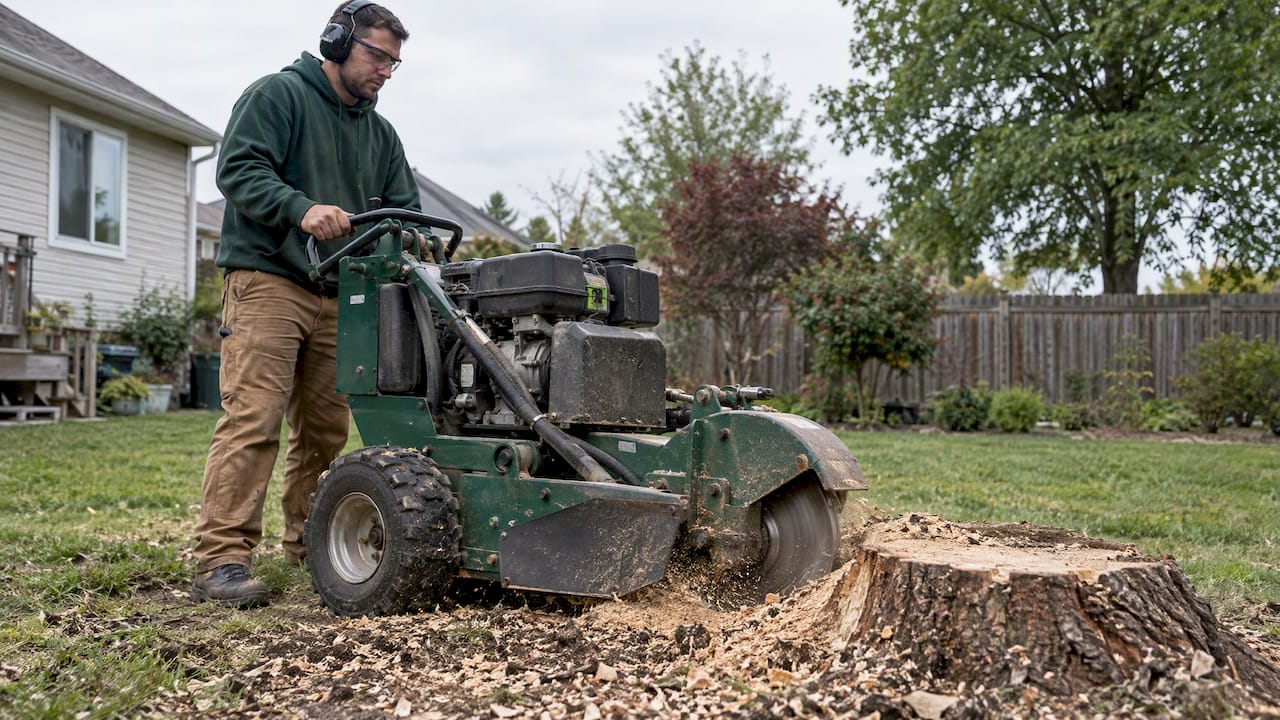
To compare these caps against real prices, see what tree removal costs. Add stump work and the total can climb, so read our note on grind depth before stump grinding or removal.
What should you look for when hiring a tree pro?
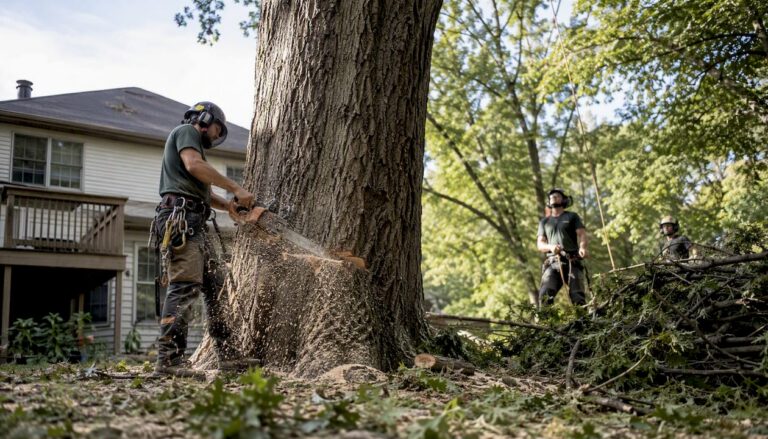
The right contractor lowers your risk and supplies the paperwork your insurer expects. Illinois forestry guidance warns homeowners not to attempt dangerous cleanup and recommends ISA Certified Arborists to assess and remove storm-damaged trees. The Illinois Department of Natural Resources also stresses that trees under tension or near electrical lines call for professional handling.
- Proof of coverage: ask for liability insurance and workers’ compensation documents.
- Itemized estimate: insist on line items for labor, equipment and haul-away.
- Written scope: confirm disposal and stump grinding are included or excluded, because insurers sometimes limit payments to debris only.
- Paper trail: keep every estimate, invoice and before and after photo for your claim file.
Pro Tip: Ask for a one-page scope of work that names the tree, the hazard and what the price includes. Clear documents can help explain the work to your adjuster.
What happens when a neighbor’s tree falls on your property?
Even when the tree grew on your neighbor’s land, start with your own insurer. Your insurer may subrogate against the neighbor’s insurance company, meaning it seeks repayment of what it paid.
- File first: do not wait for your neighbor to respond before opening a claim.
- Preserve evidence: photograph the tree’s condition and keep any record of prior warnings you gave your neighbor. This can support a negligence argument.
- Possible reimbursement: if your insurer recovers money, it may reimburse your deductible and other costs it initially covered.
A local contractor’s perspective on timelines and documentation
Missing paperwork can complicate a claim. Photograph the damage before any crew touches it, then hand your insurer an itemized estimate. Dangerous removals take longer and cost more, and a licensed crew with a clear written scope keeps adjusters comfortable. We provide a clear scope and leave the site clean.
— Chas
How does Ivan’s Landscaping help with insured tree removal?
When a tree comes down, you need safe removal and paperwork your insurer will accept. We provide tree removal in McHenry County, with fast free estimates, so you can focus on repairs.
- Written scopes of work that list exactly what is included
- Proof of insurance on request
- Before and after photos to support your claim file
- Full clean-up so your property is left tidy
Call us for a free estimate and we will walk the site with your claim in mind.
FAQ
Does homeowners insurance cover tree removal?
Usually only when the tree damages an insured structure or blocks access, such as a driveway or handicap ramp. Removal is typically capped at about $500 to $1,000, depending on your insurer and policy.
Will insurance pay if a tree falls but hits nothing?
Generally no. A tree that lands in your yard without damaging a structure is treated as a maintenance cost. The exception is a tree blocking a driveway or ramp.
Who pays when a neighbor’s tree falls on my house?
File with your own insurer first. They may later recover costs from your neighbor’s insurer through subrogation, which can include your deductible.
Does my deductible affect a tree removal claim?
Yes. If your repair and removal costs fall below your deductible, the insurer pays nothing. On larger claims, the deductible is subtracted from the payout.