If your yard stays wet for days after it rains, start with the three fixes that solve most problems: regrade the soil so it slopes away from your house, extend or redirect your downspouts, and add a simple French drain or rain garden depending on your soil type. Run a quick slope check and a percolation test first. Call a professional if water is reaching your basement, the soggy spot never dries out, or you suspect a broken utility line.
TL;DR:
- Proper yard grading requires at least a 0.5 inch per foot slope extending 10 feet from the foundation to effectively direct water away.
- Simple fixes like extending downspouts and filling small low spots can solve most drainage issues at minimal cost and effort.
- For persistent or larger problems, underground solutions such as French drains, dry wells, or rain gardens depend on soil drainage capacity and proper testing.
- Avoid costly mistakes by testing soil percolation, confirming slopes with measurements, and avoiding digging in wet soil or neglecting utility lines.
- Professional help is advisable for cases involving basement water, high groundwater, or large regrading projects to ensure safe and effective results.
Table of Contents
- Match your symptom to the right fix
- Check your slope before you dig anything
- Surface fixes: downspouts, swales, and channel drains
- French drains, dry wells, and infiltration trenches
- Rain gardens: testing, sizing, and planting
- Cheapest DIY fixes and what they actually cost
- When to call a pro and what to ask
- What years of fixing yards have taught me
- How Ivan’s Landscaping handles drainage and grading
- FAQ
- Sources
- Useful technical resources
Match your symptom to the right fix
Most yard drainage problems fall into a few patterns, and each one points to a different repair. Figuring out which category you are dealing with saves you from digging a French drain when a simple regrade would have worked.
- Puddles that sit for days in a low spot: regrade or fill the depression; easy DIY, low cost.
- Soggy lawn right next to the foundation: check and correct the slope; easy to moderate DIY.
- Water sheeting down the driveway: channel drain or catch basin at the low point; moderate DIY, often needs a mason’s help for concrete work.
- Standing water under or near a patio: French drain or dry well tied into a discharge point; moderate to advanced.
- Whole-yard mushiness after every rain: swale plus a rain garden sized for your clay or compacted soil; moderate DIY with testing required.
Check your slope before you dig anything
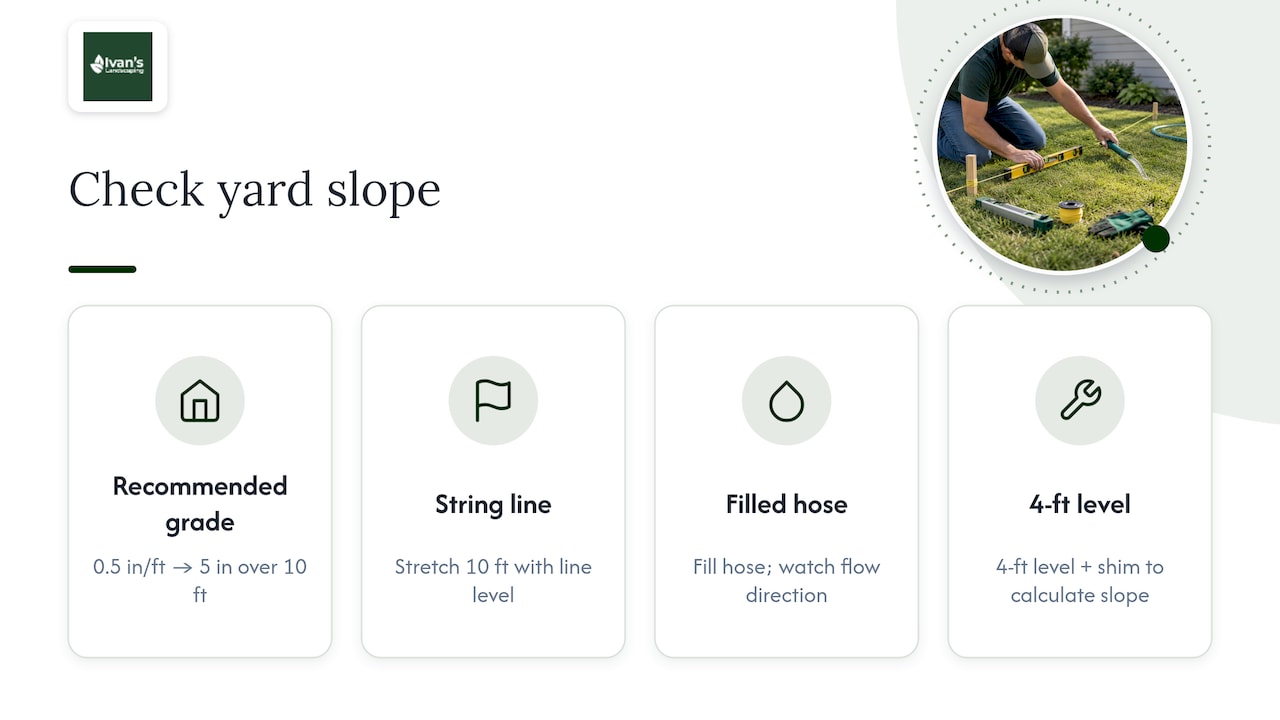
Before buying a single bag of gravel, confirm your grading is the problem, because it often is. The widely cited standard calls for the ground to drop at least 0.5 inch per foot for the first 10 feet away from the foundation, which moves water away from the house instead of letting it pool against the wall.
You can measure this two ways. A string line with a line level stretched from the foundation out 10 feet will show you the drop directly. A simpler trick: lay a hose along the ground, fill it with water, and watch which way it flows, or use a 4-foot level with a shim to calculate the slope in sections. For a quick example, if your yard sits level for 10 feet, you need about 5 inches of total drop over that span to meet the recommended grade.
For minor dips, filling low spots with topsoil, tamping it down in layers, and reseeding usually does the job over a weekend. When the slope runs the wrong way across a large area, or you are dealing with more than a few inches of correction, you are into real regrading territory that often calls for a skid steer or box blade rather than a shovel. Watch where the extra water goes: redirecting it onto a neighbor’s property or across a sidewalk creates a new problem instead of solving yours, and some municipalities restrict how close you can grade to a property line.
Surface fixes: downspouts, swales, and channel drains
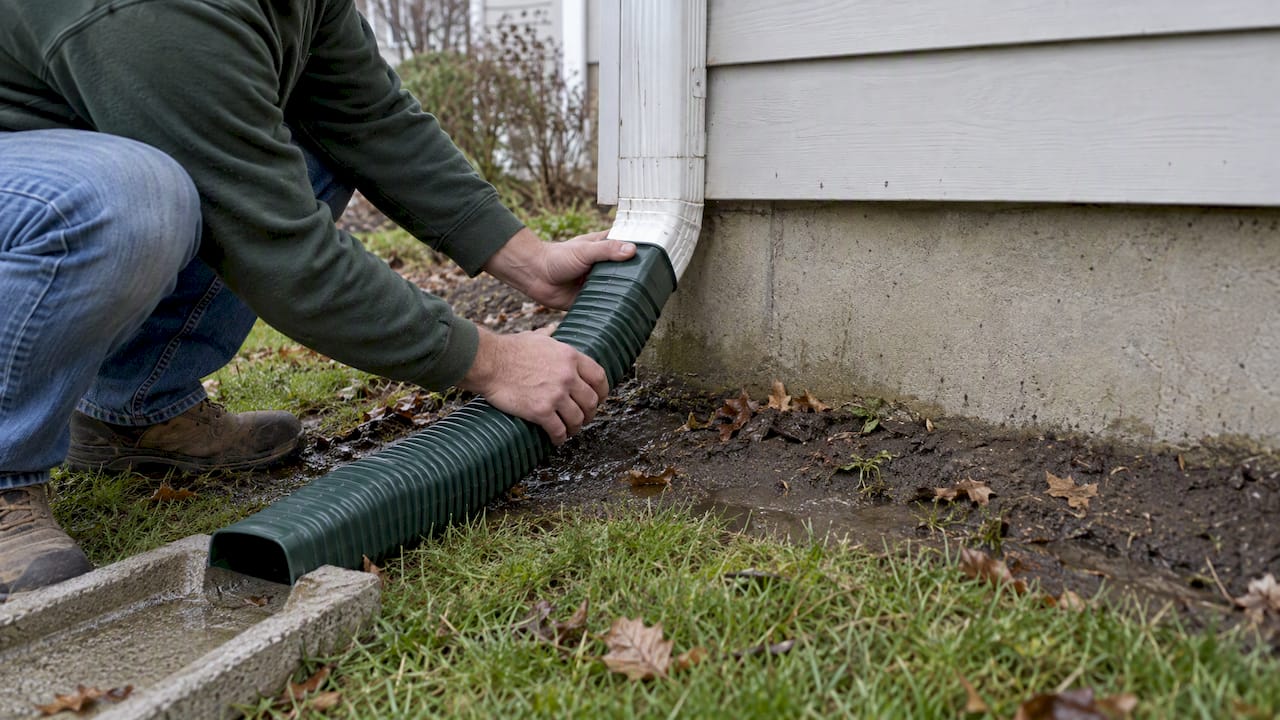
A surprising share of “drainage problems” are really downspout problems. Extending downspouts so they discharge at least several feet from the foundation, adding splash blocks, or routing water into a rain barrel or small cistern can resolve pooling without any digging at all. According to Fairfax County’s soil and water conservation guidance, simple fixes like downspout extensions and filling small depressions solve a large share of homeowner complaints before anyone needs to break ground.
When water crosses a wider area, a swale, a shallow, grass or rock-lined channel, moves it along a gentle path instead of a straight gutter. Aim for a longitudinal slope of roughly 2% to 4% and a wide, shallow cross section rather than a narrow ditch, then plant it with moisture-tolerant grasses or groundcover to hold the soil in place.
For driveways and patios, a channel drain or a catch basin set at the low point catches sheet flow before it spreads across the yard, though both need periodic cleaning to keep leaves and grit from clogging the grate.
- Downspout extension or rain barrel: cheapest fix, no digging required.
- Swale: moderate effort, works well for broad, shallow flooding.
- Channel drain or catch basin: best for driveways and patios, needs occasional cleanout.
Pro Tip: Clear gutters and catch basin grates every fall. A clogged inlet turns a working drainage system into a new puddle overnight.
French drains, dry wells, and infiltration trenches
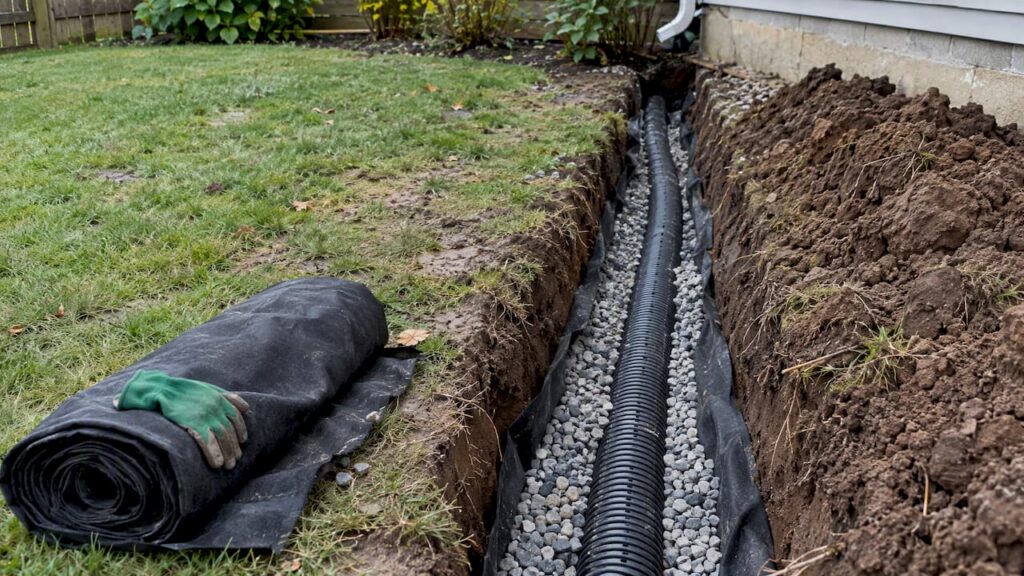
When surface fixes are not enough, the next step usually involves moving water underground. A French drain is a gravel-filled trench with a perforated pipe at the bottom, wrapped in filter fabric to keep soil from clogging it over time. Construction basics from the Building America Solution Center recommend sizing the trench to carry the expected flow, sloping the pipe toward a safe outlet, and laying the perforations facing down so water enters from below rather than silting up the holes.
Dry wells and infiltration trenches work on a similar principle but rely on your soil actually accepting water, so they only make sense where percolation is decent. Smooth PVC pipe tends to clog less than corrugated pipe over the years, and wrapping the gravel bed in fabric keeps fine soil particles from migrating in and reducing capacity.
Before installing a dry well, check your local rules. EPA guidance on stormwater drainage wells notes that residential roof-drain dry wells are often authorized by rule but may still require local reporting, while wells that collect driveway or parking runoff can face stricter oversight because of pollutant concerns. It is worth a call to your local building department before you dig, and always contact 811 first so you are not cutting into a buried utility line.
Rain gardens: testing, sizing, and planting
A rain garden is a shallow, planted depression that collects runoff and lets it soak into the ground instead of running off. Before you build one, confirm your soil can actually handle it.
- Dig a test hole about a foot deep and fill it with water.
- Let it drain once, then refill and time how long the second fill takes to disappear.
- If the water is gone within 24 to 48 hours, the site is generally suitable for a rain garden.
- If it takes longer, plan to amend the soil or add an underdrain before planting.
For sizing, a common rule of thumb targets the garden footprint at 10% to 20% of the contributing impervious area, so a 500-square-foot roof section feeding one downspout would call for a rain garden somewhere between 50 and 100 square feet, depending on your ponding depth and how fast the soil drains. Many extension guides recommend blending sand and compost into clay-heavy soil to speed infiltration, and choosing an underdrain when the natural soil still drains too slowly on its own. Keep the garden at least 10 feet from your foundation, mulch it to control weeds, and choose plants that tolerate both standing water and dry spells between storms.
Cheapest DIY fixes and what they actually cost
If budget is the main constraint, start with the fixes that need no excavation. Downspout extensions, splash blocks, and filling shallow low spots with topsoil cost little beyond materials and a weekend of labor. A basic rain barrel setup runs around $100, and a simple dry well for roof runoff can come in around $500 in materials for a homeowner willing to dig it themselves.
A small French drain or a modest rain garden sits in the mid-range once you factor in gravel, pipe, fabric, soil amendments, and plants, typically more than the simplest fixes but still well within DIY reach for a single weekend project with a helper.
Cheap fixes are fine for isolated puddles and minor downspout issues. They become a long-term risk when you skip the percolation test and bury a drain or dry well in soil that simply will not absorb the water, because you end up rebuilding the same project later at a higher cost.
When to call a pro and what to ask
Some situations are worth handing to a contractor from the start: water reaching a basement or crawl space, a soggy area that never fully dries, high groundwater, or a regrading job that needs more than a shovel and a few bags of topsoil.
When you do call around for quotes, ask each contractor about insurance coverage, references from similar jobs, whether permits apply in your area, and how they confirm utility locations through 811 before digging. A clear written scope and a warranty on the work are reasonable things to expect.
Our team at Ivan’s Landscaping handles drainage and grading work across McHenry County, backing projects with a satisfaction guarantee and fast estimate turnaround for homeowners who would rather not tackle a regrade or subsurface install themselves.
What years of fixing yards have taught me
The mistakes I see most often are self-inflicted: digging in wet soil, which compacts the trench bottom and defeats the whole point of a French drain, skipping the 811 call before breaking ground, and guessing at slope instead of measuring it. Start with the least invasive fix that could plausibly work, test your soil honestly, and only move underground when the surface options are exhausted. We have documented plenty of this kind of work on our project gallery and in our blog, if you want to see how a yard actually comes together.
— Chas
How Ivan’s Landscaping handles drainage and grading
We offer drainage and grading solutions as part of our regular service lineup, backed by a satisfaction guarantee and quick response times on free estimates. When a project involves complex regrading, basement water, or a larger subsurface system like a dry well network, that is exactly the kind of job worth handing to a crew rather than tackling with a weekend and a rented trencher.
We also build customized annual maintenance plans for homeowners who want their property looked after beyond a single fix. If your yard needs more than a DIY afternoon can solve, request a free estimate on our drainage and grading services page and we will take it from there.
FAQ
How do I fix bad drainage in my yard?
Start by checking your grading. The ground should slope away from your house at roughly 0.5 inch per foot for the first 10 feet. If regrading and downspout extensions do not solve it, move to a French drain, dry well, or rain garden depending on how well your soil drains.
What is the best drainage system for a backyard?
There is no single best system since it depends on your soil and the pattern of water you are seeing. A French drain works well for channeling concentrated flow underground, while a rain garden suits sites that pass a percolation test, draining within 24 to 48 hours.
What is the cheapest drainage method?
Downspout extensions, splash blocks, and filling small low spots with topsoil cost the least and solve a large share of common complaints. A basic rain barrel adds roughly $100 in materials and gives you a simple way to capture roof runoff before it ever reaches the lawn.
Why is my yard always wet?
Persistent wet spots usually trace back to improper grading or soil that does not infiltrate well, often clay-rich or compacted ground, according to Fairfax County’s drainage guidance. A percolation test will tell you quickly whether the issue is slope, soil, or both.
Do I need a permit for a French drain or dry well?
It depends on your location and what the system collects. EPA guidance on stormwater drainage wells notes that residential roof-drain dry wells are often authorized by rule but may still require local reporting, so it is worth checking with your building department before you dig.
Sources
- Final Grade Slopes Away from Foundation | Building America Solution Center
- How to Make a Rain Garden | Penn State Extension
- Stormwater drainage wells | U.S. EPA
- Wet yard – Solving drainage problems | Fairfax County Soil & Water Conservation
Useful technical resources
These are the technical references behind the grading, percolation, and sizing guidance above, useful if you want to check the details for your own property before you start digging.