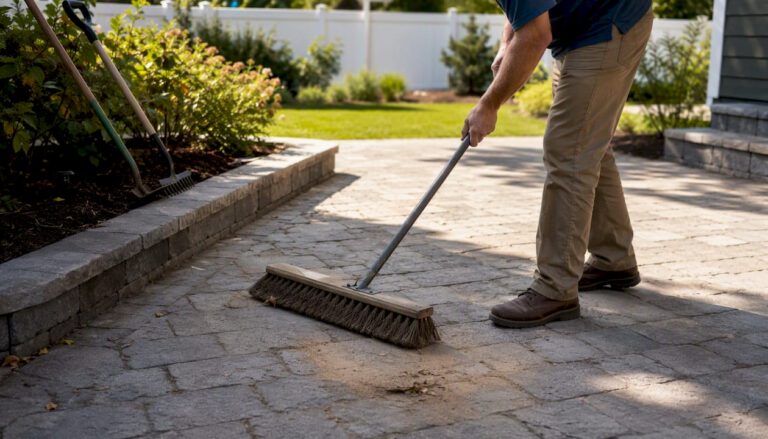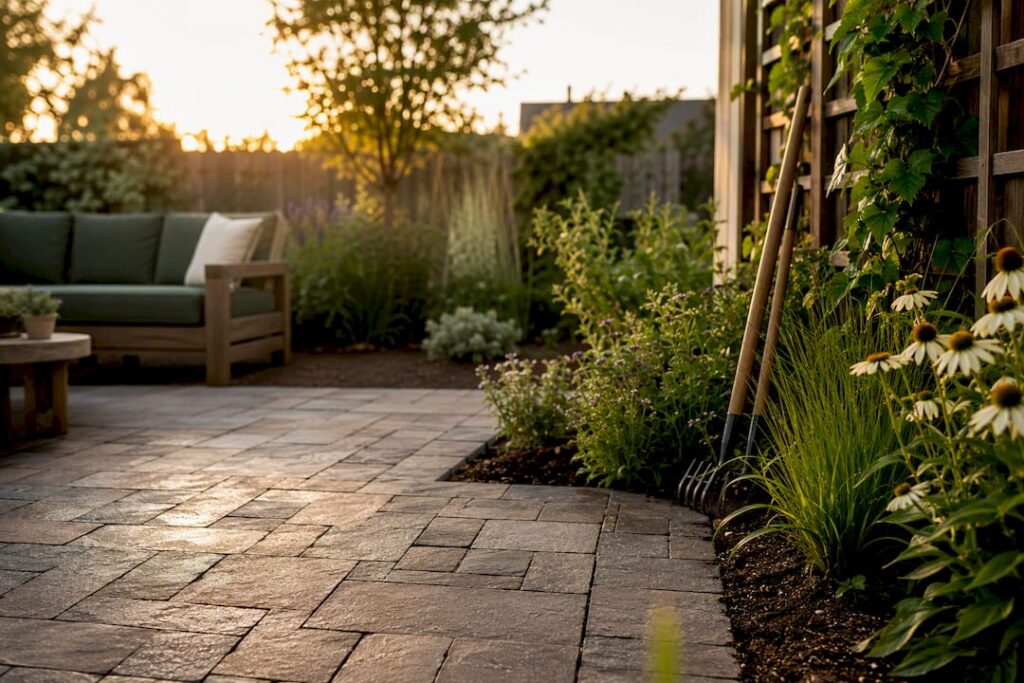
Pick one anchor use, frame the edges with layered planting, and add one focal moment, then build the hardscape first. That’s the 3-Zone Layout Rule: the anchor (a patio or dining area) takes up about half of your usable space, a green frame of planting covers roughly one third, and a single focal moment occupies the remaining portion.
Here’s how to start this weekend:
- Measure your yard and mark the anchor zone first with stakes or spray paint
- Build a simple hardscape base, even just pea gravel or a 10 by 10 patio
- Pick one quick-win feature: a vertical herb wall, a string of bistro lights, or a single fire bowl
Everything else in this article expands on that sequence.
Key Takeaways
A functional small yard comes from sequencing hardscape before plants, sizing zones by the 3-Zone Rule, and limiting materials and focal points to avoid visual clutter.

| Point | Details |
|---|---|
| Follow the 3-Zone Rule | Size the anchor at 50%, the planting frame at 30%, and one focal moment at 20% of your yard. |
| Build hardscape before planting | A firm surface like gravel or pavers gives the layout structure and improves perceived space. |
| Repeat plants in small groups | Cluster two to four species instead of mixing many, and layer by mature height for depth. |
| Cap your material palette | Limit finishes to two or three plus one accent color to keep a compact space cohesive. |
| Hire for grading and custom pavers | Ivan’s Landscaping handles drainage-sensitive hardscape and custom paver patio builds with a satisfaction guarantee. |
Table of Contents
- Apply the 3-Zone Layout to Your Small Yard Landscape Design
- Hardscape First: Pick Surfaces That Save Space and Maintenance
- Planting: Layers, Repetition, and Choosing by Mature Size
- Vertical Gardening and Privacy Screening for Tight Spaces
- Pick One Focal Moment and Light the Yard for Nighttime Use
- Budget-Friendly Rules and the Restrained Material Palette
- Maintenance and Scale: Keep a Small Yard Tidy and Durable
- Three Copyable Sample Layouts for Small Backyards
- Incorporating Native Plants for Sustainability and Ease of Care
- Soil Preparation and Improvement for Small Spaces
- Water Management Techniques Including Irrigation Methods
- Seasonal Planting and Year-Round Interest Planning
- Maximizing Functionality With Multi-Use Furniture or Structures
- Why I Recommend Professional Help for Certain Small-Yard Projects
- How Ivan’s Landscaping Helps You Build a Small Yard That Works
- Sources
Apply the 3-Zone Layout to Your Small Yard Landscape Design
The anchor is where you’ll actually spend time, a seating area, a dining nook, a hammock spot, so it gets the biggest cut of square footage. The frame is your planting border, the layered greenery that wraps the perimeter and gives the anchor a sense of enclosure. The moment is one deliberate feature, a fire bowl, a water basin, a specimen tree, that draws the eye and stops the space from feeling scattered.
Grab a tape measure and your phone. Walk the perimeter, jot down rough dimensions, and snap photos from your back door and from each corner. You don’t need CAD software for this.
- Sketch your yard’s outline on graph paper, one square per foot
- Block in the anchor zone first, since everything else adapts around it
- Draw the frame as a consistent border width, not a patchwork of shapes
- Mark one spot for the moment and leave it empty until the rest is built
Sightlines matter more than square footage. Stand at your back door and check what your eye hits first. If it’s a trash can or a utility box, that view needs screening before anything else gets planted.
Pro Tip: If your yard is under 400 square feet, skip a second sitting area entirely. One well-built zone beats two cramped ones.
Hardscape First: Pick Surfaces That Save Space and Maintenance
Hardscape is the skeleton of your small backyard landscaping plan. Get the bones right and the plants have something to grow around. Skip this step and you’ll spend years fighting mud, uneven footing, and furniture that wobbles on grass.
A firm surface also tricks the eye into reading a yard as bigger, because clean edges and consistent material read as intentional rather than leftover space.
Budget by tier:
- Budget: Compacted gravel or a pea-gravel patio, buildable in a weekend for roughly $60 to $150 in materials
- Midrange: Poured or interlocking concrete pavers, a step up in durability and a cleaner look
- Splurge: A custom paver patio with a defined border and integrated seating walls
Whatever surface you choose, place the anchor so it connects directly to a door or window, and leave at least three feet of clearance around any furniture so chairs can slide back without hitting the frame.
Planting: Layers, Repetition, and Choosing by Mature Size
Small-yard planting fails for one reason more than any other: too many species, none of them given room to grow into what they actually are. A back layer of tall shrubs or a small ornamental tree, a middle layer of mid-height perennials, and a front layer of low groundcover or edging plants gives depth without needing more square footage.

Repetition does the heavy lifting here. Repeating two to four plant species in clusters reads as calm and intentional, while one of everything reads as cluttered no matter how healthy each plant is.
Reliable low-maintenance picks for the layers:
- Back layer: dwarf arborvitae, serviceberry, or a compact hydrangea
- Middle layer: catmint, coneflower, or ornamental grasses
- Front layer: creeping thyme, sedum, or dwarf mondo grass
Always check mature size on the plant tag, not the size it is in the pot. A shrub labeled “compact” can still hit six feet wide. Include at least one evergreen in the back layer so the frame holds its shape through winter, when everything else has died back.
Vertical Gardening and Privacy Screening for Tight Spaces
When ground space runs out, go up. A trellis bolted to a fence or a wall-mounted planter grid can carry vining plants like clematis or climbing hydrangea, and pulling the eye upward makes a small footprint feel larger than it measures on paper.
For privacy, layered screening usually beats a solid fence. A staggered row of tall, narrow shrubs, like columnar arborvitae or upright yew, blocks sightlines without the flat, boxed-in feel a six-foot privacy fence creates.
- Mount wall planters at two heights to avoid a flat, single-row look
- Use bamboo or clumping ornamental grass for fast, narrow screening
- Reserve solid fencing for property-line requirements only, not general privacy
Pro Tip: Plant vines on the side of the trellis that gets morning sun. Afternoon heat on a south-facing wall can scorch new growth before roots establish.
Pick One Focal Moment and Light the Yard for Nighttime Use
Choosing more than one focal feature is the fastest way to make a small yard feel busy. Pick one: a water bowl, a specimen pot with a striking plant, or a fire bowl, and let everything else in the frame support it instead of competing with it.
Lighting turns that daytime feature into a nighttime destination. A three-height approach works well in compact spaces: path lights low along the frame, string lights at head height over the anchor, and an uplight on the moment itself.
Safety checklist before you install anything with flame or standing water:
- Set fire bowls on a non-combustible base and surround them with stone or gravel, never bare mulch or grass
- Keep at least three feet of clearance between a fire feature and any structure or overhanging branch
- Use a GFCI outlet for any water feature pump
A fire feature also does double duty as your seating anchor. Chairs naturally gather around it, which solves your furniture layout for you.
Budget-Friendly Rules and the Restrained Material Palette
You don’t need a big budget to make a small yard look finished. You need discipline about what you buy. Container gardens, a pea-gravel path, and reclaimed pavers from a demolition or salvage yard can cover most of a starter plan for a fraction of new-material cost.
The rule that keeps a tight budget from looking cheap: cap your material palette at two or three finishes total, plus one bold accent color. Too many paver colors, furniture finishes, or planting textures is what makes a compact space read as smaller and messier, not the size of the yard itself.
- Low cost: mixed containers, pea gravel, mulch refresh
- Medium cost: reused or reclaimed pavers, a simple trellis
- Worth the investment: a custom paver patio or built-in bench, since these get used daily for years
Maintenance and Scale: Keep a Small Yard Tidy and Durable
A weed in a quarter-acre yard disappears. The same weed in a 300-square-foot yard is the first thing anyone notices. Small landscapes show neglect faster than large ones, which means routine edging, deadheading, and mulch touch-ups matter more here, not less.
Build a light seasonal rhythm instead of letting tasks pile up:
- Spring: edge beds, refresh mulch, prune winter damage
- Summer: deadhead, water deeply but less often, check for pests early
- Fall: cut back perennials, clear leaves before they mat down groundcover
- Winter: wrap or mulch tender shrubs, drain any water features
Durable surfaces like pavers or gravel cut down on the mowing and edging that grass demands in tight corners. Pairing that with low-maintenance plant choices from your layered beds keeps upkeep to an hour or two a week instead of a weekend.
Three Copyable Sample Layouts for Small Backyards
Vague inspiration doesn’t build anything. These three templates give you real dimensions to work from.
- 10 by 10 lounge: A paver or gravel square anchor, two chairs and a side table, a frame of dwarf grasses and one small tree, string lights overhead
- 6 by 20 dining lane: A narrow paver or stepping-stone path down the center, a two-seat bistro table at one end, path lighting along both edges, columnar shrubs for privacy on one side
- Corner edible bed: Two raised beds at 4 by 8 feet each, positioned in an L-shape with a 3-foot gap for a wheelbarrow, herbs in the front layer for easy cutting
Each of these starts with a clear central use before adding plants, which is exactly the sequence that keeps small-yard projects from sprawling into a dozen half-finished ideas.
Incorporating Native Plants for Sustainability and Ease of Care
Native plants solve two small-yard problems at once: they demand less water and fertilizer once established, and they fill in reliably without the constant babying that showy imports require. A little bluestem or purple coneflower planted in the Midwest, for example, has already adapted to the local rainfall and soil, so it skips the transplant shock and repeated feeding schedule that non-natives often need.
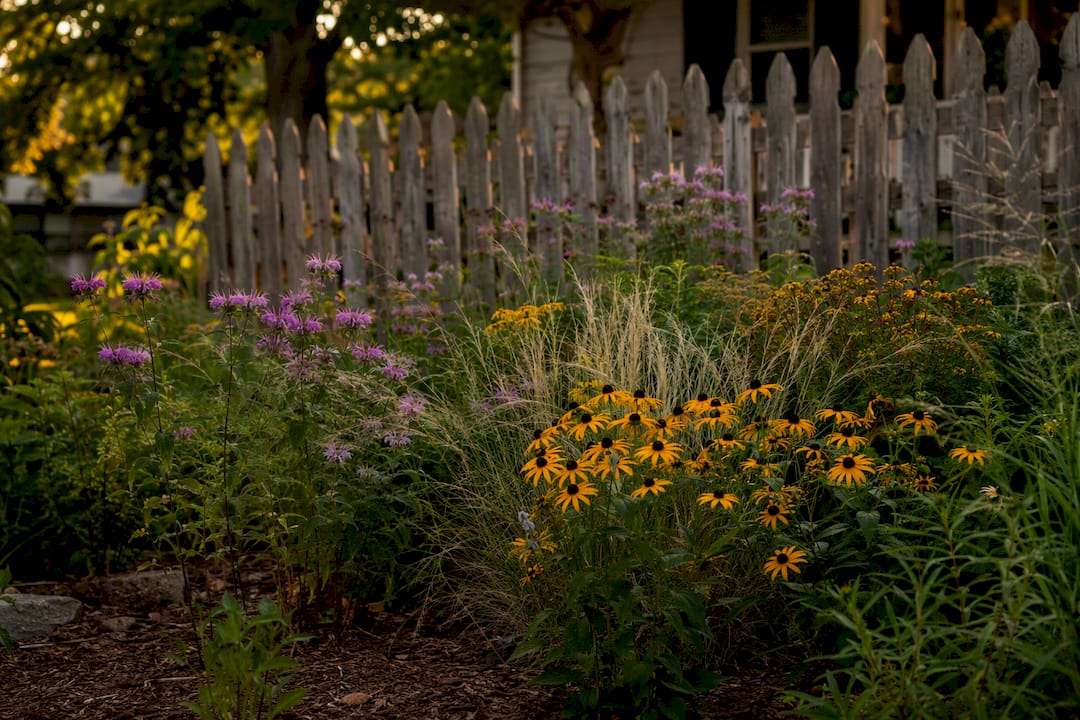
For McHenry County yards specifically, natives like wild bergamot, black-eyed Susan, and prairie dropseed work well in the middle and front planting layers. They also tend to bloom on a staggered schedule, which helps you hit the seasonal-interest goal without hunting for exotic specimens.
Native plants support local pollinators too, and a yard buzzing with bees and butterflies reads as alive in a way that a static bed of annuals never quite manages. Because these species evolved with local pests and diseases, they generally need less spraying, which matters if you want a low-chemical yard that’s safe for kids or pets to use daily.
The tradeoff is patience. Many natives put energy into root systems before top growth in year one, so a native-heavy bed can look sparse the first season and fill in by the second or third. Mixing a few fast-establishing natives with your structural evergreens bridges that gap while the slower growers catch up.
Soil Preparation and Improvement for Small Spaces
Small yards often inherit the worst soil on the property, compacted fill from construction, or a thin layer of topsoil dumped over clay. Before you plant anything, dig a test hole about a foot deep and check drainage: fill it with water and time how long it takes to empty. Longer than four hours signals compacted or clay-heavy soil that needs amending.
Working two to three inches of compost into planting beds before installation improves both drainage and nutrient content, and it’s cheap compared to replacing plants that die from waterlogged roots. In raised beds, a blended mix of topsoil, compost, and coarse sand gives roots the structure they need without the compaction risk of native clay.
Because small yards have so little square footage to work with, every planting bed needs to perform. Skipping soil prep to save a weekend often costs more later in replaced plants and stunted growth. Mulch every bed after amending, both to hold moisture and to suppress the weeds that are more visible in a compact space than in a sprawling one.
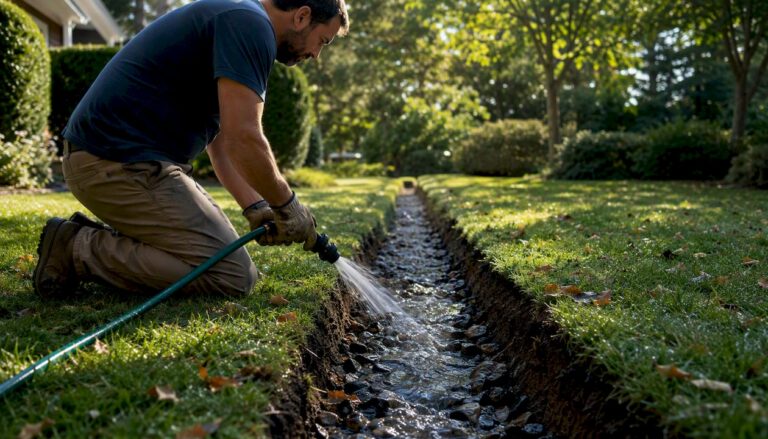
If your yard slopes toward the house or pools water after rain, address grading before you finalize bed locations. A professional check on slope and runoff before laying pavers or building beds can prevent drainage problems that undermine plant health or shift hardscape over time.
Water Management Techniques Including Irrigation Methods
Small yards need less irrigation infrastructure than large properties, but they still need a system that matches the layout rather than a hose dragged across the patio every evening. Drip irrigation is usually the best fit for compact beds because it delivers water directly to root zones with minimal evaporation and no overspray onto pavers or furniture.
For container gardens and vertical planters, a simple drip line with individual emitters at each pot keeps watering consistent without you standing there with a watering can daily. Soaker hoses work well for dense planting beds along the frame, since they’re cheap, easy to snake through layered plantings, and simple to bury under mulch so they disappear visually.
Group plants by water needs when you design your layers. Putting a thirsty hydrangea next to drought-tolerant sedum means one of them is always getting the wrong amount of water. Matching zones by need also lets you run separate irrigation timers or valves, so the anchor’s ornamental containers get daily attention while the native-heavy frame gets watered twice a week.
Rain barrels are worth considering in a small yard specifically because you don’t need much storage capacity to cover a compact bed. A single 50-gallon barrel connected to a downspout can meaningfully offset municipal water use for container and bed watering through a typical growing season, and it tucks easily behind a trellis or screening shrub where it stays out of sight.
Seasonal Planting and Year-Round Interest Planning
A small yard that only looks good in June is a small yard that looks bare or dead for nine months. Year-round interest comes from planning bloom times and structural elements so something is always doing work, even in January.
Start with your evergreen backbone in the back layer, since that’s what carries the frame through winter when perennials die back. Layer in early spring bulbs like daffodils or crocus at the front edge, then hand off to summer bloomers in the middle layer, and finish with fall performers like asters or ornamental grasses that hold seed heads and color into the cold months.
Bark and branch structure matter more in a small yard than people expect, since winter strips away the greenery that normally hides a weak layout. A red-twig dogwood or a paperbark maple gives you visual interest even when everything else is dormant, and it costs nothing extra to plan for since you’re already choosing shrubs for the back layer.
Think of your planting calendar in quarters rather than trying to cover every month individually. If each layer contributes something in at least two seasons, the yard reads as alive year round instead of having one spectacular month followed by a long stretch of green filler or bare dirt.
Maximizing Functionality With Multi-Use Furniture or Structures
Every square foot in a small yard should earn its keep twice. A built-in bench along the patio edge can double as a planter box or hide irrigation lines and storage underneath. A low retaining wall doing double duty as extra seating solves two design problems, grade change and lack of chairs, with one structure.
Storage benches replace the shed you don’t have room for, keeping cushions, tools, or hoses out of sight without eating into the anchor’s usable footprint. A pergola or arbor over the anchor zone adds shade and a mounting point for string lights, string curtains, or hanging planters, stacking three functions onto one structure instead of building separate elements for each.
Furniture that folds or nests, like a stackable bistro set or a fold-down wall table on a fence, lets you reclaim the anchor for other uses when you’re not entertaining. In a 10 by 10 lounge, that flexibility can be the difference between a cramped seating area and one that also works for morning coffee, weekend yoga, or a kids’ play space depending on the day.
Why I Recommend Professional Help for Certain Small-Yard Projects
Ivan’s Landscaping has designed and built outdoor spaces across McHenry County since 2008, backed by a satisfaction guarantee on every job. DIY works well for planting layers and container gardens. Complex grading, drainage corrections, and custom paver work are where a professional install protects your investment and avoids costly rework down the line.
How Ivan’s Landscaping Helps You Build a Small Yard That Works
You’ve got the plan: anchor, frame, moment, hardscape first. Turning that sketch into a finished patio is where most homeowners hit a wall, whether it’s grading a slope correctly or getting paver joints level enough that furniture doesn’t wobble. Ivan’s Landscaping handles the parts that punish guesswork: landscape design, paver patio construction, planting installation, and the seasonal maintenance that keeps a small yard from sliding into that “shabby” look between visits.
A free estimate gets you a walk of your property and a straight answer on what your anchor zone will actually cost to build, backed by a satisfaction guarantee on the finished work. If your small yard needs a real paver patio instead of another season of pea gravel, request your estimate and get a build date on the calendar before spring bookings fill up.
Sources
For deeper reading beyond this guide:
- Small Backyard Landscaping Ideas (No Contractor Needed)
- Landscaping ideas for small backyards
- Outdoor fire pits and fire pit safety