Keep your French drain clear by running a hose flood test each spring, clearing surface inlets of debris, and flushing the line before storm season hits. If water backs up instead of draining within a few minutes, you’ve got a blockage that needs attention now, not next month.
Here’s what to do in the next 15 to 30 minutes:
- Run a garden hose into the highest inlet and time how fast water reaches the outlet
- Clear leaves, mulch, and grass clippings from every visible grate
- Flush the full line with steady water pressure and watch for backup
- Check the outlet for blockage, sediment buildup, or crushed pipe
- Note any pooling, soggy patches, or basement dampness that suggests a deeper problem
Key Takeaways
A French drain stays reliable when you test it with a hose flood test yearly, keep inlets clear of debris, and bring in a professional for jetting or camera inspection every two to three years.
| Point | Details |
|---|---|
| Run the flood test | Flush the highest inlet with a hose yearly and time the outlet discharge to confirm the system is working. |
| Clean gently, not aggressively | Use a low-pressure sewer-jetter instead of a consumer pressure washer to avoid tearing filter fabric. |
| Watch for repeat clogs | A clog returning within weeks of cleaning usually signals root intrusion or a damaged pipe joint. |
| Follow the seasonal rhythm | Check grates each spring and fall, flush annually, and schedule professional service every two to three years. |
| Get help for recurring problems | Ivan’s Landscaping offers drainage inspections and maintenance plans for McHenry County homeowners facing repeat clogs or standing water. |
Table of Contents
- Signs Your French Drain Needs Maintenance
- Tools and Prep Before You Clean a French Drain
- How to Clean a French Drain Step by Step
- What to Do About Stubborn Clogs and Root Intrusion
- How Often Should You Inspect a French Drain?
- When to Hire a Professional for French Drain Repair
- Safety Rules for Cleaning a French Drain
- When Professional Maintenance Beats DIY
- Schedule a Drainage Inspection With Ivan’s Landscaping
- Sources
Signs Your French Drain Needs Maintenance
A French drain rarely fails all at once. It usually tells you first through standing water, then through smell, then through structural trouble if you ignore both. Watch for pooling near the trench line after rain, ground that stays soggy days after a storm, or an outlet that trickles instead of gushes. A musty basement smell often means water is backing up underground instead of moving toward daylight. Settling or small sinkholes above the trench point to a collapsed pipe or washed-out gravel bed.

The hose flood test is the fastest way to confirm a problem. Run water into the highest accessible inlet for two to three minutes and watch the outlet. Clear systems discharge steadily within a minute or two; a failing one backs up, gurgles, or barely trickles out the other end.
While you’re testing, walk the line and check:
- Inlet grates for leaf mats or soil buildup
- The outlet for mud, animal nests, or crushed pipe ends
- Ground surface for dips, cracks, or new low spots
- Nearby trees or shrubs with roots creeping toward the trench
- Any cleanout caps you may have forgotten were there
Tools and Prep Before You Clean a French Drain
Most annual maintenance needs nothing fancier than what’s already in your garage. Grab a garden hose, a hand spade for digging out grates, a stiff broom, a shop vac for standing water, and basic gloves and safety goggles. That covers surface debris removal and a straightforward flush.
Deeper clogs call for rented equipment. A low-pressure sewer-jetter clears sediment inside the pipe without tearing the filter fabric, while a standard consumer pressure washer often does the opposite. An electric drain snake handles minor blockages a hose can’t push through. Rental costs for jetters and snakes typically run in the $75 to $150 per day range at most equipment rental counters, though prices vary by region and machine size.
Pro Tip: Call 811 before any digging near the trench. Utility lines run closer to French drains than most homeowners expect, and a damaged gas or electric line turns a maintenance afternoon into an expensive emergency.
Before you start: locate both the inlet and outlet, clear surface debris, cut back vegetation crowding the trench, and put on your gloves and goggles.
How to Clean a French Drain Step by Step
Most clogs respond to a simple flush. Deeper blockages need a bit more muscle, but the order of operations stays the same whether you’re doing light annual upkeep or fighting a real backup.
- Open the access point. Remove the grate or cap at the highest inlet and clear out leaves, dirt, and mulch by hand.
- Flush with a garden hose first. Run water at full pressure and watch the outlet. A working system discharges within a minute or two.
- Step up to a sewer-jetter if the hose isn’t enough. Feed the jetter hose from the outlet toward the inlet so debris moves out rather than deeper into the trench. Skip the consumer pressure washer here. It’s built for concrete and siding, and its narrow, high-pressure stream can tear the geotextile fabric that keeps soil out of the gravel bed.
- Use an auger or drain snake for stubborn spots. Feed it slowly, follow the rental instructions, and stop if you feel heavy resistance. Forcing it can puncture the pipe.
- Retest and document. Run the hose flood test again and time the discharge. Write down the date and result so next year’s check has something to compare against.
Pro Tip: Never crank a pressure washer to max output and blast straight into the pipe. That habit pushes sediment past the clog and packs it deeper into the gravel, turning a ten-minute fix into a full excavation later.
What to Do About Stubborn Clogs and Root Intrusion
A clog that clears with a hose is usually surface sediment. One that laughs off a jetter and comes back within weeks is often something structural, most commonly root intrusion or a sagging pipe section.
Professionals typically use hydro-jetting for heavy sediment buildup and mechanical sewer rodding to cut through roots, tools most homeowners don’t own and shouldn’t need to buy for a once-a-decade problem.
Watch for these warning signs:
- The same section clogs again within a few weeks of jetting
- Visible dips or sagging in the yard above the trench
- Small sinkholes forming near the pipe run
- No improvement even after a thorough flush and jetter pass
Pro Tip: If a clog returns twice in one season, stop cleaning and get a camera inspection instead. It’s the only way to see whether you’re dealing with a broken pipe joint or a root ball that keeps growing back.
How Often Should You Inspect a French Drain?
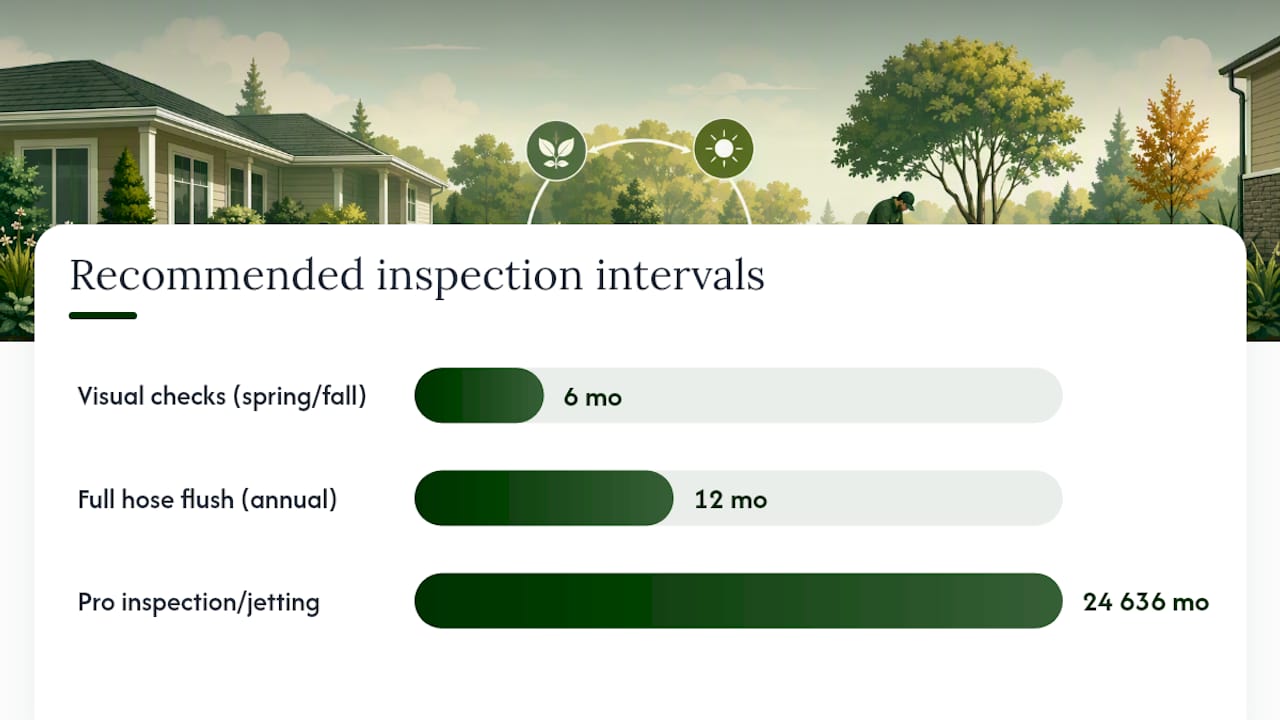
A reasonable rhythm looks like this: quick visual checks each spring and fall, a full hose flush once a year, and professional inspection or jetting every two to three years depending on your soil and tree cover.
A properly installed French drain can last 30 to 40 years with that kind of routine attention. Neglect it, and silt buildup or root intrusion can cut that lifespan dramatically.
Soil type matters more than most homeowners realize. Heavy clay and flat lots trap water and sediment longer, accelerating clogging and wear compared to sandy, well-sloped ground. If your yard fits that description, lean toward the more frequent end of the servicing schedule.
- Spring and fall: visual check of grates and outlet
- Annually: full hose flush and flood test
- Every two to three years: professional jetting or inspection, more often under mature trees or clay soil
When to Hire a Professional for French Drain Repair
Some problems are beyond hose-and-elbow-grease territory. Call a professional when a camera inspection is warranted, when clogs keep returning after you’ve jetted the line yourself, when a section has visibly collapsed, or when roots have worked their way into the pipe joints.
Cost varies by region, but homeowners can generally expect professional cleaning or jetting to run in the low hundreds of dollars, camera inspections to add a separate line item, and partial repairs or pipe replacement to cost more depending on excavation depth and length. Get a local estimate before committing. Prices swing widely based on trench depth, access, and how much digging is involved.
Before hiring anyone, ask:
- What equipment do you use, hydro-jetter, mechanical snake, or camera?
- Do you offer a warranty on the repair?
- Can you provide references from similar drainage jobs?
- Is this a cleaning, a repair, or a full pipe replacement?
Safety Rules for Cleaning a French Drain
Wear goggles and gloves any time you’re flushing or jetting a line, and keep bystanders, especially kids and pets, well away from the work area. Sturdy closed-toe shoes matter more than people expect; wet gravel and mud get slick fast.

A few firm don’ts: never stand directly over an open pipe while a jetter or hose is running at full pressure, and never point a high-pressure consumer washer straight into perforated pipe. It can tear the fabric and push sediment where you don’t want it. And check your local stormwater rules before you discharge water onto a slope or a neighbor’s property. Concentrated runoff crossing a property line is a common source of neighbor disputes and, in some municipalities, a code violation.
When Professional Maintenance Beats DIY
Homeowners with mature trees, heavy clay soil, or a yard that floods after every storm are usually better off with a maintenance contract than a once-a-year DIY flush. Roots don’t respect a homeowner’s schedule, and clay holds water and sediment in ways that make annual jetting more of a necessity than a nicety.
A solid professional visit typically includes a full visual inspection, a flush or jetter pass through the whole line, a camera check if there’s history of recurring problems, and minor repairs on the spot when they’re caught early. That last part matters. Catching a cracked joint during a routine visit is a lot cheaper than discovering it after a basement floods.
Design details like proper trench width and washed gravel reduce how often a system needs attention in the first place, but no installation, however well built, maintains itself forever. Ivan’s Landscaping has spent years handling drainage and grading work across McHenry County, and the pattern holds: systems on a schedule fail less often than systems people only think about when water’s already in the yard.
Schedule a Drainage Inspection With Ivan’s Landscaping
If you’re tired of testing your own French drain every spring and would rather have someone else catch problems before they become basement floods, that’s exactly the kind of recurring work Ivan’s Landscaping handles for homeowners across McHenry County. A first visit typically includes a visual inspection of inlets and outlets, a hose flood test, and a straightforward recommendation. Fix it now, monitor it, or schedule a deeper cleaning.
This fits best for homeowners with mature trees near the trench line, clay-heavy soil, or a yard that’s flooded more than once in recent memory. Rather than renting a jetter every few years and hoping you’re using it right, a scheduled visit folds drainage checks into the same routine as your other yard care.
Ivan’s Landscaping also handles the related work that keeps water problems from starting in the first place, from grading to seasonal cleanup that clears debris before it reaches your inlets. If your property is in the area, request a free estimate for drainage service in Cary and get a straight answer on what your system needs before the next storm rolls through.
Sources
- How To Clean a French Drain: 4 Steps to Success
- Dos and Don’ts of French Drain Cleaning – Bob Vila
- French Drain Cleaning & Maintenance in Chicagoland | Suburban Plumbing Experts
- How To Clean French Drains | Bay Area Maintenance Guide
- French drain planning, installation, and maintenance guidance (LSU AgCenter)
- French Drain Systems: A Complete Guide to Design, Installation, and Maintenance for Effective Subsurface Drainage