Most homeowners pay between $750 and $1,200 to remove a single tree, though a small tree in an easy spot can run as low as $250 and a large, hazardous removal can climb past $3,000. That’s the national average band Today’s Homeowner reports, and it lines up closely with what we see quoting jobs across McHenry County.
Here’s how the typical ranges break down:
- Low end ($200–$450): Small trees, easy access, no hazards
- Typical/average ($750–$1,200): Medium trees, standard yard access
- High end ($2,000–$3,000+): Large trees, tight access, or storm damage
HomeAdvisor and NerdWallet both cite $750 as the common average, while a modeled national baseline from HomeCostCalc puts the figure closer to $1,169 per tree once labor and equipment data get factored in. Ivan’s Landscaping quotes McHenry County jobs based on the same core variables: size, access, and hazard level.
Key Takeaways
Tree removal cost depends primarily on tree size, site access, and hazard level, with most homeowners paying $750 to $1,200 for a standard single-tree job.
| Point | Details |
|---|---|
| National average range | Most single-tree removals cost $750–$1,200, with a full range of $250–$3,000 depending on size and access. |
| Stump work costs extra | Stump grinding typically adds $75–$425 and is almost never included in the base cutting quote. |
| Access changes the price | Tight yards, overhead lines, or slope can add 25–50 percent to a standard quote. |
| Get written, itemized quotes | Collect at least three estimates that separately list stump grinding, hauling, cleanup, and permit handling. |
| Local, licensed help available | Ivan’s Landscaping offers free, written estimates and licensed, insured tree removal across McHenry County. |
Table of Contents
- How Much Does Tree Removal Cost by Size and Species?
- What Extra Services Get Added to a Tree Removal Quote?
- What Factors Change the Cost of Tree Removal?
- How Do You Get an Accurate Tree Removal Quote?
- Should You Remove a Tree Yourself or Hire a Professional?
- How Long Does Tree Removal Take, and Do You Need a Permit?
- A Local Crew’s View on What Actually Happens During a Tree Removal
- Why Ivan’s Landscaping Should Be Your First Call for Tree Removal
- Where to Check Tree Removal Costs and Permit Rules
- Sources
How Much Does Tree Removal Cost by Size and Species?
Size drives price more than almost anything else. A tree’s height and trunk diameter determine how much rigging, labor time, and equipment a crew needs, and that math scales fast once you get past 60 feet.
A few notes worth keeping in mind as you size up your own tree:
- Trunk diameter matters as much as height. A short tree with a 36 inch trunk can cost more to remove than a taller, slimmer one.
- Wide canopy trees near a house or fence often need to be taken down in sections, which adds labor hours.
- Species affects wood density and branch structure, but access and size typically outweigh species as cost drivers in most quotes.
Pro Tip: To estimate height without climbing anything, stand back from the tree until you can see the top, hold a pencil at arm’s length, and compare its length to the tree’s visible height against a known reference, like a one-story wall (roughly 10 feet). Multiply accordingly for a rough estimate.
What Extra Services Get Added to a Tree Removal Quote?

Base removal quotes typically cover cutting, chipping, and hauling the tree itself. Stump work, heavy debris hauling, and specialty equipment almost always show up as separate line items.
A few things to know before the invoice surprises you:
- Base cutting almost never includes the stump. Thumbtack’s cost data shows that adding stump removal typically pushes a job’s total into the $884 to $1,627 range.
- Crane or traffic control fees usually only apply when a tree hangs over a street, roof, or power line, and the crew can’t drop it safely.
- Chipping and hauling wood debris off-site is often bundled into the base quote, but ask your contractor to confirm this in writing.
What Factors Change the Cost of Tree Removal?
Every quote starts from the same baseline questions: how big is the tree, how hard is it to reach, and how much risk does the crew take on.
- Size and trunk diameter: Bigger trees need more cuts, more rigging, and more disposal trips.
- Species and wood density: Dense hardwoods like oak take longer to cut than softer woods like pine.
- Access and yard constraints: Narrow gates, fences, or tight side yards can add 25 to 50 percent to a quote because equipment has to be hauled in by hand.
- Proximity to structures or power lines: Trees near a roof, deck, or utility line require careful, slower rigging.
- Slope and terrain: Steep yards slow down equipment and increase the crew’s setup time.
- Tree health and decay: Dead, hollow, or leaning trees are riskier to fell and often cost more, not less.
- Number of trees: Removing several trees in one visit usually lowers the per-tree cost since setup and travel are shared.
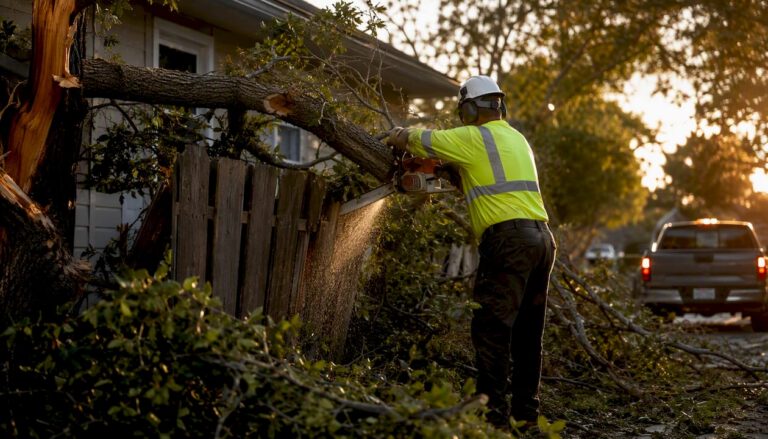
- Emergency status: Storm-damaged or hazard trees can add $500 to $3,000 in emergency surcharges.
Pro Tip: If you have more than one tree that needs attention, bundle the jobs into a single visit. Crews charge less per tree when they’re already on-site with equipment set up, and scheduling in late winter can save another 5 to 10 percent since demand drops and leaf-off trees are faster to cut.
How Do You Get an Accurate Tree Removal Quote?
A written, itemized estimate protects both you and the contractor. Before anyone shows up to look at your tree, do this:
- Take photos of the tree from at least two angles, including anything it’s leaning toward.
- Measure or estimate the distance from the tree to your house, fence, and any power lines.
- Note site access details: driveway width, gate clearance, and any slope in the yard.
- Check whether the tree touches or overhangs a neighbor’s property.
Once a crew is on-site, ask these questions directly:
- Are you licensed and insured, and can you provide a certificate of insurance?
- Does this quote include stump grinding, debris hauling, and cleanup, or are those separate?
- Who handles permit paperwork if one is required?
- What’s the expected timeline, and what happens if weather delays the job?
- What are the payment terms, and is a deposit required?
Get at least three written quotes before deciding. A landscaping company that walks the property with you and hands over an itemized estimate, the way Ivan’s Landscaping does on every tree removal job, gives you something to compare apples to apples.
Should You Remove a Tree Yourself or Hire a Professional?
Cutting down a small ornamental tree in an open yard is one thing. Taking down anything near a structure, power line, or with visible decay is a different risk category entirely.
Professionals bring more than a chainsaw to the job:
- Specialized rigging equipment for controlled, section-by-section takedowns
- Insurance coverage that protects your property if something goes wrong
- Training to read decay, lean, and wind load before making the first cut
- Traffic control and permitting knowledge for jobs near streets or sidewalks
Before hiring anyone, ask for a certificate of insurance, proof of workers’ compensation coverage, and any local licenses your municipality requires.
Power lines, roof overhangs, visible rot, and any tree with a significant lean are not DIY territory. A single miscalculated cut on a leaning or hollow tree can send it in an unpredictable direction, and homeowner’s insurance often won’t cover injuries from unlicensed tree work gone wrong.
How Long Does Tree Removal Take, and Do You Need a Permit?
Most single-tree removals take two to six hours. Large or hazardous trees can stretch into a full day, and multi-tree or land-clearing jobs can run several days.
- Small to medium trees: 2 to 4 hours
- Large trees or ones requiring cranes: 4 to 8 hours (sometimes a full day)
- Multi-tree or storm cleanup jobs: 1 to 3 days
Many McHenry County municipalities and HOAs require a permit before removal, especially for large or heritage trees. Permit fees commonly run $60 to $200, and some jurisdictions require an arborist report first. Check your local village code and HOA rules before you schedule anything.
A Local Crew’s View on What Actually Happens During a Tree Removal
Every job we run starts the same way: a site visit, a written estimate with line items spelled out, and a straight answer on timeline before anything gets scheduled. Since 2008, Ivan’s Landscaping has handled everything from single ornamental trees to storm-damaged hazards across McHenry County, and we’re licensed and insured on every job.
When a permit or arborist consult is needed, we handle that coordination directly with the municipality so homeowners aren’t stuck chasing paperwork. Emergency calls get the same written-estimate approach, just on a faster clock.
Why Ivan’s Landscaping Should Be Your First Call for Tree Removal
Getting three quotes is good advice, but it only works if each one is clear, itemized, and backed by a crew that shows up when they say they will. Ivan’s Landscaping has served McHenry County homeowners and property managers since 2008, and every tree removal estimate comes in writing, with stump grinding, hauling, and cleanup spelled out as separate line items so you know exactly what you’re paying for before work starts.

We’re licensed and insured, and our estimates are free with a quick response time, whether you’re dealing with a storm-damaged tree that needs emergency attention or a routine removal you’ve been planning for months. If you’re ready to see what your specific tree, yard access, and site conditions actually cost, request a free estimate through our tree removal services page and we’ll get a crew out to look at it in person.
Where to Check Tree Removal Costs and Permit Rules
- Today’s Homeowner: national cost averages and range breakdowns
- HomeAdvisor: typical pricing plus permit and crane fee notes
- Briley Tree Service’s cost guide: a regional breakdown of the same cost drivers
- Your local village or county code office: permit requirements before scheduling removal
Sources
- How Much Does Tree Removal Cost? (2026) | Today’s Homeowner
- Tree Removal Cost Calculator (2026) — Free Online Estimate | HomeCostCalc
- 2026 Tree Removal Costs | Pros Explain Key Price Factors
- How Much Does It Cost to Remove a Tree? 2025 Data | HomeAdvisor
- Cost to Remove a Tree: Is It Worth It? – NerdWallet