Commercial landscape design is the process of planning outdoor space around how a business property actually gets used, not just how it looks from the road. Done right, it improves curb appeal, safety, tenant experience, and resale value while keeping long-term maintenance cost under control. The work covers site analysis, hardscape, planting, lighting, and irrigation, and it succeeds or fails based on whether the design matches a realistic maintenance plan from day one.
TL;DR:
- Proper site analysis and detailed construction documents are essential to prevent costly changes and maintenance issues during and after construction.
- Choosing durable hardscape materials, native plant species, and layered lighting can significantly reduce long-term maintenance and energy costs.
- Water-efficient systems with smart controls and on-site stormwater management help lower water bills and meet municipal regulations.
- Vetting experienced, licensed contractors with proven commercial portfolios and clear maintenance plans reduces risks and future repair expenses.
- Focusing on realistic maintenance budgets and early value engineering ensures the design remains sustainable and aligned with long-term operational costs.
Table of Contents
- What Commercial Landscape Design Includes: Scope and Deliverables
- Core Elements: Hardscape, Softscape, Lighting, Irrigation, and Furnishings
- Design Process and Phases: From Site Analysis to Construction-Ready Documents
- Durability, Maintenance, and Budgeting: Aligning Design With Long-Term Operations
- Sustainability and Water Management: Practical Strategies That Lower Costs
- How to Choose a Commercial Landscape Designer or Contractor
- Lessons From the Field: What Commercial Properties Get Wrong
- Get a Commercial Landscape Estimate From a Local Team
- Sources
What Commercial Landscape Design Includes: Scope and Deliverables
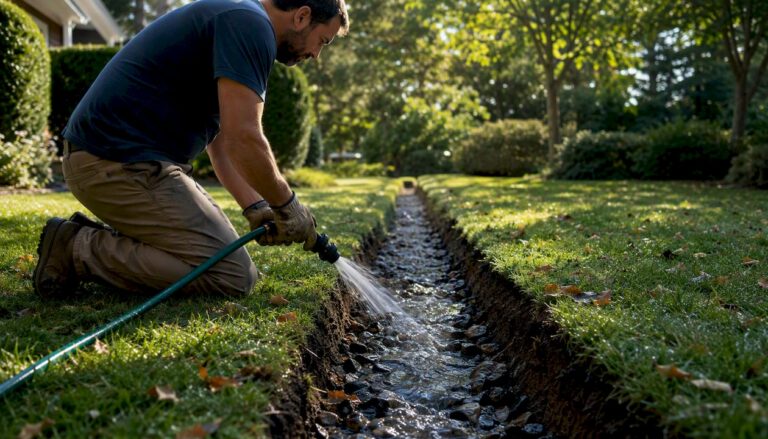
A commercial project covers more ground than most property owners expect going in. The scope typically spans site analysis, permitting, planting plans, hardscape layout, lighting design, irrigation systems, furnishings, and full construction documents that a contractor can actually build from. A comprehensive commercial landscape project folds grading and drainage work in alongside the visible elements, because water management underneath the surface determines whether the plantings above it survive.
Residential jobs rarely demand this level of documentation. Commercial sites carry heavier foot traffic, stricter code requirements, and far more public visibility when maintenance slips. A cracked residential walkway is a homeowner’s problem; a cracked walkway outside a retail entrance is a liability and a brand issue simultaneously.
When you hire a designer or firm for a commercial property, expect these deliverables at minimum:
- A written site analysis covering grading, drainage, utilities, and access points
- A planting plan specifying species, mature size, and spacing
- Hardscape drawings with material callouts and ADA-compliant dimensions
- Lighting and irrigation plans coordinated with the electrical and utility layout
- Construction-ready documents a contractor can bid and build from without guesswork
- A maintenance recommendation tied to the design’s actual upkeep demands
Skipping any of these usually shows up later as a change order or a maintenance dispute.
Core Elements: Hardscape, Softscape, Lighting, Irrigation, and Furnishings
Every commercial landscape rests on five categories of decisions, and each one has a durability trade-off worth understanding before you sign off on a plan.
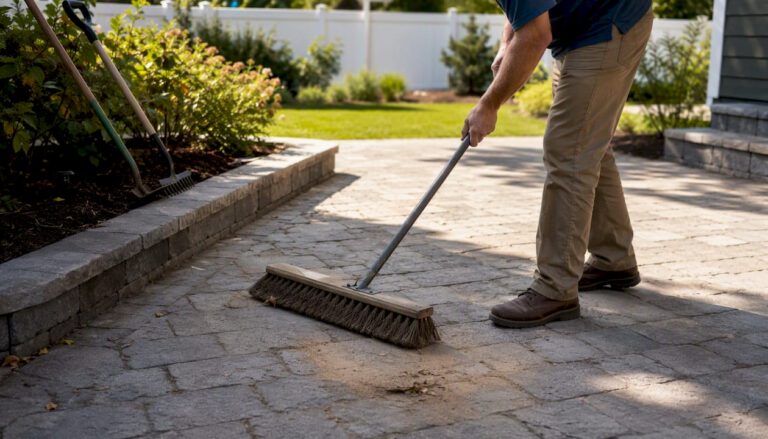
Hardscape choices set the tone and absorb the most wear. Concrete pavers cost less upfront but can shift over time; unit pavers cost more but allow individual replacement without tearing out a whole section. Walkways, ramps, and parking-adjacent paths need to meet accessibility standards, including slope, width, and surface texture requirements under the Americans with Disabilities Act.
Softscape, meaning plant material, should be selected for mature scale and root space, not just the look on day one. A tree planted three feet from a foundation wall or utility line becomes a maintenance headache within five years. Low-maintenance palettes built around native and adapted species reduce both watering and pruning demands.
Lighting works best in layers: safety lighting along paths and entrances, accent lighting on signage or architectural features, and timers or photocells that control energy draw automatically. A layered outdoor lighting approach also does double duty for security, since well-lit approaches and parking areas discourage loitering and vandalism.
Irrigation systems with smart controllers and rain sensors cut water waste compared with fixed timers, and they pay for themselves faster on properties with large turf areas.
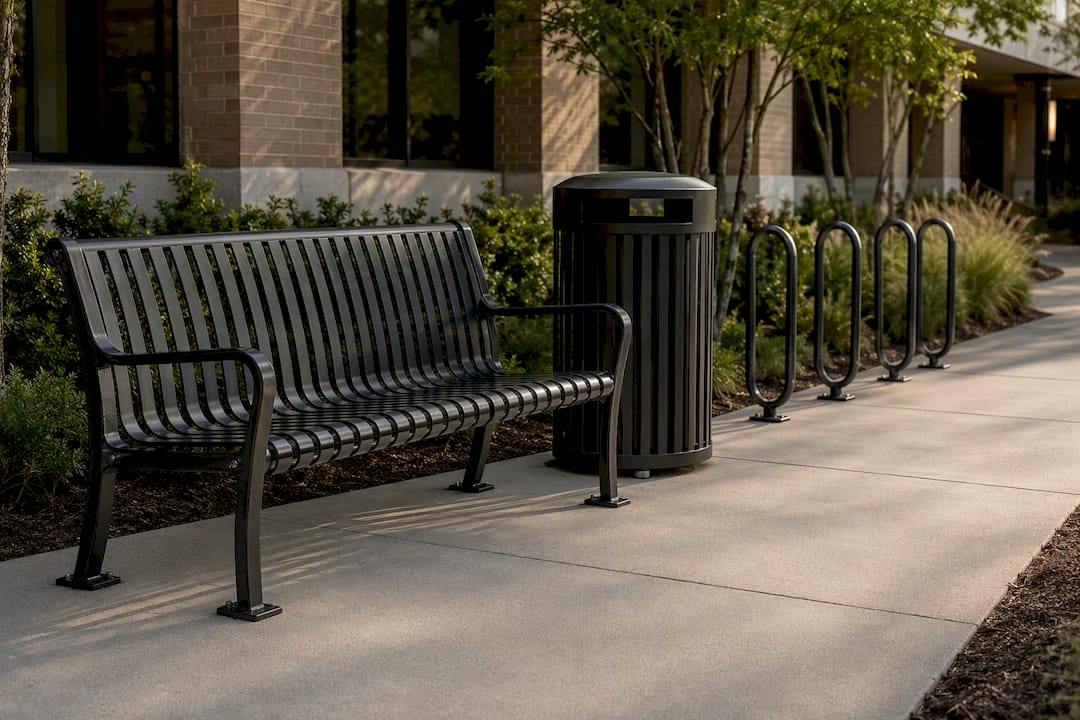
Furnishings, including benches, trash receptacles, and bike racks, should be commercial-grade and anchored. Lightweight furnishings invite theft and damage, which adds unplanned costs to a maintenance budget that assumed otherwise.
Pro Tip: Ask your designer to specify replacement parts availability for pavers, light fixtures, and irrigation heads before installation. Matching a discontinued paver three years later is far harder than budgeting for extras up front.
Design Process and Phases: From Site Analysis to Construction-Ready Documents
Commercial projects move through predictable phases, and knowing what happens at each one helps you spot a rushed or incomplete process before it costs you money.
- Site analysis. A qualified designer evaluates grading, drainage patterns, existing utilities, soil composition, and sightlines from the street and parking areas. This step catches problems, like a low spot that floods every spring, before they get built around instead of solved.
- Concept and schematic development. The designer establishes the overall organizing idea, often called the parti, along with circulation paths and how the landscape should reinforce your brand identity. This is where 3D renderings earn their keep: photorealistic visuals reduce miscommunication between what a client imagines and what actually gets built, and they tend to speed up approvals.
- Design development. Materials get finalized, plant palettes get locked in, and preliminary pricing surfaces. This is the natural point to raise value engineering options if the budget is tight.
- Construction documentation and permitting. Insist on full construction drawings and specifications, not sketches. These documents are what a municipality reviews for permits and what a contractor bids against, so vague documentation invites cost surprises during construction.
- Construction, commissioning, and final walkthrough. A design-build team that carries a project from design through installation tends to reduce handoff errors between separate designers and contractors, since single-team accountability removes a common source of delay. The final walkthrough should confirm irrigation zones work, lighting timers are set correctly, and any warranty items are documented in writing.
Durability, Maintenance, and Budgeting: Aligning Design With Long-Term Operations
The design decisions that look best in a rendering are often the ones that cost the most to keep looking that way. Seasonal annual color beds and water features are the two biggest recurring-cost items on a commercial property, and they need dedicated line items in a maintenance contract, not an afterthought once the invoices start arriving.
Value engineering is the standard tool for controlling this before construction starts. It means simplifying materials or details during design development rather than cutting corners once crews are already on site, and it’s most effective when applied early, since changes made on paper cost far less than changes made mid-build.
Your maintenance contract should spell out:
- Scope of work by season, including mowing heights, pruning frequency, and bed maintenance
- Seasonal color replacement schedule, if annual plantings are part of the design
- Irrigation system checks and adjustment frequency
- Emergency response terms for storm damage or irrigation failures
- Warranty coverage on plant material and hardscape installation
Aligning the aesthetic ambitions of a design with an explicit, agreed maintenance budget up front is widely considered the strongest predictor of how long a commercial landscape actually holds up. When comparing bids, weigh the run-rate maintenance cost alongside the install price, not instead of it. A lower installation quote paired with an underfunded maintenance plan almost always costs more over five years.
Sustainability and Water Management: Practical Strategies That Lower Costs
Native and drought-tolerant plant palettes cut water demand and reduce the pruning and replacement cycle that keeps maintenance crews busy. The trade-off is aesthetic: native palettes often look different from traditional ornamental beds, and clients need to see the design before construction to set expectations correctly, which is another reason renderings matter early in the process.
Smart irrigation technology, including soil moisture sensors and weather-based controllers, can reduce water use significantly compared with fixed-timer systems, and an irrigation audit before installation often identifies overwatered zones that pay back the audit cost within one season.
Stormwater management increasingly shapes commercial design too. Consider:
- Rain gardens that capture runoff from parking lots and roof drains
- Permeable pavers in low-traffic parking areas to reduce impervious surface
- Bioswales along property edges that double as landscape features and drainage infrastructure
Check with your municipality before finalizing plans. Many jurisdictions offer stormwater credits or reduced fees for properties that manage runoff on-site, and some require it outright above a certain lot size. Seasonal irrigation audits and proper winterization also extend equipment life and catch leaks before they show up on a water bill.
How to Choose a Commercial Landscape Designer or Contractor
Vetting a designer or contractor for a commercial project takes more scrutiny than picking someone for a residential job, mostly because the stakes and the paperwork are both bigger.
- Review portfolio fit. Look for completed commercial work similar in scale and use case to your property, not just attractive residential photos.
- Confirm documentation capability. Ask to see a sample set of construction documents from a past project. If a firm can’t produce permit-ready drawings, that’s a gap that will surface during your build.
- Check insurance and licensing. Commercial work carries higher liability exposure, so confirm coverage limits match the scope of your project.
- Ask for references on maintenance follow-through. A design team that disappears after installation leaves you managing warranty issues alone.
- Request a value engineering conversation up front. Ask how they’d adjust the design if the budget came in 15% over estimate, before you’re locked into a contract.
Watch for red flags in a proposal: vague material specifications, no mention of a maintenance transition plan, and pricing that excludes site work or permitting fees as “to be determined.” Those gaps tend to reappear as change orders.
Weigh the long-term operating cost as heavily as the install number. A proposal comparison that only stacks up upfront pricing misses the maintenance and water costs that follow for years after installation.
Pro Tip: Ask every bidder the same question: “What in this design will cost the most to maintain in year three?” The answer tells you more about their honesty than any glossy rendering.
Lessons From the Field: What Commercial Properties Get Wrong
Since 2008, Ivanslandscaping has installed and maintained commercial landscapes across McHenry County, and the same mistakes tend to repeat across properties. Undersized irrigation zones show up constantly, usually because a design assumed turf coverage that never accounted for slope or sun exposure. Maintenance budgets set before the plant palette was finalized cause the second-most common headache, leaving property managers stuck paying for pruning schedules nobody priced into the contract.
Missing construction detail is the third pattern: a plan without grading specifics leads to standing water within a season. Ivanslandscaping backs every commercial installation with a satisfaction guarantee and a written maintenance handoff, including warranty documentation, so property managers know exactly what’s covered and what to expect before the crew leaves the site.
— Chas
Get a Commercial Landscape Estimate From a Local Team
Ivanslandscaping gives McHenry County property managers a faster path to a working design than starting a search for a firm and a separate maintenance contractor from scratch. Our design-build and maintenance services cover the full scope this article walks through: layout and planting design, paver patio and hardscape construction, irrigation installation, and customized maintenance plans built around your actual budget, not a generic package.

Before requesting a free estimate, have your property’s square footage, current pain points (drainage, dead turf, lighting gaps), and any HOA or municipal restrictions ready. That information lets us scope the site visit efficiently and return a proposal with real numbers instead of placeholders. After you reach out, expect a site walk, a written estimate, and a maintenance recommendation matched to your property type. Request your estimate today and get a plan built for how your property actually gets used.
Sources
- Commercial landscape design — Cedreo blog
- The Ultimate Guide to Commercial Landscape Design — Minick Materials
- Value engineering — Shawver Harris