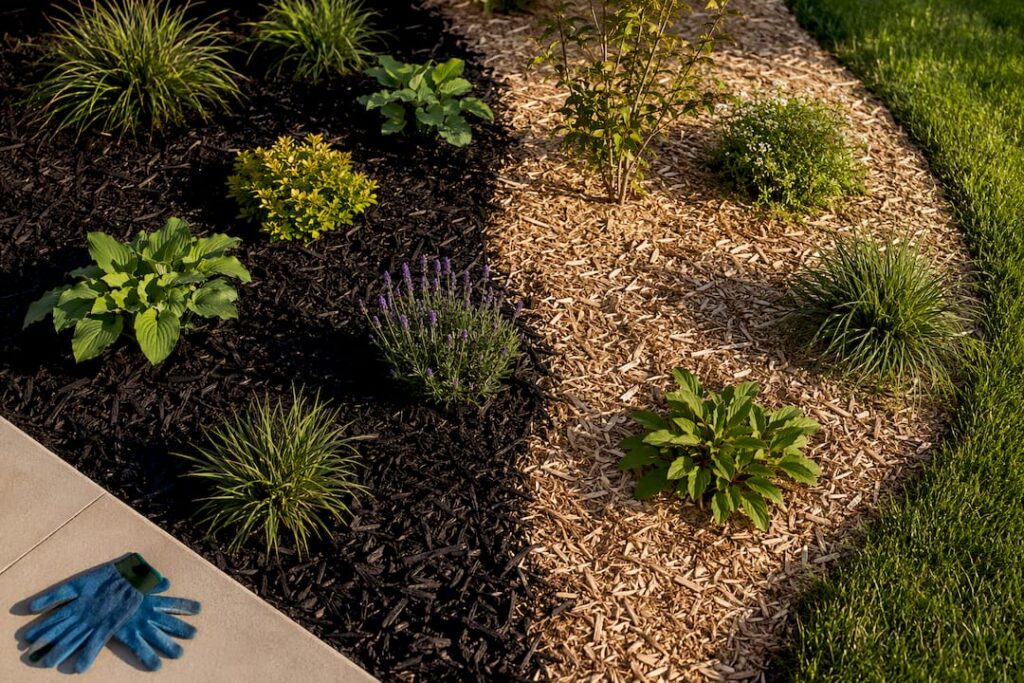
For most home planting beds, undyed natural mulch is the safer, more soil-friendly choice, while dyed mulch is a reasonable option when you prioritize a long-lasting, uniform color and can verify the wood source. The main tradeoffs come down to safety and sourcing, aesthetics, how long the color holds, and cost. If you choose dyed mulch, confirm where the wood came from and keep it at a safe distance from your foundation.
TL;DR:
- Dyed mulch is typically made from recycled wood that may contain treated lumber, raising contamination risks if the wood source is unknown.
- Safe distances of at least 18 inches from structures and foundations are advised regardless of mulch type to reduce fire risk and pest habitats.
- Black dyed mulch retains color for 12 to 18 months but increases soil temperatures, while red fades quickly within 3 to 6 months and may stain light surfaces.
- Organic matter in mulch breaks down over time, requiring occasional nitrogen amendments and possibly cleaning stains from dyed mulch stains.
- For vegetable gardens and play areas, verified natural mulch from known sources is safer than recycled wood with uncertain treatment history.
Table of Contents
- What is dyed mulch and how does it differ from natural mulch?
- Is dyed mulch safe for pets, kids, and plants?
- How long does the color last, and does it affect your plants?
- What does dyed mulch really cost over time?
- How do you choose the right mulch for your yard?
- When it makes sense to bring in a professional
- Balancing curb appeal with soil health
- How Ivan’s Landscaping handles mulch selection and installation
- Sources
- FAQ
What is dyed mulch and how does it differ from natural mulch?
Dyed mulch starts as ground wood, often recycled from pallets, construction debris, or land-clearing operations, that gets coated with a colorant after processing. The most common pigments are iron oxide for red and brown tones and carbon black for the deep black look many homeowners want; some suppliers use vegetable-based dyes as well. Natural mulch, by contrast, comes from a single identified source such as cedar, pine bark, or hardwood bark, and it keeps its native color as it ages and breaks down.
The distinction that matters most is not the dye itself but where the wood came from. Recycled wood streams can carry treated lumber, including wood once treated with chromated copper arsenate, and grinding it into mulch increases the surface area where contaminants can leach into soil, as the National Pesticide Information Center notes about CCA-treated wood.
- Dyed mulch: ground recycled wood plus a colorant, usually iron oxide or carbon black.
- Natural mulch: bark or wood chips from a known, untreated source, left in its natural color.
- The real variable: wood origin, not dye choice, drives most safety questions.
Is dyed mulch safe for pets, kids, and plants?
The dyes themselves carry low toxicity risk. University of Florida IFAS Extension points out that the pigments in common use, iron oxide and carbon black, have not been shown to be harmful when the underlying wood is clean. The real concern is what that wood was before it got ground up.
About 18 inches is the buffer Massachusetts’s Executive Office of Public Safety and Security recommends keeping between mulch and combustible siding, a gap that reduces both fire risk and the chance that mulch offers shelter to pests already living near your home. Mulch does not create termite infestations on its own, but it can provide a favorable habitat for colonies that already exist nearby.
For vegetable beds and areas where children play, UMass Extension recommends virgin bark or mill residuals over unspecified recycled wood. When you cannot confirm the source, undyed mulch from a known supplier is the safer default.
- Ask before you buy: where did this wood come from before grinding?
- Skip unknown recycled wood for vegetable gardens and play areas.
- Keep mulch back from combustible siding and other structures.
Roughly 18 inches of clear space between mulch and your foundation is the distance Massachusetts’s mulch fire safety guidance points to as a practical rule, and it applies whether you choose dyed or natural product.
How long does the color last, and does it affect your plants?
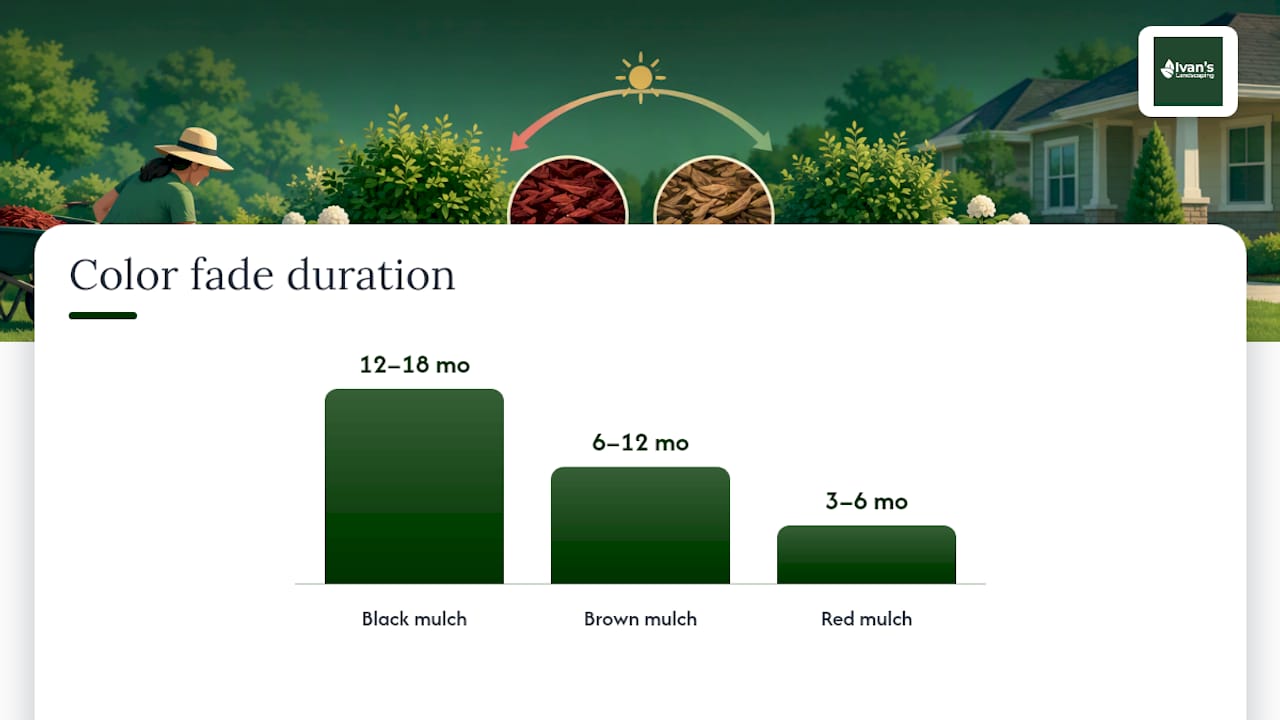
Color life varies by pigment. Black dyed mulch holds its look the longest, generally 12 to 18 months, because carbon black resists UV breakdown better than other colorants, according to Massachusetts’s mulch guidance. Brown typically fades over 6 to 12 months, and red is the least stable, often noticeably lighter within 3 to 6 months.
Color affects more than looks. Darker mulches, especially black, can raise soil surface temperatures by roughly 10 to 15 degrees Fahrenheit in full sun compared with lighter, natural mulch, per the same Massachusetts source. That heat gain matters near shallow-rooted perennials or new plantings that prefer cooler soil.
- Black: longest color retention, about 12 to 18 months, but the most heat gain.
- Brown: moderate fade over 6 to 12 months, a middle-ground choice for most beds.
- Red: fades fastest, within 3 to 6 months, and stains light concrete more readily than other colors.
If your beds sit against a patio or walkway, skip red near light-colored hardscape and use edging to keep any color from migrating during heavy rain.
What does dyed mulch really cost over time?
Pricing depends more on wood source and whether you buy bagged or bulk than on the dye itself. Bulk delivery generally costs less per yard than bagged mulch, and dyed products are often marketed as longer-lasting, but the practical refresh schedule for most yards lands in a similar range regardless of color, since sun exposure and bed depth matter more than pigment.
Beyond the sticker price, factor in a few hidden costs. Cleaning red dye stains off a patio or walkway takes time and sometimes a pressure washer. Wood-based mulches with a high carbon-to-nitrogen ratio, whether dyed or natural, can temporarily tie up soil nitrogen as they break down, which Penn State Extension notes may call for a light nitrogen amendment in heavily mulched beds.
- Bulk mulch typically costs less per yard than bagged product.
- Dark dyed mulch may need less frequent top-dressing for color, but organic matter still breaks down at a similar pace.
- Budget for extras: edging to prevent staining and occasional nitrogen amendments where decomposition is heavy.
How do you choose the right mulch for your yard?
Start with what the bed is used for. Ornamental beds around trees and shrubs tolerate dyed mulch well, especially in shade where heat gain matters less. Vegetable gardens, herb beds, and areas where kids play call for verified natural mulch every time.
- Identify the bed type first: ornamental beds have more flexibility than edible or play areas.
- Check sun exposure: full sun plus dark dye means higher soil temperatures, so favor brown or natural mulch there.
- Call your supplier and ask directly: what is the wood source, do you test for CCA or arsenic, and what dye is used?
- Watch for red flags: vague answers about “recycled wood,” no mention of testing, or an odd chemical smell coming from the pile.
- Apply the distance rule: keep mulch at least 18 inches from foundations and combustible siding no matter which type you choose.
Pro Tip: Ask for a supplier’s most recent wood-source documentation before delivery, not after it is already spread across your beds.
When it makes sense to bring in a professional
Homeowners who install a small ornamental bed can usually manage dyed or natural mulch on their own. Larger properties, beds near foundations, or situations where you want documented proof of a clean wood source are a different story, and that is where working with a landscaper pays off. A professional landscaping company with experience in mulch installation can provide backed work and satisfaction guarantees.
- Bulk installs: covering large beds evenly takes more material handling than most homeowners want to manage alone.
- Source verification: a professional crew can request supplier documentation before delivery.
- Placement near hardscape: correct edging and depth reduce staining and migration onto patios and walkways.
Readers who want a hand with either step can look at Ivan’s mulch installation services or review fresh mulch delivery options for McHenry County properties.
Balancing curb appeal with soil health
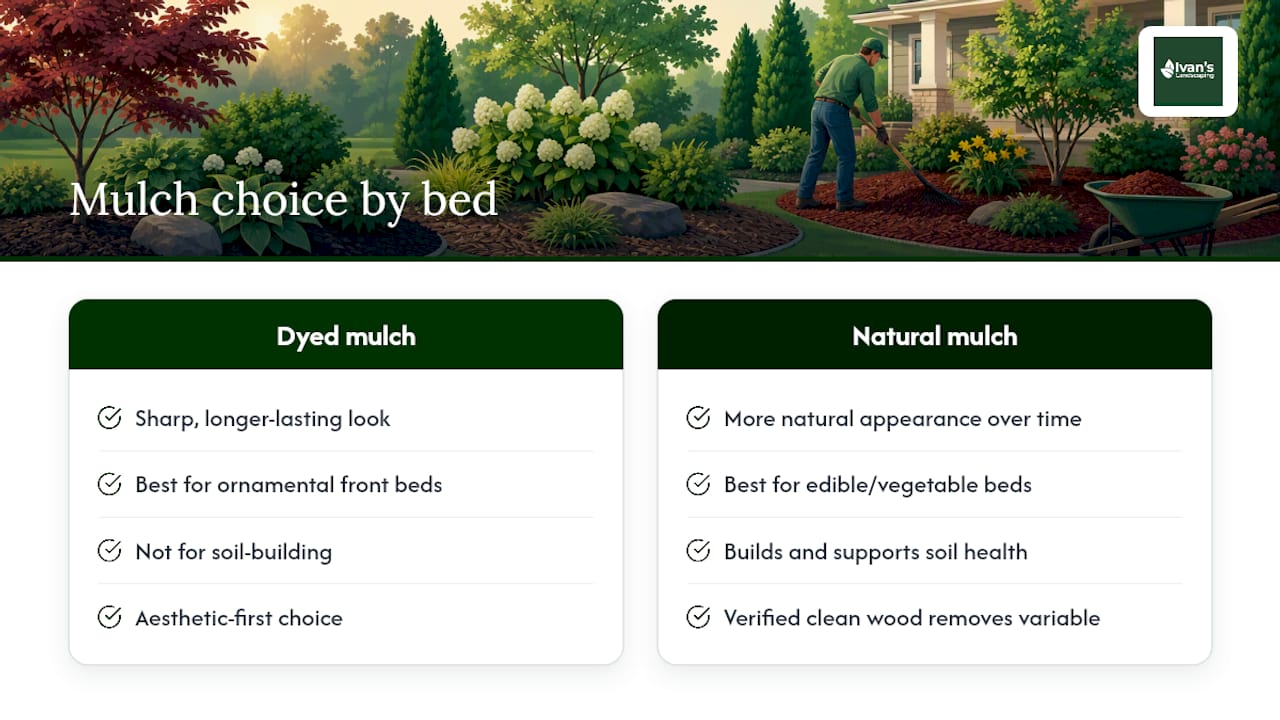
Dyed mulch earns its popularity honestly: a fresh bed of black or brown mulch looks sharp and holds that look longer than natural bark. That said, I lean toward natural mulch for any bed where soil-building matters, especially vegetable gardens, because verified clean wood removes a variable you do not need to manage.
A practical middle ground works for a lot of yards: dyed mulch in ornamental front beds, natural mulch everywhere edible plants grow. That split gives you the look you want up front without applying it where the stakes are higher.
— Chas
How Ivan’s Landscaping handles mulch selection and installation
Choosing between dyed and natural mulch gets easier when someone else is doing the sourcing legwork. Ivan’s Landscaping’s Mulch Service covers both material selection and installation, and the company can work with clients who want a verified, clean wood source for vegetable beds or play areas.
- Free estimates with a quick response time, so you know your options before committing.
- Clean job sites during and after installation, no lingering debris or stray mulch on walkways.
- Seasonal timing guidance, including the best time to mulch in McHenry County, so your beds get refreshed at the right point in the season.
If your beds are due for a refresh or you are planning a new landscape design, request a mulch estimate and get a plan built around your specific beds and goals.
Sources
- Mulch fire safety and mulch guidance — Massachusetts Executive Office of Public Safety & Security
- Is colored mulch bad for the environment? — University of Florida IFAS (Northwest District)
- Colored bark mulch — UMass Extension (fact sheet)
- Mulch — A Survey of Available Options — Penn State Extension
FAQ
Why not use dyed mulch?
Dyed mulch itself is not inherently unsafe, but it is often made from recycled wood that can include treated lumber, which raises contamination concerns according to UMass Extension. If you cannot verify the wood source, choosing undyed mulch from a known supplier removes that uncertainty.
Does dyed mulch attract termites?
Mulch, dyed or natural, does not create a termite problem where one did not already exist. It can provide a favorable habitat for colonies already nearby, which is why Massachusetts safety guidance recommends keeping mulch about 18 inches from combustible siding.
What is the best color of mulch to use?
The best color depends on your bed’s sun exposure and how often you want to refresh it. Black holds its color longest, around 12 to 18 months, but raises soil temperature more in full sun, while brown offers a middle ground that fades over 6 to 12 months, per Massachusetts mulch guidance.
Does mulch dye actually work?
Yes, the pigments used, mainly iron oxide and carbon black, do hold color for a period before fading, with black lasting longest and red fading fastest within 3 to 6 months according to Massachusetts’s fire safety office. How well it performs also depends on sun exposure and rainfall, which accelerate fading regardless of pigment.