Use pine straw on slopes, under acid-loving shrubs, and anywhere you want quick, low-cost coverage. Choose shredded wood mulch when you need stronger moisture retention, longer-lasting weed suppression, or a clean, formal look near a patio or entryway. Both materials are flammable, so keep either one a few inches back from your foundation and siding. Skip dyed wood mulch around vegetable beds, since the dyes aren’t meant for edible gardens.
Top jobs for pine straw: steep slopes, azalea and blueberry beds, vegetable gardens (it keeps fruit off wet soil).
Top jobs for wood mulch: play areas and paths, formal foundation beds, and beds where you want mulch to last through more than one season.
TL;DR:
- Pine straw is ideal for slopes, acid-loving plants, and vegetable beds because it resists erosion and does not significantly acidify soil.
- Wood mulch lasts longer, typically 2 to 3 seasons, and is better suited for formal beds, paths, and moisture retention in flat, sandy soils.
- Both materials should be installed at a depth of 2 to 3 inches and refreshed accordingly, with pine straw needing more frequent replacement.
- Neither mulch type is pest-free nor fireproof, so flammability and pest issues require careful management and buffering near structures.
- Professional installation from Ivan’s Landscaping simplifies the process, ensuring correct depth, site-specific matching, and saving homeowners time.
Table of Contents
- Mulch vs Pine Straw: What Each Material Actually Is
- Does Pine Straw Really Change Your Soil’s pH?
- How Long Does Each One Actually Last?
- Moisture Retention or Erosion Control: Which Matters More?
- Do You Need to Worry About Pests or Fire Risk?
- Which One Looks Better in Your Landscape?
- What Will Pine Straw or Mulch Cost You Over a Season?
- Which Ground Cover Fits Your Specific Yard?
- When Should You Install It and How Deep?
- What the Research Actually Tells You to Prioritize
- Let Ivan’s Landscaping Handle the Heavy Lifting
- Key Takeaways
- Sources
Mulch vs Pine Straw: What Each Material Actually Is
“Mulch” is a broad term, but in most yards it means organic mulch: shredded bark, wood chips, or dyed mulch made from ground pallets or reclaimed wood. Pine straw is different. It’s the dried needles of pine trees, usually longleaf or slash pine, baled and sold by the bag or bale rather than by the yard.
Knowing how each is packaged matters for planning a project:
- Wood mulch is sold by the cubic yard (bulk delivery) or in 2 cubic foot bags from a garden center.
- Pine straw comes compressed into bales, typically around 35 pounds each.
- A single pine straw bale covers roughly 50 square feet at a 2 inch depth, while a cubic yard of shredded mulch covers 100 to 120 square feet at a 2 to 3 inch depth, depending on the material.
That coverage gap is the first thing to account for when you’re pricing out a bed.
Does Pine Straw Really Change Your Soil’s pH?
Fresh pine needles test acidic, which is where the old myth about pine straw “ruining” your soil comes from. In practice, it doesn’t hold up. Extension research on pine needle mulch has found it does not significantly acidify garden soil under typical landscape conditions, so it’s safe around a much wider range of plants than most gardeners assume.
Pine straw’s reputation as an acid bomb for your soil is mostly folklore. University testing shows the pH shift in real garden beds is minor at most, which means you can use it around perennials and shrubs that aren’t strict acid lovers without much worry.
Wood mulch works differently. As it breaks down, it feeds the soil food web and improves soil structure over time, similar to how compost builds tilth. The catch is fresh, unaged wood mulch can tie up nitrogen at the soil surface as microbes work to decompose it.
Pro Tip: If you’re mulching a vegetable bed with wood chips, work in a little compost or blood meal first. That offsets the nitrogen pull and keeps your plants from yellowing.
How Long Does Each One Actually Last?
Wood mulch generally holds up for 2 to 3 seasons before it breaks down enough to need replacing. Pine straw decomposes faster, often needing a refresh after just 1 to 2 seasons, though a hot, humid climate can shorten both timelines.
- Watch for matting. Wood mulch can compact into a dense layer that blocks water; break it up with a rake each spring.
- Watch for blowing and floating. Pine straw’s light weight means wind and heavy rain can push it off beds; a thin border of edging helps anchor it.
- Top up, don’t bury. Add mulch or straw only until you’re back to a 2 to 3 inch depth rather than piling a fresh layer over old material.
- Keep both off trunks. Pull mulch or straw a few inches back from tree trunks and shrub stems to prevent rot and pest hiding spots.
Moisture Retention or Erosion Control: Which Matters More?
If your priority is holding water in the soil during a dry spell, shredded wood mulch wins. Its dense, insulating layer slows evaporation and helps organic matter build up in sandy soil over time. If your priority is stopping soil from washing away on a slope, pine straw is the better call.
- Sloped beds: pine straw’s needles interlock into a mat that resists washout better than loose wood chips, which tend to migrate downhill in heavy rain.
- Flat, sandy beds: wood mulch’s moisture-holding capacity does more work here than pine straw’s erosion resistance.
- Vegetable plots: many gardeners layer straw close to the plants for cleanliness and use wood mulch on the walking paths between rows.
Combining the two by zone, rather than picking one for the whole yard, is often the smartest move on a property with mixed terrain.
Do You Need to Worry About Pests or Fire Risk?
Neither material is pest-free, and neither is fireproof. Reports of pests like palmetto bugs and artillery fungus turn up in both wood mulch and pine straw, though the evidence connecting either material to snake activity is weak and largely anecdotal. Extension guidance is clearer on fire: both materials are combustible, and defensible space recommendations call for keeping mulch beds away from structures in fire-prone regions.
- Keep a mulch-free or gravel band within a foot or two of your foundation and siding.
- Water beds during dry spells to reduce how easily either material ignites.
- In high fire-risk areas, favor a thinner layer or a non-organic ground cover near the house.
- Avoid piling either material against wood siding, decks, or fences.
Which One Looks Better in Your Landscape?
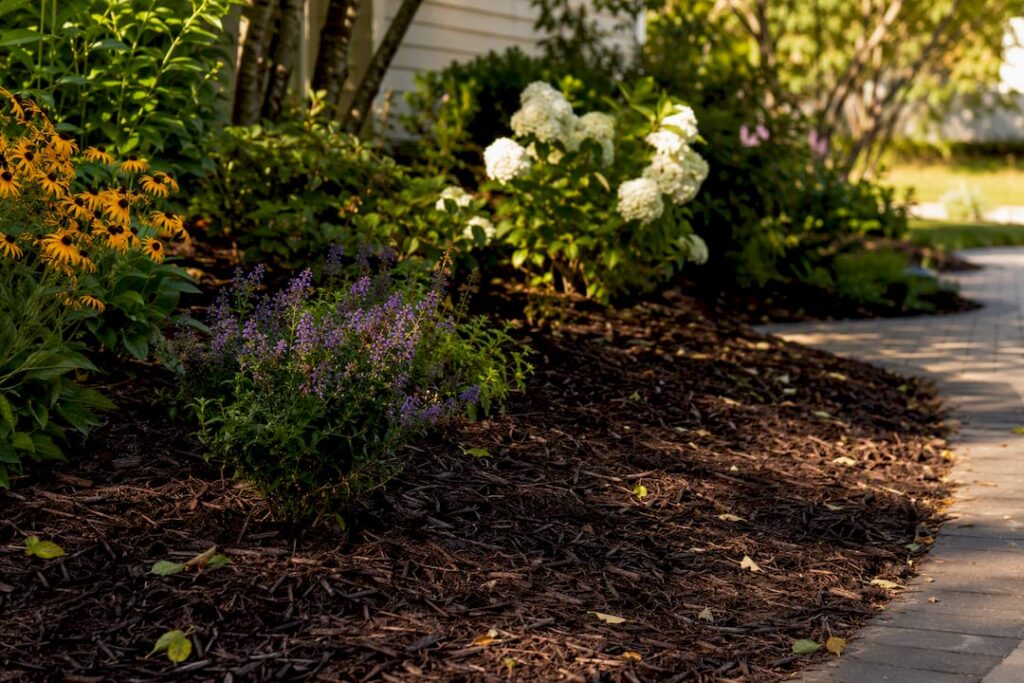
Wood mulch, especially the dark, dyed varieties, gives beds a crisp, manicured look that reads as intentional near a front entrance or patio. Pine straw has a softer, more natural texture that tends to disappear visually into woodland or naturalistic beds rather than standing out.
- Play areas and paths: wood mulch’s larger chips cushion foot traffic better and stay put underfoot.
- Formal beds: dyed or triple-shredded mulch holds its color and clean edges longer.
- Slopes and naturalistic plantings: pine straw blends in and needs less edging maintenance.
- Both fade with sun exposure, so plan on refreshing wood mulch color roughly once a year and pine straw slightly more often to keep the bed looking tended.
What Will Pine Straw or Mulch Cost You Over a Season?
A pine straw bale runs cheaper up front and covers about 50 square feet at 2 inches, while a cubic yard of wood mulch covers 100 to 120 square feet at a similar depth. Wood mulch is heavier and bulkier to move by hand, which is where delivery and professional installation start to pay for themselves on larger properties.
- Calculate square footage first. Measure your beds before buying either material so you’re not guessing at bale or yard counts.
- Factor in refresh frequency. Pine straw’s shorter lifespan can mean buying it more often, even though the per-bale price is lower.
- Weigh labor against material cost. Wood mulch’s weight makes spreading it over a large bed more physically demanding than distributing pine straw.
- Compare long-term cost, not just sticker price. A slightly pricier mulch that lasts three seasons can beat two rounds of cheaper pine straw over the same period.
Which Ground Cover Fits Your Specific Yard?
- Steep slope or erosion-prone bed: pine straw, for its interlocking mat.
- Acid-loving shrubs (azaleas, blueberries): pine straw, for easy upkeep and mild soil benefit.
- Vegetable garden: pine straw near plants to reduce rot; wood mulch on paths.
- Formal foundation bed: wood mulch, for color and clean edges.
- Play area or walking path: wood mulch, for cushioning and durability.
- Drought-prone, sandy bed: wood mulch, for better moisture retention.
Combination strategies: edge a bed with wood mulch for a tidy border, then use pine straw in the interior where slope or acid-loving plants make it the better fit.
Red flags for pine straw: heavy foot traffic areas, beds right against wood siding without a buffer, and large-scale harvesting sites where repeated raking can strip nutrients from the source stand.
Red flags for wood mulch: fresh, unaged wood chips in vegetable beds without added compost, dyed mulch around edibles, and piling mulch in a “volcano” shape against tree trunks.
When Should You Install It and How Deep?
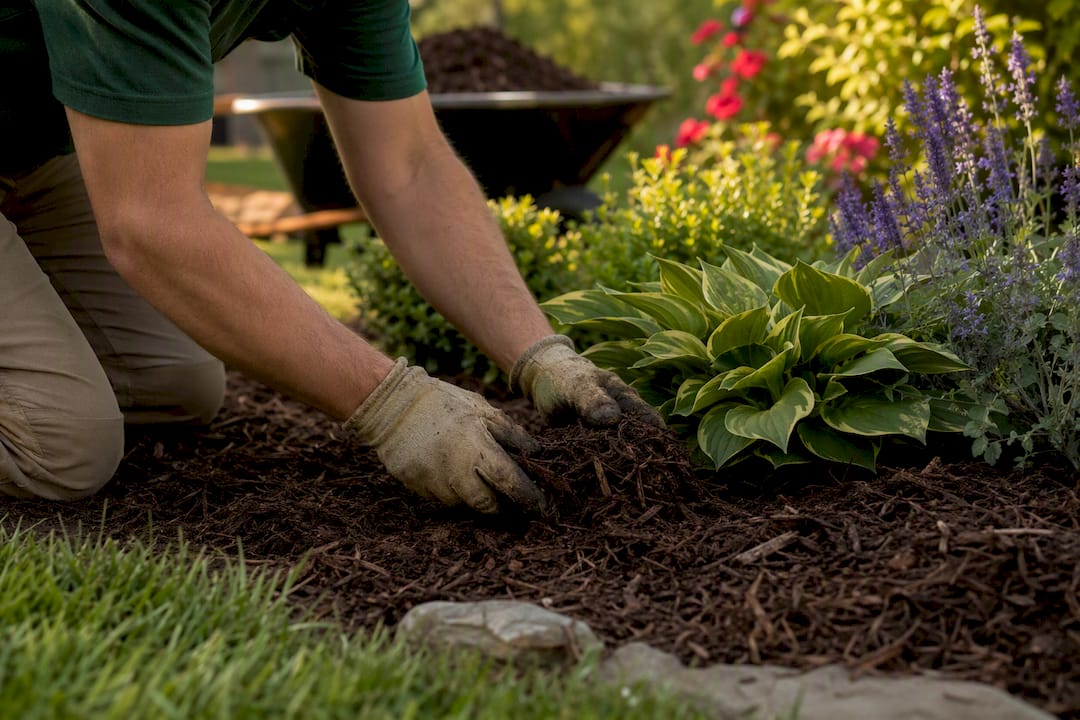
Ivan’s Landscaping has installed both materials across McHenry County since 2008, and depth is where most DIY jobs go wrong. A 2 to 3 inch layer is the sweet spot for both wood mulch and pine straw. Going deeper doesn’t suppress more weeds; it just risks smothering roots and holding too much moisture against stems.
- Clear old mulch and weeds before laying new material, don’t just pile on top.
- Install in early spring or fall, when temperatures are moderate and beds aren’t freshly planted.
- Keep both materials 2 to 3 inches back from trunks and stems.
- Edge beds cleanly first; a defined border keeps pine straw from blowing into the lawn.
Pro Tip: If your property has more than a few large beds or any slope steeper than a gentle grade, professional mulch installation saves you a weekend and gets the depth right the first time.
For readers weighing timing more closely, our guide on the best time to mulch in McHenry County breaks down the seasonal windows in more detail.
What the Research Actually Tells You to Prioritize
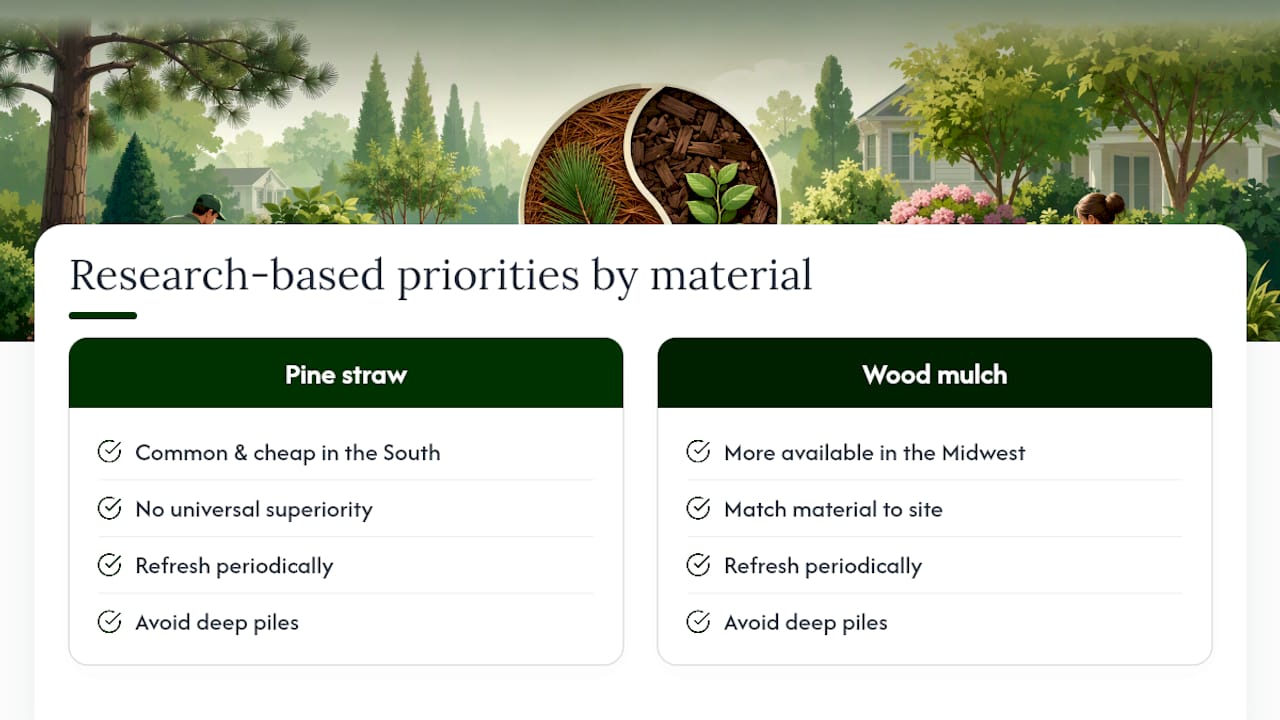
Most of the debate over mulch versus pine straw treats it like a binary choice, and that’s the wrong frame. The extension research doesn’t back a universal winner. It backs a match between material and site condition, and homeowners who pick based on regional habit or curb appeal alone often end up fighting the material instead of working with it.
The most overlooked point in the research is that pine straw’s popularity in the South is largely logistical, not agronomic. It’s cheap and locally abundant there, not objectively superior for soil health. In the Midwest, where wood mulch is often the more available and cost-effective material, that regional logic flips.
If you take one thing from this comparison, let it be this: stop asking which material is “better” and start asking what your bed actually needs. A slope needs erosion resistance. A vegetable bed needs clean fruit contact. A foundation bed needs color that holds. Match the material to that job, refresh it on schedule, and skip the deep pile that both university guidance and common sense warn against.
— Chas
Let Ivan’s Landscaping Handle the Heavy Lifting
Comparing coverage math and hauling bales or bags yourself takes a weekend most homeowners don’t have. Ivan’s Landscaping is the alternative to spending your Saturday calculating cubic yards. We deliver and install the right material at the right depth for your specific beds, whether that’s pine straw on a slope or shredded wood mulch around your foundation. Our mulch delivery and installation service covers McHenry County properties of any size, backed by a satisfaction guarantee and a clean job site when we’re done. If you’re ready to skip the trial and error, request a free estimate through our mulch installation services page and we’ll size up your beds this week.
Key Takeaways
The right ground cover depends on the job: pine straw excels on slopes and around acid-loving or vegetable beds, while wood mulch wins on moisture retention, longevity, and formal appearance.
| Point | Details |
|---|---|
| Match material to site | Pine straw suits slopes and acid-loving plants; wood mulch suits formal beds and moisture-hungry sites. |
| Pine straw’s pH myth | Research shows pine straw does not significantly acidify garden soil despite fresh needles testing acidic. |
| Depth stays the same | Both materials perform best at a 2 to 3 inch depth, regardless of which one you choose. |
| Refresh on different schedules | Pine straw typically needs replacing every 1 to 2 seasons; wood mulch lasts 2 to 3 seasons. |
| Hire Ivan’s Landscaping for larger jobs | Ivan’s Landscaping delivers and installs both materials at the correct depth across McHenry County properties. |
Sources
- Pine needle mulch: the myths and legends — N.C. Cooperative Extension (Lee County)
- Pine straw vs. mulch — HGTV