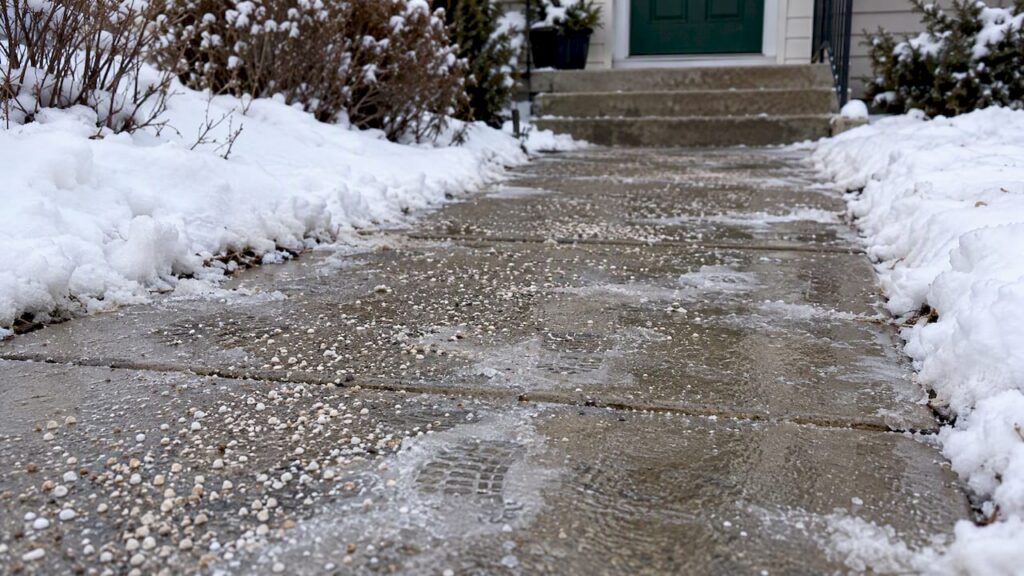
Rock salt is one type of ice melt, not its opposite. Rock salt is sodium chloride, the cheapest option and a good fit for moderately cold days. Products sold as “ice melt” are usually blends or other chlorides, such as calcium chloride or magnesium chloride, that keep working when it gets much colder. The right choice depends on pavement temperature, the surface you are treating and how much you want to spend.
TL;DR
- Rock salt (sodium chloride) works down to about 15°F. Below that it slows to a crawl, and below -6°F it does not work at all, according to University of Minnesota research.
- Calcium chloride works down to about -20°F and acts faster, but it costs more.
- Apply before ice forms, spread thinly, and use less than the label says if you can.
- Keep sodium and calcium chloride off new concrete, brick and stone, and keep it away from plant beds.
- Salt melts ice but gives no grip. Sand gives grip but melts nothing.
Table of Contents
- What “ice melt” actually means
- Rock salt, calcium chloride and magnesium chloride compared
- Salt brine vs. rock salt
- Why pavement temperature matters more than air temperature
- When to apply ice melt
- Protecting concrete, plants and pets
- How to choose
- Our perspective
- Let us handle winter for you
- FAQ
- Sources
What “ice melt” actually means
The bag labeled “ice melt” is a category. Inside it you may find sodium chloride (rock salt), calcium chloride, magnesium chloride, or a blend. Many bags add a colorant or an anti-caking agent. That is why two bags with the same label can behave very differently at 5°F.
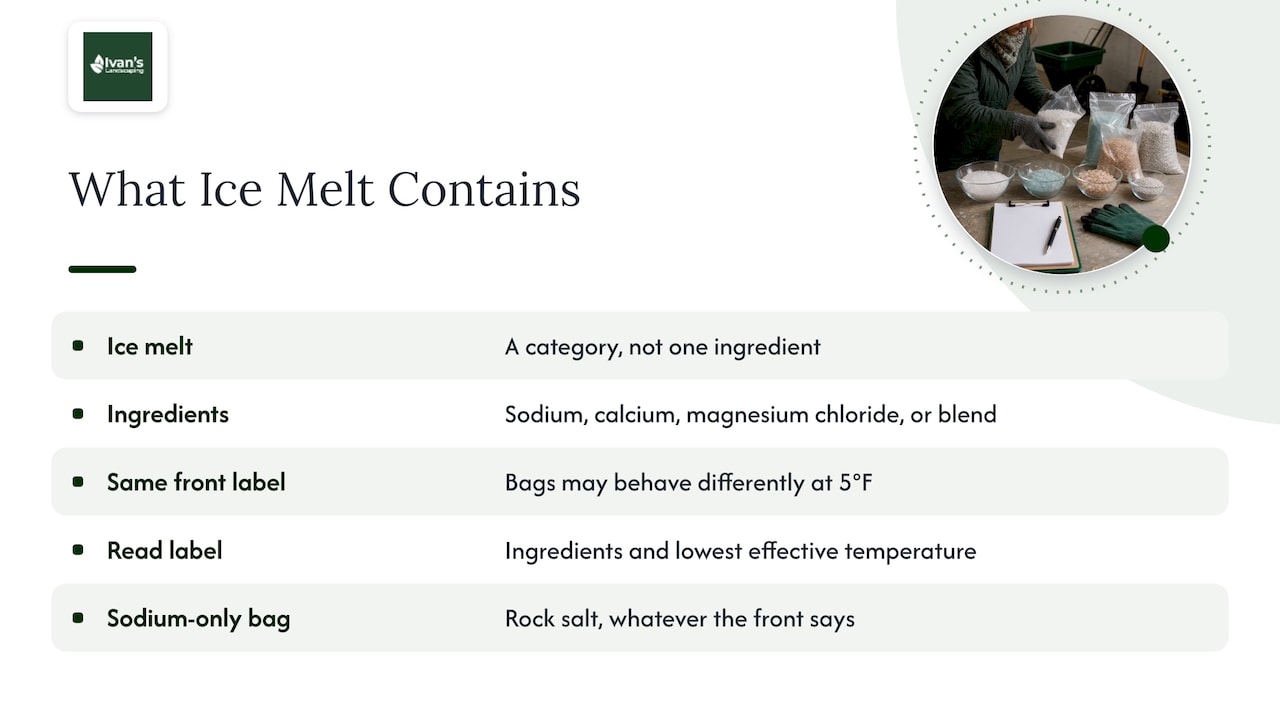
The label to read is the ingredient list and the stated lowest effective temperature. A bag that lists only sodium chloride is rock salt, whatever the front says.
Rock salt, calcium chloride and magnesium chloride compared
| Rock salt (sodium chloride) | Calcium chloride | Magnesium chloride | |
|---|---|---|---|
| Practical low temperature | About 15°F | About -20°F | Better than sodium chloride in the cold, per lab testing |
| Speed | Slower, needs heat from its surroundings | Faster, releases heat as it dissolves | Performs well in cold lab tests |
| Relative cost | Lowest | Higher | Higher |
| Main concern | Concrete, metal and plant damage | Can leave a damp, slick surface in deep cold | Same family of chloride concerns |
Sources for the table: the Minnesota winter salt guide for temperatures, a Canadian building research digest for the heat release, a laboratory study of snow and ice control chemicals for magnesium chloride, and the Minnesota Pollution Control Agency for cost.
Rock salt
Rock salt is inexpensive and easy to find, which is why it is the default for driveways and walks. It needs some warmth to dissolve, so it is slow when temperatures are low. For a McHenry County morning at 25°F with sun on the pavement, it does the job. For a week of single digits, it will disappoint you.
Calcium chloride
Calcium chloride gives off heat as it dissolves, so it starts working faster than sodium chloride, as the Canadian digest explains. It also attracts moisture. Below about 0°F it can leave a surface damp and slippery, and the same source suggests a light application of abrasives, or chemicals mixed with abrasives, may work better in that range.
Magnesium chloride
Laboratory testing has found that magnesium chloride brines outperform sodium chloride at cold temperatures, which is why road crews often choose them, according to the ASCE laboratory investigation. For a homeowner, it usually shows up as a premium bag or as part of a blend.
Salt brine vs. rock salt
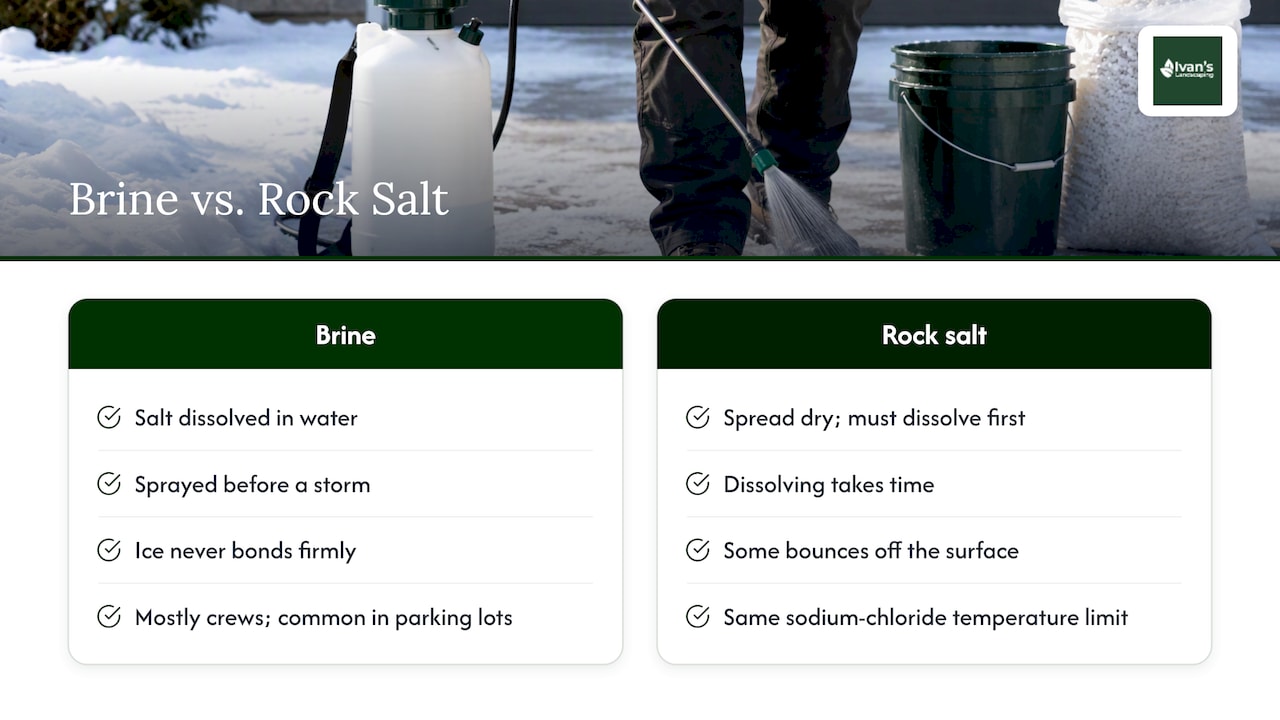
Brine is salt already dissolved in water. It is sprayed on before a storm, so the ice never bonds firmly to the pavement. Rock salt is spread dry and has to dissolve first, which takes time and some of it bounces away from the surface. Brine is mostly a tool for crews with sprayers, and it is a common approach for parking lots. For a home, bagged ice melt is the practical choice. Brine and rock salt share a weakness: both are sodium chloride, so the temperature limit is the same.
If you manage a commercial property, our page on deicing salt types for property owners explains how to choose by pavement conditions rather than the forecast.
Why pavement temperature matters more than air temperature
The lowest practical temperature printed on a bag is based on the temperature of the pavement, not the air, as the Minnesota guide notes. A dark asphalt driveway in afternoon sun can run warmer than the air. A shaded north-side walk can run colder. If you are choosing between products, assume the walk is colder than the thermometer says.
When to apply ice melt
The best time is before ice forms. The University of Maryland Extension advises spreading ice-melting products thinly and evenly ahead of the ice, following the manufacturer’s directions and, where possible, using less than recommended.
A simple routine for sidewalks and steps:
- Before the storm or freezing rain: put down a thin, even layer where people walk.
- During snowfall: shovel first, then treat what is left. Chemicals loosen the bond between ice and pavement but do not give traction on top of snow and ice, as the Minnesota Pollution Control Agency points out.
- After: sweep up leftovers. The MPCA suggests that if salt is routinely sitting on dry pavement after the snow is gone, it is time to rethink your approach.
More is not better. A heavy layer does not melt faster. It just ends up in your lawn and in the storm drain.
Protecting concrete, plants and pets
Sodium and calcium chloride are especially hard on newly poured concrete, and overuse can speed up freeze-thaw damage on sidewalks and driveways, according to the University of Maryland Extension. The same source says not to use them on brick or stone, and notes that large amounts of deicer can harm nearby plants and shrubs. The Canadian digest says both can corrode metals.
Some practical habits:
- Wait on new concrete. Check with your installer before the first winter.
- Keep deicer off bed edges. Shovel snow away from shrubs instead of piling salted snow on them.
- Use sand or wet ashes where you need footing. The Maryland guidance says in very cold weather they can provide traction and help with melting.
- Store bags in watertight containers in a dry place, as the Canadian digest recommends.
For a closer look at how surface damage happens, this piece on whether salt damages concrete is a good companion. Our own notes on preventing ice melt damage to concrete cover the steps we take on residential jobs, and if you are weighing grit against chemicals, see sand vs. salt for McHenry County.
How to choose
- Mild winter days, around 20°F to 30°F, older concrete or asphalt: rock salt, applied lightly.
- Single digits or below: a calcium chloride or magnesium chloride product, or a blend rated for those temperatures.
- New concrete, brick, pavers or stone: skip chloride products and use sand for traction. Our guide to paver patio maintenance covers winter care for pavers.
- Large lots and many entrances: hand-spreading gets expensive and inconsistent. See parking lot snow removal for how professional crews handle it.
Our perspective
Most of the winter damage we are called out to repair comes from the same pattern: too much product, spread too late, on the wrong surface. People buy the cheapest bag, pour it on after the ice has bonded, and then wonder why the concrete flakes by spring.
We build and maintain properties year-round in McHenry County, so we see what a winter does to walks, patios and plant beds. Our approach is to match the material to the pavement, apply it before ice forms, and keep the amount small. For commercial properties, we document the scope in writing so a manager knows what gets treated and when.
If you would rather not think about bags and thresholds, that is what a seasonal plan is for.
Chas
Let us handle winter for you
Ivan’s Landscaping has served McHenry County since 2008, with snow and ice removal for homes, businesses and HOAs, plus annual maintenance plans that carry your property from season to season. Free estimates are quick to schedule. See our snow removal services, or compare contract types in our guide to the snow removal contract.
FAQ
Is rock salt the same as ice melt?
Rock salt is a kind of ice melt, made of sodium chloride. Products labeled “ice melt” may be rock salt, calcium chloride, magnesium chloride or a blend, so check the ingredients and the lowest rated temperature.
Is calcium chloride better than rock salt?
It works faster and at colder temperatures, down to about -20°F compared with about 15°F for rock salt, according to the Minnesota winter salt guide. It also costs more, and both can harm concrete, metal and plants if overused.
When should I salt sidewalks?
Before ice forms, if you can. Spread a thin, even layer and follow the label. Putting salt down after ice has bonded takes longer and needs more product.
Can I use ice melt on new concrete or pavers?
It is best to avoid it. Sodium and calcium chloride are particularly damaging to newly poured concrete, and they should not go on brick or stone, per the University of Maryland Extension. Use sand for traction instead.
Sources
- Winter Salt Guide: Pavement Temperatures and Deicing Use, University of Minnesota
- CBD-191: Chemicals for Snow and Ice Control Around Buildings
- Laboratory Investigation of Performance and Impacts of Snow and Ice Control Chemicals
- Melting Ice Safely, University of Maryland Extension
- Winter Parking Lot and Sidewalk Maintenance Factsheet, MPCA
- How salt works and overview of deicing chemicals, MPCA
- Does Salt Damage Concrete?