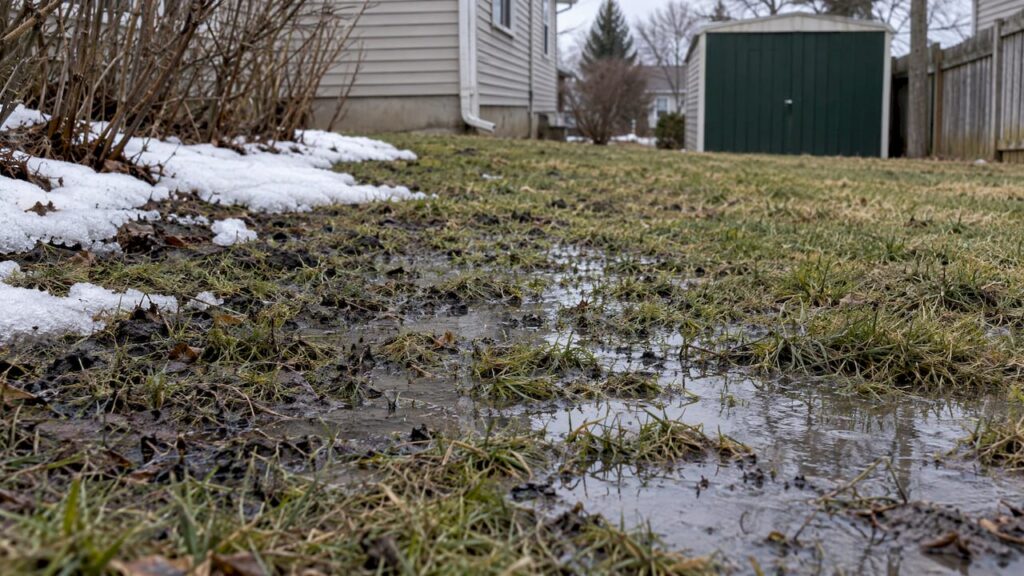
A soggy lawn after snowmelt is normal, and most of the time the right move is to wait. Stay off the turf until the soil firms up, rake lightly once it does, and repair only what has not recovered. If water keeps standing in the same spots, the cause is drainage or grading, and that is the part we can fix for McHenry County properties.
TL;DR
- Keep off soggy ground. Walking, mowing or raking wet soil compacts it and tears soft turf.
- Once the soil is no longer soggy, rake matted grass gently to open the canopy and let it dry.
- Gray or pink snow mold looks alarming but rarely kills grass. Fungicide sprays in spring are not the fix.
- Overseed bare patches when soil reaches about 50°F, and wait on fertilizer until mid-May.
- Puddles that return every spring point to a drainage or grading problem, not a lawn care problem.
Table of Contents
- Why the lawn is soggy after snow melts
- When the lawn is ready to walk on
- What the damage looks like
- How to repair the lawn after winter
- When the problem is drainage, not winter
- Prevent it next winter
- Let us handle the cleanup and the drainage
- Our perspective
- FAQ
- Sources
Why the lawn is soggy after snow melts
Frozen ground cannot absorb meltwater, so it sits on the surface or runs to low spots. Soil with small pores also holds water longer, and compacted soil leaves less room for water and air, as Illinois Extension explains. Much of northern Illinois has heavy clay, so a few days of mud is common.
What matters is how long the water stays. Too much water starves roots of oxygen, stunts growth and promotes root and crown rot. Snow disease is also worst where drainage is poor and grass stays wet for long periods, for instance where plowed snow was piled.
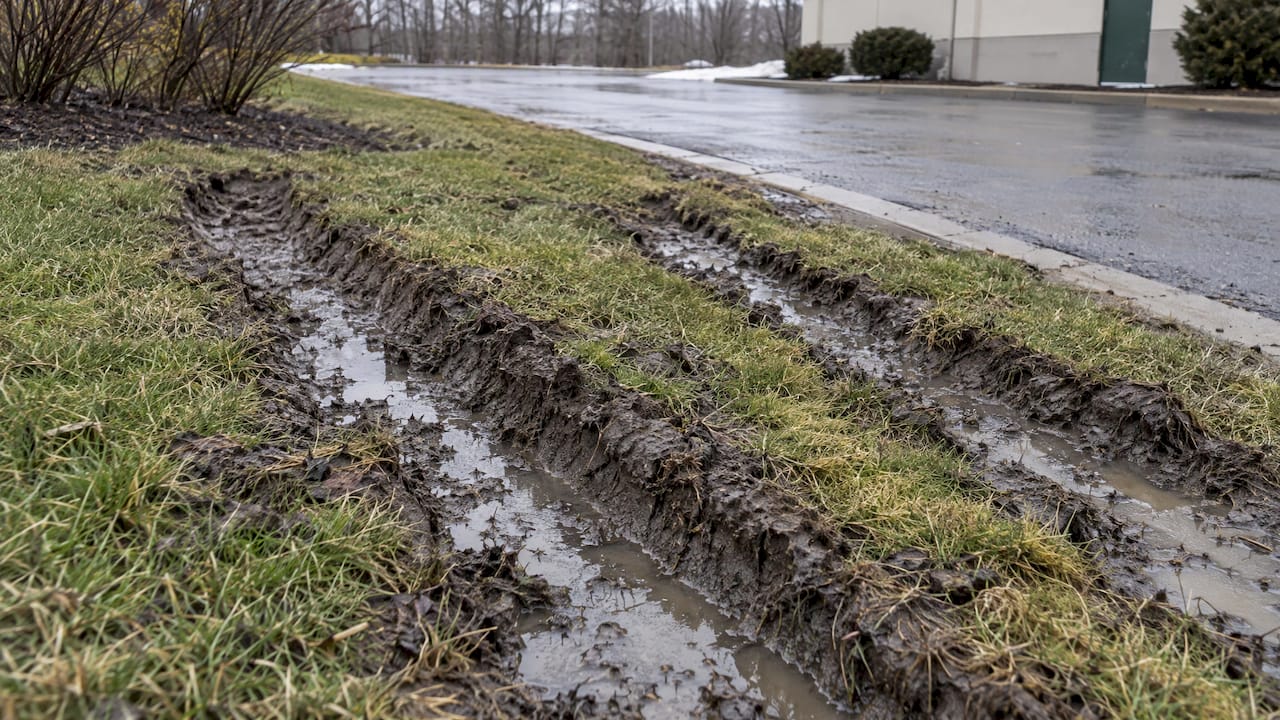
That last point matters on commercial sites and HOA common areas. The edge of a parking lot or driveway where snow was stacked is usually where the worst damage and the longest wet period show up.
When the lawn is ready to walk on
The test is simple: step on it. If your foot sinks or the soil squishes, wait. UMN Extension advises waiting until the soil is no longer soggy before you rake, and never mowing wet turf. Illinois Extension also says to avoid driving, walking or working wet soils to prevent compaction.
This includes equipment. A mower or a delivery truck on saturated ground leaves ruts that can last all season.
What the damage looks like
Most lawns that look dead after winter are dormant, not destroyed. Check for these signs before you decide anything needs replacing.
| What you see | Likely cause | What to do |
|---|---|---|
| Matted, crusty grass, gray-white or pink | Snow mold | Rake lightly when the soil is firm and give it time |
| Roughly circular white to gray patches that merge into straw-colored areas | Gray snow mold | Rake, then overseed if grass does not return |
| Standing water or squishy soil weeks later | Poor drainage or compaction | Fix drainage or grading |
| Brown, flat grass with no mold | Dormancy or snow compaction | Wait for warmer soil |
Illinois Extension notes that gray and pink snow mold both occur in Illinois, and severity varies by year. The fungi are cold-tolerant and active between about 25 and 60°F, at snowmelt and during cold drizzly spells. UMN Extension says these patches rarely kill grass, and light raking and time are usually all that is needed.
How to repair the lawn after winter
1. Rake gently once the soil is firm
Light raking removes debris and matted grass, improves airflow and supports natural recovery. Aggressive raking damages soft turf and wet soil. Nebraska Extension says that in most cases raking out matted areas opens the canopy and lets grass begin recovering. Our spring yard cleanup checklist lays out the order of work for McHenry County yards.
2. Start mowing only when the ground is firm
Mowing helps dry the lawn only when the ground is firm and the grass has reached about 3½ to 4 inches, according to UMN Extension. If you would rather not rut the lawn on the first cut, our lawn mowing service starts the season when conditions allow.
3. Overseed bare patches at the right time
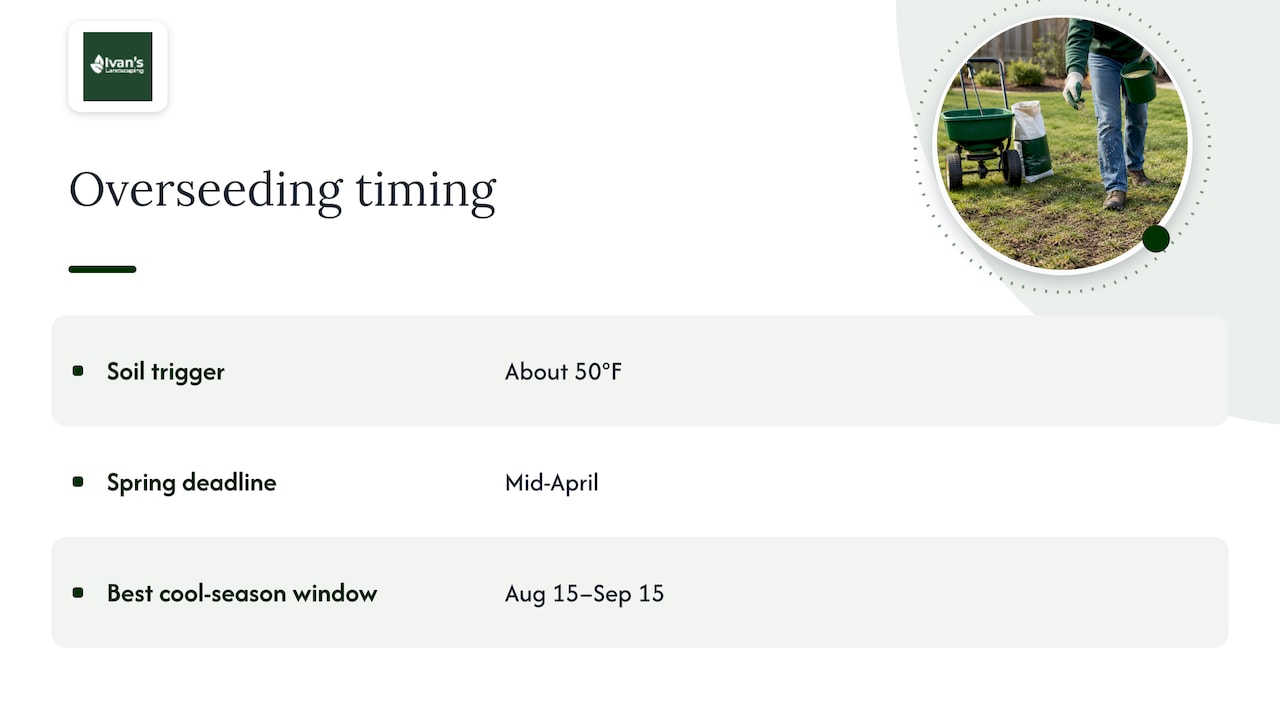
Overseed when soil reaches about 50°F. Illinois Extension says that if you seed in spring, plan to finish by mid-April, and that the best seeding window for cool-season lawns is August 15 through September 15. Purdue Extension recommends raking and overseeding as soon as possible where gray snow mold damaged turf. For larger dead areas, sod installation gives you a finished surface without waiting on seed, and our sod watering schedule covers the first 30 days.
4. Hold off on fertilizer and aeration
Illinois Extension advises waiting until mid-May to fertilize, because early turf fertilizer pushes leaf growth at the expense of roots. UMN Extension says spring aeration generally does more harm than good unless compaction is severe, and that late summer or fall is ideal. Illinois Extension says core aeration belongs when lawns are actively growing, typically May or September. Our guide to aeration versus dethatching helps you pick which your lawn needs.
When the problem is drainage, not winter
If the same low spot is soggy every spring, raking will not help. Water is collecting because of the slope, compacted soil or a lack of an outlet. Illinois Extension lists ensuring surface drainage among the ways to reduce snow mold risk, along with managing thatch and pruning dense bordering plants to improve air circulation.
These are the usual fixes, from simplest to largest:
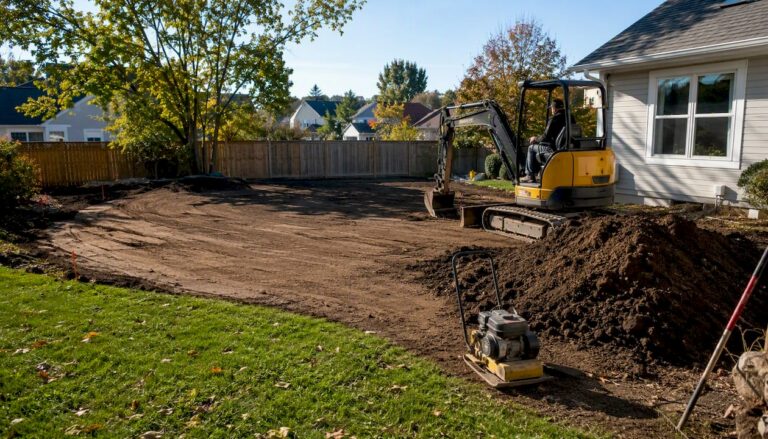
- Regrade low spots so water moves away from the lawn and the foundation. See our guide to grading around a foundation.
- Add a shallow swale to carry runoff to a safe outlet. Test the soil first, as in our drainage swale design guide.
- Try the smaller options in our weekend yard drainage fixes.
One caution if you test drainage yourself: Illinois Extension notes that a percolation test run in overly wet soil can give false results. Wait for a dry spell.
Prevent it next winter
Most of the prevention happens in fall. Mow until the grass is completely dormant and keep leaves off the turf. Avoid heavy late-fall nitrogen: UMass Amherst advises applying fertilizer a few weeks before dormancy and not after the first frost. Our fall yard cleanup guide covers the routine. Property managers should also pick snow storage areas away from lawns that already drain poorly.
Let us handle the cleanup and the drainage
We have served residential and commercial properties in McHenry County since 2008. Our spring and fall cleanup removes matted debris once the ground is ready, and our drainage and grading work addresses the spots that stay wet. We also build annual maintenance plans for homes, HOAs and commercial sites, with free estimates and a satisfaction guarantee. You can start from our main services page.
Our perspective
Most spring lawn calls we get are about timing. People see brown, matted grass and want to act the first warm weekend, but the lawn is usually still too wet to work on. Patience and a light rake do more than any product.
The calls that need real work are the ones where the same corner floods every year. That is a grading and drainage question, and it is cheaper to correct once than to reseed it every April. We document the scope of the job up front, keep the site clean and stand behind the work with a satisfaction guarantee.
For HOAs and commercial sites, a maintenance plan that covers fall prep, spring cleanup and snow storage planning keeps these problems from piling up.
Chas
FAQ
How long does it take a soggy lawn to dry out after snowmelt?
There is no fixed number, because it depends on soil type, slope and weather. Judge by feel: when you can walk across it without sinking, the soil is ready for light raking. If water is still standing weeks after the snow is gone, look at drainage.
Do I need fungicide for snow mold?
Usually not. UMN Extension says spring fungicide applications won’t help, and Nebraska Extension does not recommend them for most cases. Light raking and time let the grass recover.
Can I walk on or mow a soggy lawn?
No. Walking on saturated soil compacts it, and mowing wet turf damages it. Wait until the ground is firm and the grass is about 3½ to 4 inches tall.
When should I reseed bare patches?
Spring seeding can go down when soil reaches about 50°F, ideally finished by mid-April in Illinois. The best window for cool-season lawns is August 15 through September 15.
Sources
- Illinois Extension: Improving Soil Drainage
- UMass Amherst: What’s Wrong With My Lawn?
- University of Illinois IPM: Snow Molds of Turfgrasses
- UMN Extension: Spring lawn care
- Illinois Extension: Preventing Winter Damage to Lawns
- Nebraska Extension: Lawn Tips for Late Winter
- Purdue Extension: Gray Snow Mold
- Illinois Extension: Spring lawn care
- Illinois Extension: Go green with eco-friendly lawn care
- UMass Amherst: Snow Mold on Lawns