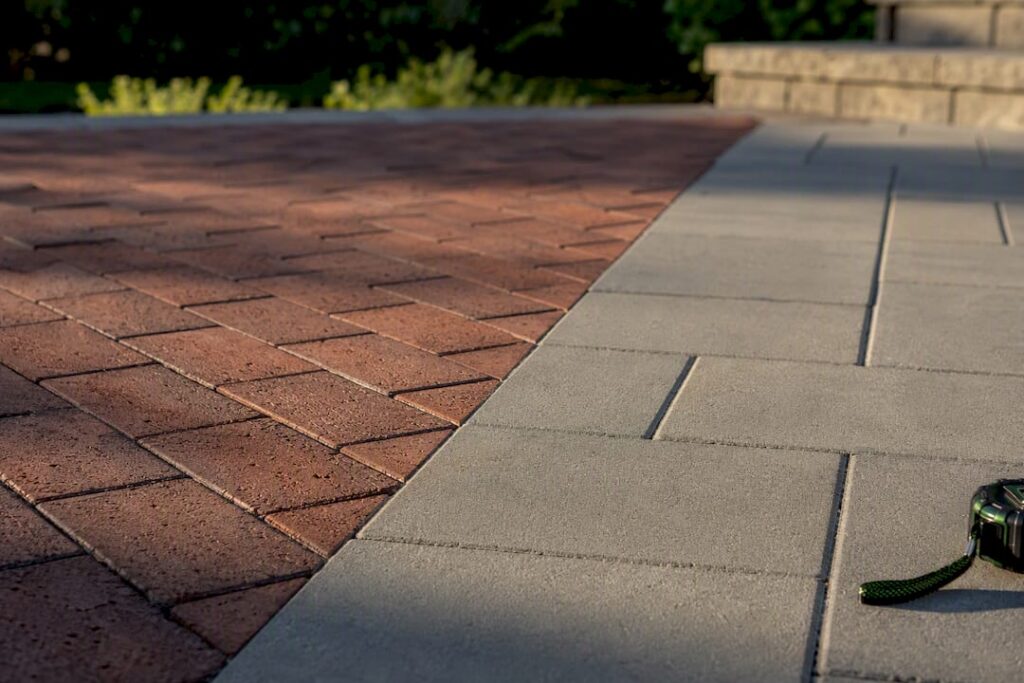
Concrete pavers usually win on upfront cost and design flexibility, while clay brick tends to win on color permanence, repairability, and long-term lifespan. If your budget is tight or you want a specific color and pattern, concrete pavers make sense. If you want a surface that ages gracefully and can be fixed one brick at a time, clay brick is worth the higher price. Watch for one catch: some “brick” products sold today are actually concrete brick lookalikes, so always confirm the material before you compare quotes.
TL;DR:
- Concrete pavers typically cost $6 to $15 per square foot installed, whereas clay brick ranges from $10 to $25, with site conditions and pattern complexity affecting total expenses.
- Proper base preparation and drainage are critical, as inadequate sub-base compacts and shallow layers cause shifting and early failure regardless of material choice.
- Concrete pavers require resealing every two to five years to prevent fading and staining, while brick’s color runs through the unit, reducing ongoing maintenance needs.
- Brick’s joints absorb ground movement and allow for easier spot repairs, making it more durable in freeze-thaw climates and for long-term lifespan.
- When choosing, prioritize your budget, desired appearance, and maintenance willingness, asking specific questions about material grade and installation details for optimum results.
Table of Contents
- Brick vs Concrete Pavers: Quick Compare
- How Brick and Concrete Pavers Are Actually Made
- Brick vs Concrete Durability: Cost Comparison and What Drives Price
- Which Material Handles Freeze-Thaw and Heavy Traffic Better?
- Installation and Sub-Base Prep: What Never Gets Skipped
- Maintenance and Repair: The Ongoing Cost Nobody Mentions
- How to Choose Between Brick and Concrete Pavers
- Slip Resistance and Safety Considerations
- Sealing and Protective Treatments: What Each Material Needs
- A Note From Ivan’s Landscaping: Practical Takeaways From Real Installs
- Get a Free Estimate for Your Paver Patio Project
- Sources
- FAQ
Brick vs Concrete Pavers: Quick Compare
Before you dig into installed costs and climate specs, it helps to see the trade-offs side by side. Here’s how the two materials stack up on the factors homeowners care about most.
Concrete pavers:
- Lower installed cost and more shapes, colors, and patterns to choose from
- Faster installation because units are uniform and manufactured to consistent tolerances
- Usually need resealing every few years to protect color and resist stains
Clay brick pavers:
- Color runs through the entire unit, so it doesn’t fade or chip away like a surface coating
- Individual bricks can be lifted and swapped without disturbing the whole patio
- Classic, timeless look, but typically heavier and pricier per square foot
One caution worth repeating: ask your contractor whether the “brick” in their quote is fired clay or a concrete unit molded to look like brick. The price and performance differences are significant, and concrete pavers actually offer more design flexibility and faster installation than most people assume when they hear the word “brick.”
How Brick and Concrete Pavers Are Actually Made
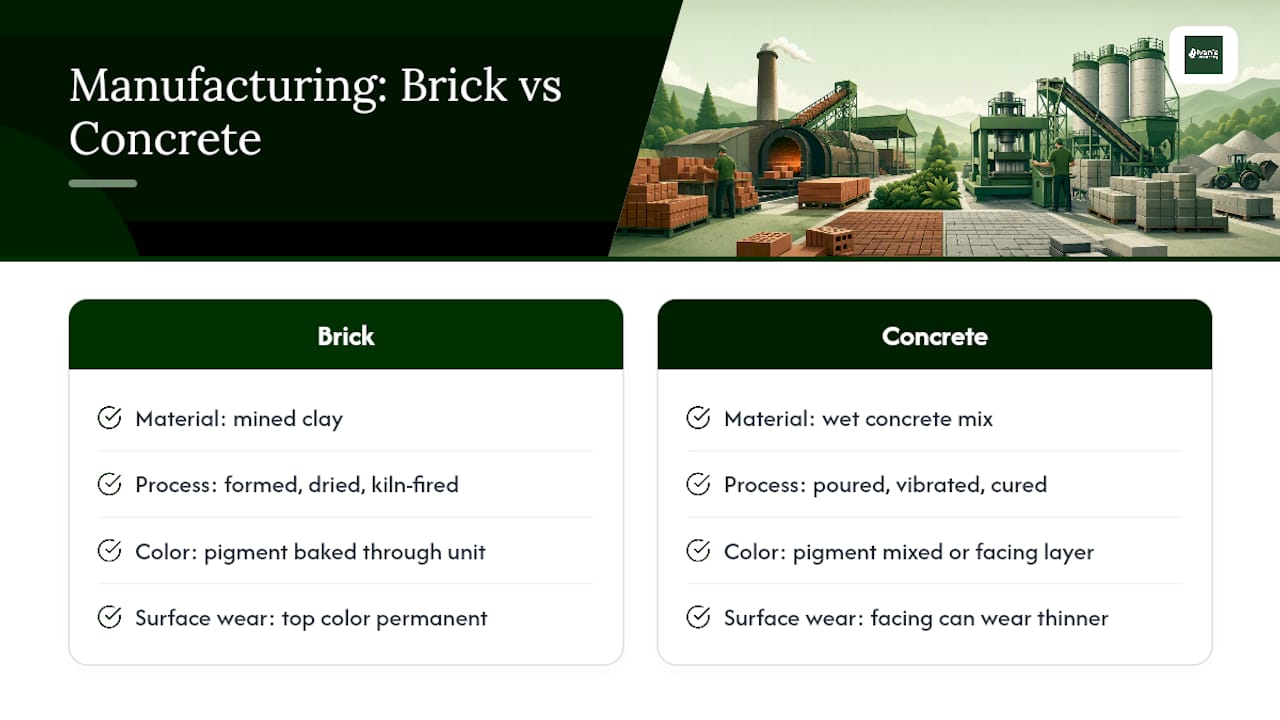
Clay brick starts as mined clay that gets mixed, formed into shape, dried, and then fired in a kiln at high temperatures. That firing process is what gives brick its color permanence: the pigment isn’t a coating, it’s baked into the clay all the way through the unit. The EPA’s technical documentation on brick manufacturing notes that firing temperature and process (extrusion versus soft mud molding) directly affect a brick’s compressive strength and water absorption rate, both of which predict how long it will hold up outdoors.
Concrete pavers are molded, not fired. Wet concrete gets poured into forms, vibrated to remove air pockets, and cured. Pigment gets mixed into the batch or applied as a facing layer, which is why the top surface can wear thinner over decades of foot traffic than a brick’s color does.
When you’re shopping, ask about water absorption rate for brick and compressive strength (PSI) for concrete. Both numbers tell you more about how the specific product will age than the price tag does.
Brick vs Concrete Durability: Cost Comparison and What Drives Price
Installed costs vary more than most homeowners expect, and the material itself is only part of the equation. Basic poured concrete patios typically run $6 to $15 per square foot installed, concrete pavers land somewhere in the middle, and clay brick pavers commonly run $10 to $25 per square foot installed.
Several factors push those ranges up or down:
- Base depth and drainage — deeper aggregate bases and proper drainage planning cost more but prevent shifting later.
- Pattern complexity — herringbone or basket weave patterns require more cutting than a simple running bond.
- Cutting and edging — curved beds, borders, and tight corners increase labor hours.
- Sealing — concrete often needs a sealer applied at installation, adding to the initial bill.
- Site conditions — poor drainage, clay soil, or restricted equipment access can raise total project costs by 15 to 50 percent before a single paver goes down.
On a 400 square foot patio, choosing concrete pavers over clay brick can save roughly $1,600 to $4,000 depending on pattern and site prep. That gap is real money, but it doesn’t account for resealing or repair costs down the road. Always ask for an itemized quote that breaks out base preparation separately from material and labor. A bundled number hides where corners might get cut.
Which Material Handles Freeze-Thaw and Heavy Traffic Better?
Expected lifespan depends less on the material category and more on grade and base quality, but the ranges still differ meaningfully. Well-installed clay brick can last several decades, sometimes outliving the original homeowner’s tenure in the house. Concrete pavers and poured concrete slabs typically last 20 to 30 years with proper care, shorter if the mix or base was undersized for the climate.
Freeze-thaw fact check: In cold-winter climates, a concrete patio slab should be specified at a minimum of 4,000 PSI with 5 to 7 percent air entrainment to resist cracking from repeated freezing and thawing. Skip that spec and you’re gambling on a shorter lifespan.
Brick’s individual units and sand-filled joints give it a built-in advantage in freeze-thaw regions: the joints flex and absorb ground movement instead of transferring stress across one continuous surface. That’s also why a brick patio can be repaired one unit at a time while a cracked concrete slab often needs a larger patch job.
For driveways, load matters more than looks. Vehicle traffic demands a thicker base and, if you go with concrete, a higher PSI mix than a patio needs. If you’re weighing best pavers for driveways, ask your contractor for the specific base depth and compaction plan for vehicle loads, not just foot traffic.
Installation and Sub-Base Prep: What Never Gets Skipped
Nearly every paver failure traces back to the base, not the material on top. Poor sub-base preparation causes shifting and premature failure regardless of whether you chose brick or concrete.
A correct installation follows this sequence:
- Excavate to the proper depth, accounting for both the paver thickness and the base layer.
- Lay and compact aggregate base in lifts, typically 4 to 8 inches depending on soil type and use (driveways need more).
- Add a bedding layer of sand, screeded flat and even.
- Set the pavers in your chosen pattern, leaving consistent joint spacing.
- Install edge restraints along every open edge to lock the field in place.
- Fill joints with polymeric sand for pavers exposed to weather, or mortar if you’re setting brick in a more formal, mortared pattern.
Watch for shortcuts in a quote: no mention of compaction equipment, vague “base prep included” line items with no depth specified, or missing edge restraints. These are the details that separate a patio that lasts fifteen years from one that heaves within three winters.
Pro Tip: A small stepping-stone path is a reasonable DIY project. A patio or driveway over a few hundred square feet is not, mainly because plate compactors and proper base depth control require equipment and experience most homeowners don’t have on hand.
Maintenance and Repair: The Ongoing Cost Nobody Mentions
Concrete pavers typically need resealing every 2 to 5 years to protect color and resist staining, and skipping that maintenance accelerates fading and makes the surface more porous to oil and rust stains. A professional reseal job on a mid-size patio generally runs a few hundred dollars, less if you do it yourself with the right sealer and a weekend.
Brick asks less of you day to day. Because color runs through the whole unit, there’s no sealing requirement tied to appearance. Ongoing care is mostly joint sand replenishment and occasional weed control between units. When a brick does crack or stain, you replace that single unit rather than resurfacing an entire section.
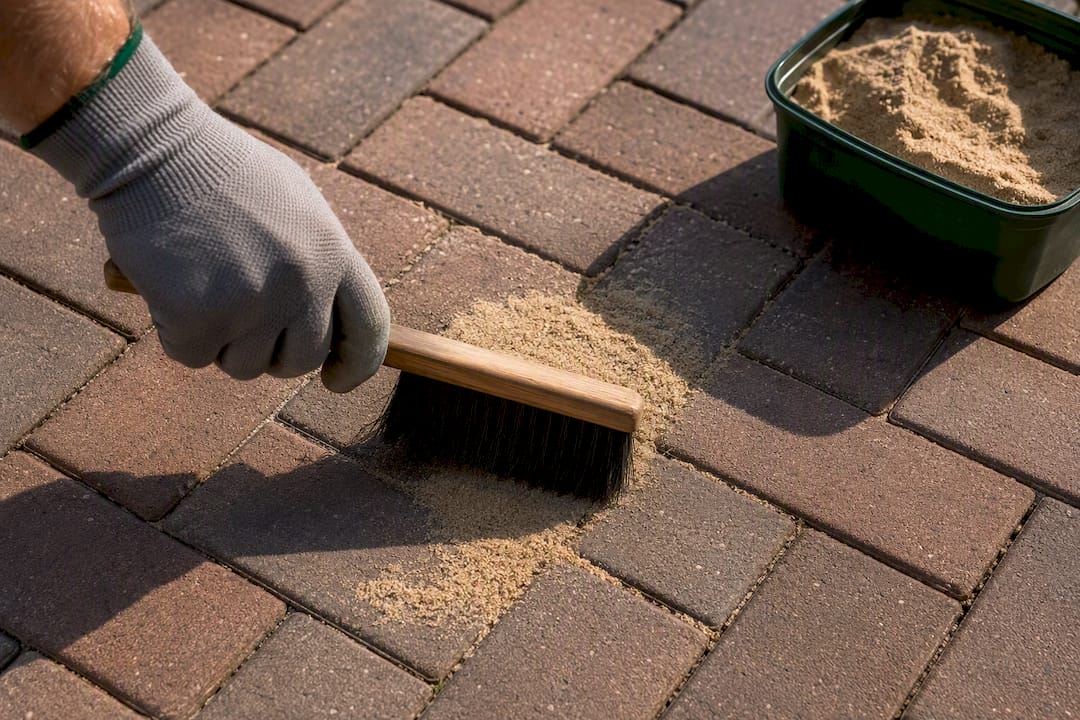
Here’s the trade-off worth remembering: lower upfront cost doesn’t always mean lower total cost once you factor in a couple of decades of resealing versus spot brick replacement.
How to Choose Between Brick and Concrete Pavers
Start by ranking your own priorities honestly: budget, appearance, how long you want the surface to last, and how much maintenance you’re willing to do. That ranking should drive the material choice, not the other way around.
If concrete pavers are on the table, ask your contractor:
- What PSI is the mix rated for, and does it include air entrainment for freeze-thaw protection?
- How often will this need resealing, and is that included in future service?
If brick is on the table, ask:
- Is this kiln-fired clay brick or a concrete unit styled to look like brick?
- Where is the brick sourced, and can matching replacement units be found later if one cracks?
Red flags in any quote include bundled “base work” with no depth or compaction spec listed, no mention of edge restraints, and vague pattern descriptions that don’t match what you discussed. A contractor who can’t answer these questions on the spot probably isn’t specifying the job carefully enough.
Slip Resistance and Safety Considerations
Surface texture, not material category, is the biggest factor in slip resistance for both brick and concrete pavers. A smooth, polished concrete finish gets slick fast when wet, while a textured or exposed-aggregate concrete surface holds traction far better around pools and walkways.
Clay brick has a naturally grainy surface straight out of the kiln, which tends to give it decent traction even without added texture. That said, brick can develop a slippery film over time if algae or moss builds up in shaded, damp areas, so the surrounding drainage and sun exposure matter as much as the material itself.
For pool decks, entryways, and sloped walkways, ask about slip ratings on any concrete paver you’re considering, and look for a textured or brushed finish rather than a smooth one. With brick, prioritize proper drainage and periodic cleaning over the material choice itself, since a well-drained brick patio in full sun rarely develops the slick buildup that shaded, poorly drained areas do.
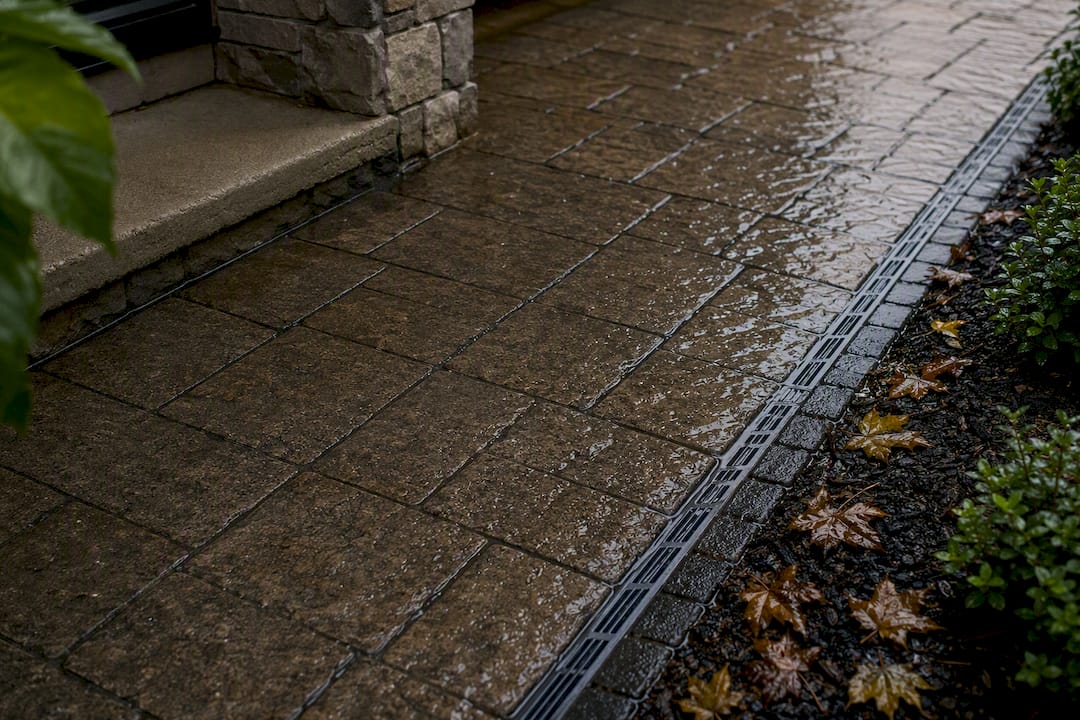
Neither material is inherently safer across the board. The details that actually protect you, texture, drainage, and maintenance, matter more than whether you chose brick or concrete in the first place. If safety around water features or steep grades is a top concern, say so when you’re getting quotes, because it should change the surface finish your contractor recommends.
Sealing and Protective Treatments: What Each Material Needs
Concrete pavers are built to be sealed. A quality sealer protects the surface from staining, resists color fade from UV exposure, and helps repel water that would otherwise seep in and freeze during winter. Most manufacturers and installers recommend reapplying that seal every two to five years, and skipping it shortens the paver’s effective life even if the underlying material is still structurally sound.
Clay brick is a different story. Because pigment runs all the way through the unit rather than sitting on the surface, brick doesn’t rely on a sealer for color retention the way concrete does. Some homeowners still choose to apply a breathable sealer to reduce moss growth or make cleaning easier, but it’s optional rather than essential.
One caution applies to both materials: never seal a paver surface that hasn’t fully cured or that still has moisture trapped underneath from recent rain or a fresh installation. Trapping moisture under a sealer can cause discoloration or even cause the sealer to peel. Ask your contractor how long they recommend waiting after installation before the first seal coat goes on, and whether they use a solvent-based or water-based product, since that affects both appearance and how often you’ll need to reapply.
A Note From Ivan’s Landscaping: Practical Takeaways From Real Installs
Most homeowners we talk to default to concrete for budget reasons, but the ones planning to stay in their home long term often lean toward brick once they understand the repair advantage… Browse our project gallery or reach out for an on-site evaluation to see what fits your yard.
Get a Free Estimate for Your Paver Patio Project
Whichever material you land on, the installation is what determines whether it lasts. Professional landscaping companies handle site evaluation, base preparation, drainage planning, and paver installation for patios, providing comprehensive service without the need to hire separate contractors for each step. Estimates may be free and scheduled quickly; many services include satisfaction guarantees and promise a clean site upon completion.
Before your estimate visit, walk your yard and note where water pools after rain, roughly what square footage you’re picturing, and whether you’re leaning brick or concrete pavers so we can talk through the trade-offs specific to your soil and drainage. We handle the compaction equipment and base depth calculations that DIY projects often get wrong. If you’re ready to see what a properly built patio costs for your space, start with our paver patio installation page for details, or request your free estimate today.
Sources
- The benefits of concrete pavers versus brick pavers — Belgard pro tips
- How to restore faded pavers — This Old House
- Brick vs Concrete Patio 2026: Cost, Durability, Maintenance & Which Wins — ConcreteCalculate
- EPA technical note: Brick and structural clay products manufacturing
FAQ
Which Is Cheaper, Concrete or Brick Pavers?
Concrete pavers are generally cheaper, with basic poured concrete running $6 to $15 per square foot installed compared to $10 to $25 per square foot for clay brick.
How Much Does a 20×20 Brick Patio Cost?
A 400 square foot clay brick patio typically falls in the $4,000 to $10,000 range installed, depending on pattern complexity, base depth, and site conditions.
What Are the Disadvantages of Using Brick Pavers?
Brick pavers cost more upfront than concrete, weigh more (which can add to installation labor), and offer fewer color and shape options since color and texture are limited to what the kiln produces.
What Are the Downsides of Concrete Pavers?
Concrete pavers need resealing roughly every two to five years to protect color and resist staining, and their surface pigment can wear thinner over decades compared to brick’s through-body color.
Are Concrete Pavers Better for a Driveway?
Concrete pavers are often preferred for driveways because they can be specified at higher PSI ratings for vehicle loads, but proper base depth and compaction matter more than the material choice for long-term performance under traffic.