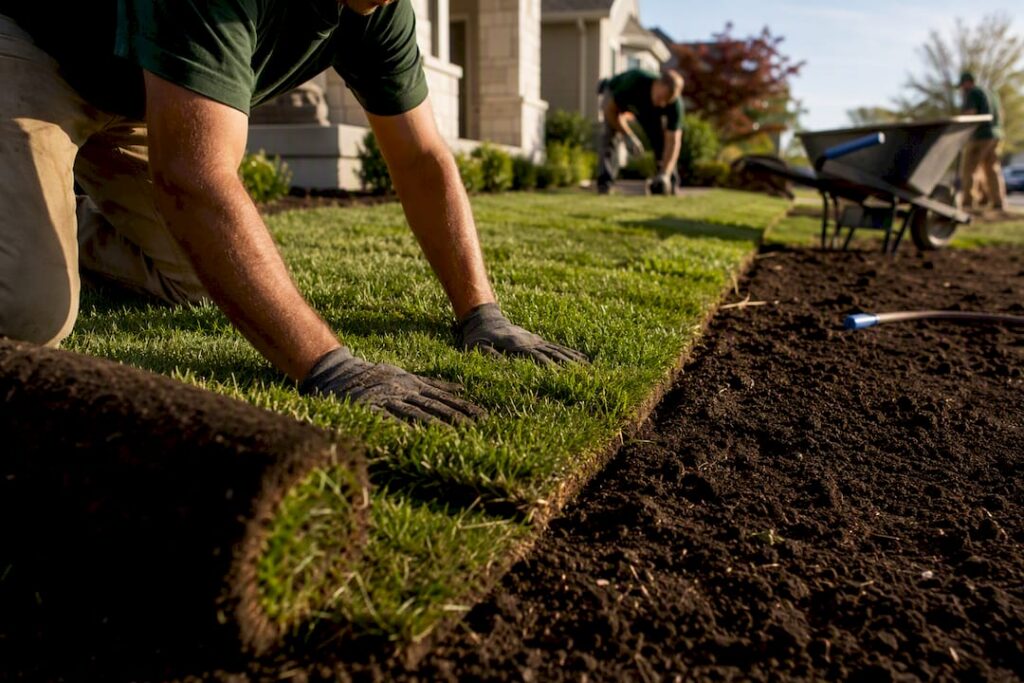
Most homeowners pay between $1 and $3 per square foot for professionally installed sod, with a typical full lawn landing between $1,000 and $3,000 depending on size and prep work. That price covers four buckets: sod material, delivery, labor, and site preparation. Site prep is usually the variable that pushes a quote higher, since removing an old lawn, correcting grade, or amending poor soil can add significant cost before a single roll of sod goes down.
TL;DR:
- Site preparation costs, such as grading and soil amendments, can significantly increase total installation prices, especially for poor soil conditions.
- Delivery surcharges are common for small orders, making minimal patches more expensive per square foot than larger, full-pallet projects.
- Scheduling during peak seasons like spring or fall often results in higher costs and longer wait times due to increased demand.
- Choosing the right grass type depends on climate, with Bermuda and Zoysia suitable for warm areas and Kentucky bluegrass or tall fescue better for cooler regions, affecting material costs.
- Professional estimates should itemize all costs separately to avoid hidden fees, especially for site prep, disposal, and possible additional work.
Table of Contents
- Breaking Down the Real Cost for Sod Installation
- What Does Sod Cost for a Typical Yard Size?
- What Factors Change Your Sod Installation Quote the Most?
- Which Grass Type Costs the Most to Install?
- Is DIY Sod Installation Actually Cheaper Than Hiring a Pro?
- What Month Should You Lay Sod?
- How to Calculate Your Own Sod Installation Budget
- What Should You Ask Before Booking a Sod Installer?
- A Contractor’s Honest Take on Budgeting for Sod
- Get a Free, Itemized Sod Installation Estimate
- Sources
- FAQ
Breaking Down the Real Cost for Sod Installation
A quote that just lists “sod installation, EX” tells you almost nothing. A useful estimate separates four line items, and knowing what each should cost helps you spot a bid that’s missing something.
Sod material typically runs $0.35 to $0.80 per square foot on its own, before installation. Once labor and delivery are added, installed pricing climbs to roughly $1 to $6 per square foot, with most standard residential jobs clustering closer to the low end of that range unless the site needs heavy correction.
Delivery and pallet handling hit small orders hardest. A pallet typically covers 400 to 500 square feet, and ordering less than a full pallet or two often triggers a delivery surcharge that makes a tiny patch cost more per square foot than a full-yard job.
Labor gets priced either per square foot or, for smaller or oddly shaped lots, by the hour. Installers also tack on scheduling premiums during busy spring and fall windows, when crews are booked out and demand outpaces available install dates.
Site prep is where quotes diverge the most. Watch for these charges on any itemized estimate:
- Old lawn or weed removal (often billed separately from install labor)
- Grading to fix low spots or improve drainage
- Soil amendments or topsoil delivery
- Dump or haul-away fees for removed sod and debris
- Fuel or travel surcharges for properties outside a contractor’s normal service radius
If a bid looks suspiciously low, check whether prep and disposal are included or waiting to appear as change orders later.
What Does Sod Cost for a Typical Yard Size?
Per-square-foot pricing is useful, but most homeowners think in whole-yard totals. Here’s how the math plays out across three common yard sizes, using low, typical, and heavy-prep scenarios.
These figures track with what cost calculators and market aggregators model for installed sod projects, which show typical jobs landing in the low thousands with a wide range depending on scope.
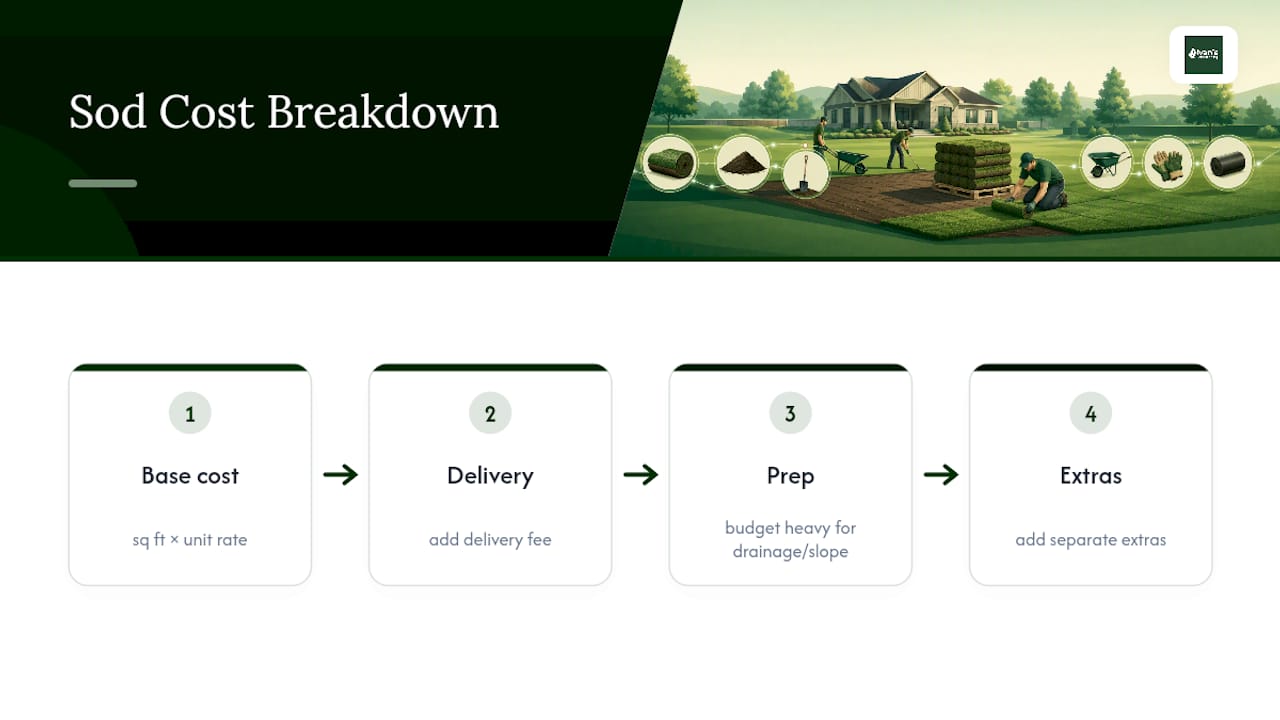
To build your own estimate, use this formula: (square footage × unit rate) + delivery + prep + extras. Start with a per-square-foot rate from a local quote, multiply it by your yard size, then add delivery and any prep items separately rather than assuming they’re baked in. If your site has drainage problems or a steep slope, budget toward the heavy-prep column, not the low one.
What Factors Change Your Sod Installation Quote the Most?
Two identical-sized yards can generate very different bids. These five factors explain most of the gap:
- Soil condition. Compacted or nutrient-poor soil often needs topsoil or amendments before sod can root properly. A basic soil test runs $20 to $100, and amendments based on those results add modestly to the total but meaningfully improve establishment success.
- Grading and drainage. Correcting low spots or poor slope is billed per square foot or as a lump sum, and skipping it invites pooling water and dead patches within months.
- Access and logistics. A yard with narrow gates, steep stairs, or a long carrying distance from the driveway to the install zone raises labor hours, since crews can’t wheel pallets directly to the site.
- Irrigation work. Repairing or extending sprinkler coverage before installation is a common, predictable add-on, especially on older properties.
- Season and local labor rates. Booking during peak spring or fall windows often means paying a premium simply because crews are in high demand, a pattern consistent with general seasonal pricing dynamics in service industries.
Which Grass Type Costs the Most to Install?
Material choice shifts your total more than most homeowners expect, and the right variety depends on climate as much as budget.
- Kentucky bluegrass and tall fescue are common cool-season choices, generally moderate in material cost and reliable in northern climates.
- Bermuda grass tends to run cheaper and establishes quickly in warm climates, but it struggles in shade and goes dormant in cooler regions.
- Zoysia costs more upfront but tolerates both heat and moderate shade better than Bermuda, making it a common compromise pick.
- St. Augustine carries some of the highest material pricing among common varieties and favors humid, warm climates with decent shade tolerance.
Availability matters too. Less common cultivars may only be sold by the full pallet, so a small order of a specialty grass can cost more per square foot than a standard variety bought in bulk. Extension guidance notes that material costs vary by cultivar and region, so get a local price before assuming a grass type is affordable just because it’s popular elsewhere.
Is DIY Sod Installation Actually Cheaper Than Hiring a Pro?
On paper, DIY looks like the budget option. In practice, the gap narrows once you account for everything beyond the sod itself.
A realistic DIY budget includes:
- Sod material at retail pricing
- Rental equipment (sod cutter, roller, tiller) often running $50 to $150 per day
- Delivery fees, which don’t disappear just because you’re not hiring labor
- Helpers, whether paid or favors owed
- Disposal of old turf and leftover sod scraps
Home improvement guidance points out that rental equipment and handling time are the line items DIYers most often underestimate. A professional bid, by contrast, typically bundles site prep, a trained crew, cleanup, and a workmanship warranty into one price, which reduces the risk of costly rework if the sod fails to root. That risk is real: DIY installs carry a higher chance of replacement sod and coordination headaches compared to a professionally managed install, a pattern that shows up in other DIY-versus-professional home projects too, not just landscaping.
Pro Tip: Get one professional quote even if you plan to DIY. It gives you a real number to compare against your rental and material costs, and often reveals prep work you hadn’t budgeted for.
The economics favor hiring a pro once your yard exceeds roughly 1,000 square feet or includes grading, irrigation, or access challenges. Comparing sod against overseeding is also worth doing before committing to either DIY or professional installation.
What Month Should You Lay Sod?
Timing affects both success and price. Cool-season grasses like Kentucky bluegrass and tall fescue establish best in early fall or spring, while warm-season varieties like Bermuda and Zoysia prefer late spring through early summer.
- Installing outside your grass type’s window raises the risk of poor rooting and potential replacement costs.
- Spring and early fall are peak booking periods, which means higher prices and longer waits for install dates.
- Scheduling installation for late spring or midsummer (for warm-season grass) or late summer (for cool-season grass) can mean more contractor availability and better pricing.
- Delivery timing matters as much as the calendar: sod should go into the ground within 24 hours of harvest, based on extension research, so confirm your installer coordinates delivery and labor on the same day rather than staging pallets for later.
How to Calculate Your Own Sod Installation Budget
Turning per-square-foot numbers into a real budget takes three steps.
- Measure your area and round up slightly to account for waste around edges and curves.
- Apply the formula: (square footage × unit rate) + delivery + prep + extras. For a 1,000 sq ft yard at $1.80 per square foot with $150 in delivery and $300 in grading, that’s $1,800 + $150 + $300 = $2,250.
- Match line items against your quote. A trustworthy estimate should separately list material, delivery, labor, prep, and disposal, not bundle everything into one number.
Keep a simple checklist next to your worksheet: material rate, delivery fee, labor rate or flat install cost, prep charges, disposal fee, and any irrigation work. If a contractor’s number doesn’t map cleanly to those categories, ask them to break it down further.
What Should You Ask Before Booking a Sod Installer?
A trustworthy quote answers questions before you have to ask them. If it doesn’t, ask directly:
- What’s included in site prep, and is old sod removal itemized separately?
- Is there a workmanship warranty, and what does it actually cover?
- When will sod be delivered relative to installation, and is same-day coordination guaranteed?
- Are disposal and dump fees included, or billed separately?
- How are change orders handled if hidden site issues turn up mid-job?
A red flag worth remembering: pricing research shows installed sod costs typically cluster in the $1 to $3 per square foot range for standard residential jobs. A bid far below that band with no prep detail is often missing something you’ll pay for later. Ivan’s Landscaping provides free, itemized estimates for sod installation that separate material, labor, delivery, and prep, backed by a satisfaction guarantee, so homeowners can compare bids on equal footing before booking. For a broader look at evaluating contractor proposals, see this guide to comparing landscaping quotes.
A Contractor’s Honest Take on Budgeting for Sod
The bids that hold up under scrutiny are the ones with the clearest line items, not the lowest number on the page. Prioritize clarity on site prep and ask who’s actually running the crew. Build in a 10 to 15% contingency for unexpected grading or soil issues. Ask any installer for recent project examples and how long they’ve worked in your area before signing anything.
— Chas
Get a Free, Itemized Sod Installation Estimate
Ivan’s Landscaping installs sod for homeowners across McHenry County, IL, and handles the full scope, from soil prep and grading through delivery coordination and final cleanup. Every estimate starts with an on-site visit so the quote reflects your actual yard conditions, not a generic per-square-foot guess, and it comes itemized so you can see exactly what you’re paying for in material, labor, delivery, and prep. That itemized approach, backed by a satisfaction guarantee, is the real advantage over piecing together a DIY budget or hoping a vague bid covers everything it should. If you’re ready to move from estimating to scheduling, request a free estimate for sod installation in McHenry County or browse recent local projects to see what a completed install looks like before you book.
Sources
- How much does it cost to lay sod? — Angi
- Sod production and installation guidance — Purdue Extension
- How to lay sod — Home Depot
- Sod installation cost calculator — HomeCostCalc
FAQ
How much does it cost to lay 500 square feet of sod?
A 500 square foot area typically costs between $500 and $1,500 installed, depending on how much site prep the yard needs before the sod goes down.
Can I just lay sod over dirt?
No. Bare dirt usually needs grading, loosening, and often a soil test or amendment first, since sod rooted directly into compacted or poor soil struggles to establish and can fail within weeks.
How much is 1,000 square feet of sod?
A 1,000 square foot lawn typically runs $1,000 to $3,000 installed, with the total depending on grass type, delivery distance, and how much grading or old lawn removal the site requires.
What month should you lay sod?
Cool-season grasses install best in early fall or spring, while warm-season varieties do best from late spring through early summer; scheduling outside those windows raises the risk of poor rooting.
Is sod cheaper than seeding a lawn?
Seed is generally less expensive upfront, but sod establishes faster and with lower failure risk, which often offsets the higher initial cost for homeowners who want a usable lawn within weeks rather than months.