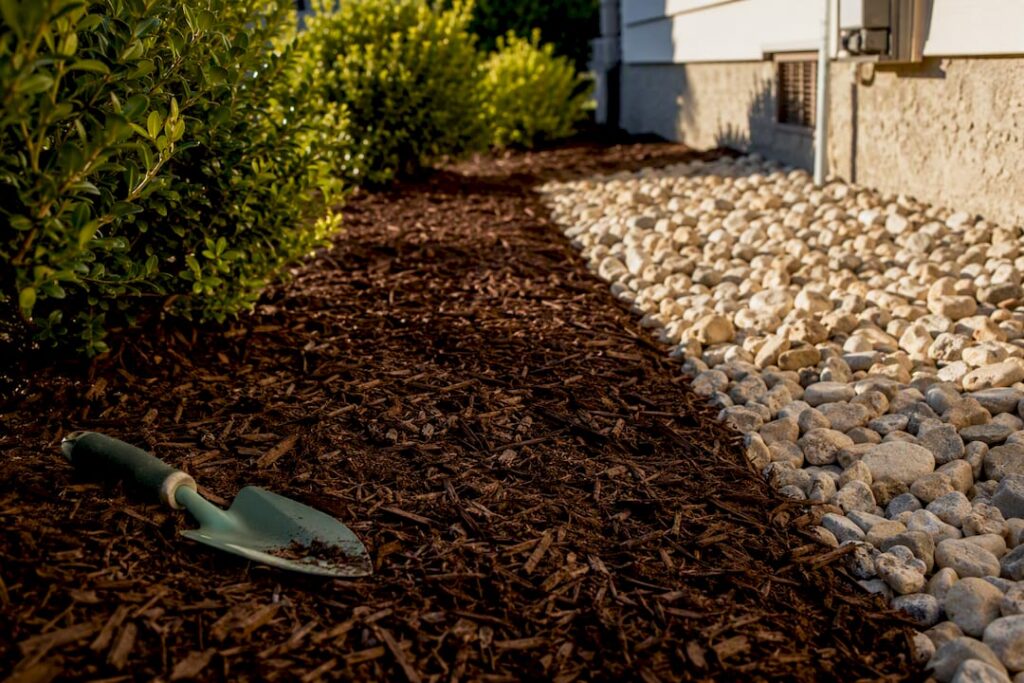
For planted beds, organic mulch is almost always the better choice, and rock belongs in pathways, drainage areas, and defensible zones near structures. Mulch cools soil, holds moisture, and feeds plants as it breaks down. Rock lasts longer and needs less replacement, but it can raise soil temperature and complicate long-term maintenance. The right answer usually depends on what is growing where.
TL;DR:
- Mulch is recommended for planting beds because it maintains soil moisture, cools roots, and decomposes to enrich the soil over time.
- Rock lasts longer and resists pests but absorbs heat, raises soil temperature, and makes future removal and maintenance more difficult.
- In hot climates, mulch reduces soil temperature by up to 18°F, whereas rock often increases water and irrigation needs due to heat radiation.
- Over five to ten years, mulch requires ongoing replenishment, while rock may need weed control and eventual fabric replacement, increasing long-term labor costs.
- The best approach involves using mulch in planting zones and rock in pathways, drainage areas, and fire-safe zones, with proper edging to separate zones.
Table of Contents
- Rock vs Mulch: Pros and Cons Side by Side
- How Rock and Mulch Affect Soil Temperature and Plant Health
- What Does Rock vs Mulch Cost Over 5 to 10 Years?
- Where Should You Use Mulch or Rock in Your Yard?
- How to Apply Mulch and Install Rock the Right Way
- A Simple Hybrid Layout That Works
- What We’ve Learned Installing Both for Nearly Two Decades
- Get Professional Help With Mulch or Rock in McHenry County
- Sources
- FAQ
Rock vs Mulch: Pros and Cons Side by Side
Every planted bed has different needs, but the tradeoffs between these two materials stay consistent across yards.
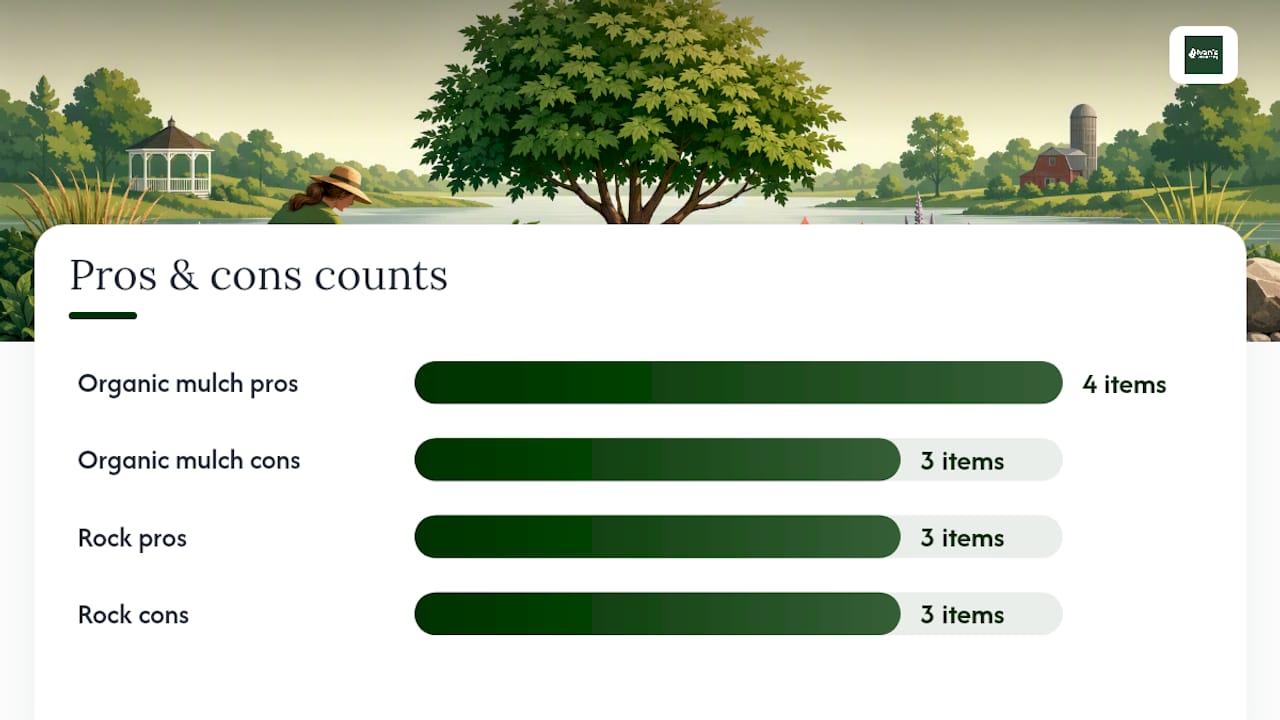
Organic mulch pros:
- Holds soil moisture and cuts down on watering
- Breaks down over time, adding nutrients and improving soil structure
- Keeps roots cooler during summer heat
- Easy to plant into, move, or adjust as beds change
Rock pros:
- Lasts far longer than mulch without needing replacement
- Doesn’t decompose, so it won’t attract fungus gnats or termites
- Works well as a nonflammable surface near structures
Organic mulch cons: needs replenishing, can wash out on slopes, and can smother crowns if piled too high.
Rock cons: absorbs and radiates heat, can shift soil pH over time, and is genuinely hard to remove once installed.
If you’re planting anything, lean mulch. If you’re covering a utility strip, path, or drainage area with no root systems to protect, rock earns its keep.
How Rock and Mulch Affect Soil Temperature and Plant Health
The science behind this comparison is not close. A 3-inch layer of bark mulch can reduce midday soil temperatures by up to 10 to 18°F compared to bare soil or rock-covered ground. That temperature swing matters more than most homeowners realize.
Pro Tip: Stick your hand two inches into a rock bed on a 90-degree afternoon. Then do the same in a mulched bed nearby. The difference tells you everything you need to know about root stress.
Rock absorbs heat during the day and re-radiates it into the surrounding soil and air well into the evening, which pushes up irrigation needs in hot climates. Mulch does the opposite:
- Slows evaporation from the soil surface
- Decomposes gradually into humus, feeding soil microbes and improving structure
- Buffers roots against both extreme heat and sudden cold
Drought-adapted plants like agave, yucca, and certain ornamental grasses tolerate rock beds fine. Most perennials, shrubs, and vegetable plants don’t.
What Does Rock vs Mulch Cost Over 5 to 10 Years?
Sticker price tells you almost nothing about the real cost of either material. Mulch typically needs topping off every 1 to 3 years, while rock can last 10 to 20 years without replacement. That sounds like an easy win for rock, until you account for what happens underneath it.
- Mulch: recurring material and labor cost every couple of years, but minimal cleanup between refreshes
- Rock: landscape fabric beneath it clogs with dust and organic debris within a few years, which creates a seedbed for weeds and restricts water and air to the roots below
- Rock removal: heavy, slow, and often requires hauling equipment if you ever want to convert the bed back to plantings
- Watering: rock beds in hot climates often need more frequent irrigation, adding to your water bill over time
The perceived “low maintenance” of rock is often overstated. Once the fabric fails, restoring the bed becomes more labor intensive than a decade of mulch top ups combined.
Where Should You Use Mulch or Rock in Your Yard?
Think in zones instead of picking one material for the entire property.
- Planted beds, tree rings, and shrub borders call for organic mulch every time. It supports root health and improves the soil beneath it season after season.
- Vegetable plots and shaded beds do best with mulch too, since it retains moisture that would otherwise evaporate quickly in loose garden soil.
- Pathways, drainage swales, and slopes needing erosion control are better suited to rock, which won’t wash away or break down under foot traffic.
- Defensible space near structures in fire-prone regions should favor rock or gravel, since nonflammable ground cover close to a building reduces wildfire risk.
Humid climates tend to favor mulch across more of the yard, since moisture retention matters less and decomposition happens faster. Arid climates lean more heavily on rock for non-planted zones, where water conservation and erosion control take priority.
How to Apply Mulch and Install Rock the Right Way
Getting the application right prevents most of the problems homeowners run into with either material.
For mulch, the 3-inch rule is the standard extension guidance: anything more than that can suffocate roots and trap moisture against plant crowns, inviting rot and pests. Keep mulch a few inches back from trunks and stems.
- Clear weeds and debris before laying down either material
- Install edging to keep mulch or rock contained within the bed
- Use landscape fabric under rock only where you’re prepared to maintain or eventually replace it
- Anchor rock on slopes with larger stones at the base to prevent sliding
- Leave a gap around every trunk and crown, regardless of material
Pro Tip: Check our guide to the best time to mulch in McHenry County before your next application. Timing affects how well mulch suppresses weeds through the growing season.
A Simple Hybrid Layout That Works
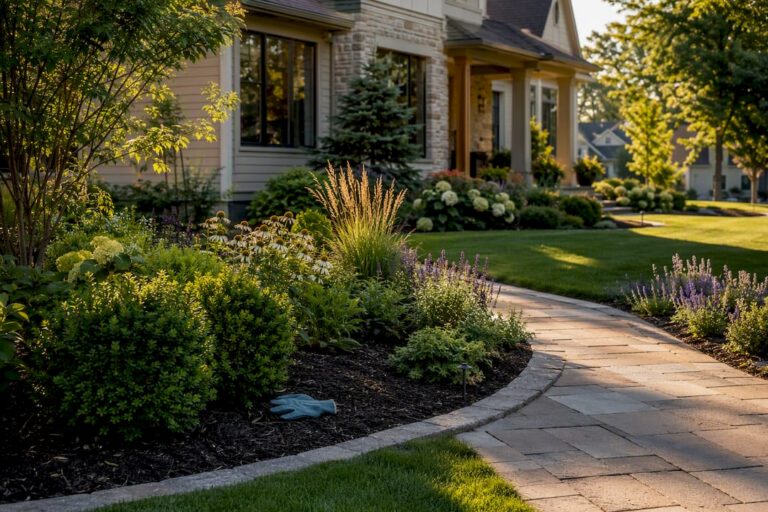
Most well-designed yards use both materials with intention. Mulch planted beds, borders, and tree rings; use rock for the walkway, the drainage swale along the side yard, and any defensible strip near the foundation. A clean transition point, like a steel edge or a row of pavers, keeps mulch from migrating into rock and vice versa.
- Mulch: front bed, foundation plantings, vegetable garden
- Rock: walkway, drainage channel, gravel patio border
- Edging: separates zones and simplifies future changes
If you’re not sure which zone a space belongs in, picture what’s growing there in five years. That answer usually decides the material.
What We’ve Learned Installing Both for Nearly Two Decades
Since 2008, professional landscaping companies have installed mulch and maintained beds across McHenry County, and the pattern rarely changes: rock beds that looked great in year one often need expensive labor by year five once the fabric underneath fails, so consider choosing Delgado’s Landscaping Services in Streamwood, IL for expert local support. Mulch top-ups are simpler, cheaper, and better for the plants. For heavy rock removal or conversion projects, bring in a crew. It’s more physical work than it looks.
— Chas
Get Professional Help With Mulch or Rock in McHenry County
Choosing between rock and mulch is only half the job. Getting it installed correctly, at the right depth, with proper edging and drainage, is where most DIY projects run into trouble. Ivan’s Landscaping handles fresh mulch delivery and installation across McHenry County, along with seasonal maintenance plans that keep beds topped off before they thin out. If your yard needs a hybrid approach with rock in the pathways and mulch in the planting beds, our team can plan the layout and handle the heavy-lift work, including rock removal if an old bed needs to be reset. For larger properties or a full landscape refresh, browse our full range of landscaping services. Request a free estimate and we’ll walk your property and recommend the right material for each zone.
Sources
- Canr
- Mulching for soil and garden health — University of Minnesota Extension
- Ucanr
- Mulching landscape trees — Penn State Extension
FAQ
Is It Better to Put Down Rock or Mulch?
For planted beds, mulch is better because it retains moisture and improves soil health as it decomposes. Rock works better for pathways, drainage areas, and non-planted utility zones.
What Is the 3-3-3 Rule for Mulch?
There’s no universally recognized “3-3-3 rule” in extension guidance, but the well-supported standard is a 3-inch mulch depth, kept a few inches back from trunks and crowns to avoid rot.
Is It Better to Put Rocks or Mulch Next to Your House?
In wildfire-prone regions, rock or gravel is the safer, nonflammable choice within the first few feet of a structure. Outside fire zones, mulch is fine next to the house as long as it’s kept away from siding and foundation vents.
Is It Okay to Put Rocks on Top of Soil?
Yes, but only in areas without active plantings, since rock traps heat that can stress roots and raises irrigation needs in warm climates. For planted beds, organic mulch is the better ground cover choice.