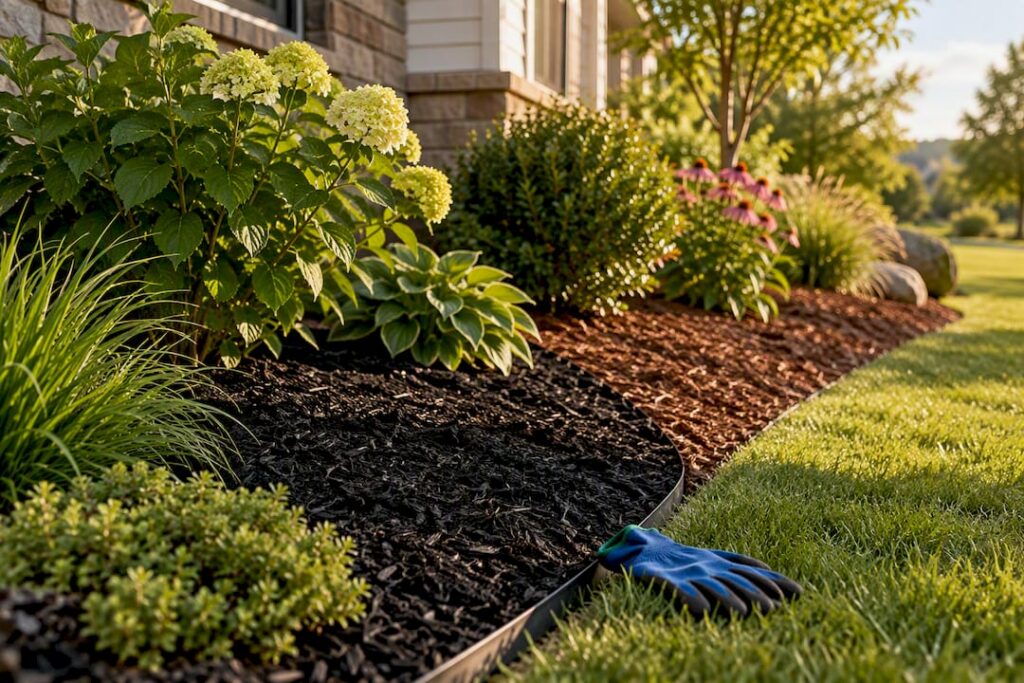
Choose black mulch when you want sharp contrast against modern siding or need extra soil warmth on a north-facing bed early in the season, and choose brown mulch for most other beds, especially near heat-sensitive plants or edible gardens. The decision comes down to three things: how the color reads against your home, how much heat it adds to the soil, and how it affects long-term soil health.
TL;DR:
- Black mulch can raise soil temperatures by 10 to 15°F in full sun, making it ideal for early-season beds and heat-loving plants, but risky for moisture-sensitive or shallow-rooted plants.
- Black mulch fades to dull gray within a year and requires more frequent top-ups, especially in sun-exposed beds, compared to brown mulch, which fades more gradually to a weathered brown.
- Dyed mulch slows soil decomposition and nitrogen release, so it is best avoided in vegetable and herb beds to prevent plant sluggishness and ensure soil health.
- Proper mulch application involves a 3-inch depth, maintaining a 3-inch clearance from trunks, and checking or refreshing every 3 months to prevent rot, pests, and color fading issues.
- Most homeowners should base mulch color choices on exposure and plant type first, with black for extra warmth and contrast in tough plantings, and brown for blending and longer-lasting visual appeal.
Table of Contents
- Brown vs Black Mulch: What Actually Sets Them Apart
- How Black and Brown Mulch Change Your Curb Appeal
- Does Mulch Color Affect Soil Temperature and Plant Health?
- How Long Does Mulch Color Last Before It Fades?
- What Dyed Mulch Does to Your Soil Over Time
- How to Apply Mulch the Right Way
- How Landscapers Actually Choose Mulch Color on Real Jobs
- The Color Debate Misses the Real Decision
- Get Mulch Installed Right the First Time
- Sources
- FAQ
Brown vs Black Mulch: What Actually Sets Them Apart
Both colors start as the same base material, usually shredded hardwood or softwood bark, and the difference comes almost entirely from the dye added during processing. Brown mulch often uses a lighter iron oxide tint or no dye at all if it is naturally aged bark. Black mulch gets its color from carbon black or a heavier iron oxide blend. Beyond color, the two perform almost identically for moisture retention and weed suppression when installed correctly, according to one industry comparison of black and brown mulch. Where they genuinely diverge is in how they look over time, how much heat they trap, and how they interact with your soil, which is where the real decision-making happens.
How Black and Brown Mulch Change Your Curb Appeal
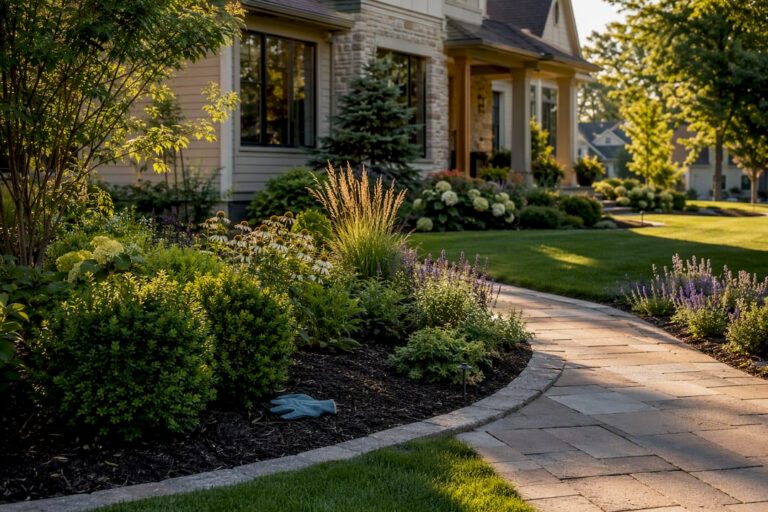
Black mulch creates contrast. It makes green foliage and colorful blooms pop, which is why it shows up so often around modern homes with dark siding, black window frames, or geometric hardscaping. Brown mulch blends. It reads as a natural extension of the soil, which suits traditional homes, brick exteriors, and cottage-style plantings where you want the beds to feel settled rather than staged. A landscape perspective from Mile High Lifescape notes that black mulch is especially popular for commercial properties and contemporary designs where it emphasizes plant shapes and clean lines.
A few practical cues can help you shortlist a color before you commit to a truckload:
- Gray, white, or black siding and dark pavers usually pair better with black mulch.
- Red brick, tan stucco, or natural stone tends to look better with brown mulch.
- Bright annuals and variegated foliage stand out more against black; native plantings and grasses often look more natural in brown.
- Snap a photo of your bed at midday and hold a mulch sample against it. Lighting changes everything, and a color that looks great in the bag can look muddy or harsh once it hits full sun.
Does Mulch Color Affect Soil Temperature and Plant Health?
Yes, and the difference is bigger than most homeowners expect. Black mulch absorbs more sunlight than brown, which raises the temperature of the soil underneath it.
Statistic Callout: In full summer sun, black mulch can raise surface soil temperature by roughly 10 to 15°F compared with lighter organic mulches, according to observations from the University of Delaware extension. A broader review of colored mulch effects confirms that black mulch consistently raises soil temperature and may improve water use efficiency in certain crop settings.
That warmth is an asset in some situations and a liability in others.
- Where extra heat helps: early-season vegetable beds, heat-loving crops like peppers and tomatoes, and north-facing beds that stay cool and slow to warm in spring.
- Where extra heat hurts: shallow-rooted perennials, hydrangeas and other moisture-sensitive shrubs, and south- or west-facing beds that already bake in full sun during summer.
- Climate matters too: in hotter regions, black mulch can push root zones past comfortable temperatures for many ornamentals, drying out soil faster and stressing plants during heat waves.
If you are torn between colors and your bed gets brutal afternoon sun, brown mulch benefits win here. It keeps root zones cooler and more stable through the hottest stretch of the year.
How Long Does Mulch Color Last Before It Fades?
Both colors fade, but they fade differently, and that difference affects how often you will be back out there with a rake and a fresh bag.
Black mulch shows fading fast because the contrast that makes it striking when fresh is the same thing that makes gray patches so noticeable once the dye starts to break down. Extension and landscape sources consistently note that black mulch fades to a dull gray more visibly than brown, creating a patchy look that draws the eye in ways brown mulch typically does not. Brown mulch fades too, but toward a lighter, more weathered brown that still looks intentional rather than tired.
Here is what that means for your maintenance calendar:
- Black mulch in full sun often needs a color refresh or top-up within one growing season to avoid the patchy look.
- Brown mulch can often stretch a full season, sometimes longer in shadier beds, before it needs attention.
- Large beds amplify the cost difference. If you are covering a quarter acre, a color that needs refreshing every year adds up fast compared with one that holds its look for two seasons.
- When switching from a faded black bed to a new color, pros typically strip the top layer of old mulch first. Going from black over faded gray to fresh black creates an obvious two-tone patchwork, while switching to brown covers the transition much more cleanly.
What Dyed Mulch Does to Your Soil Over Time
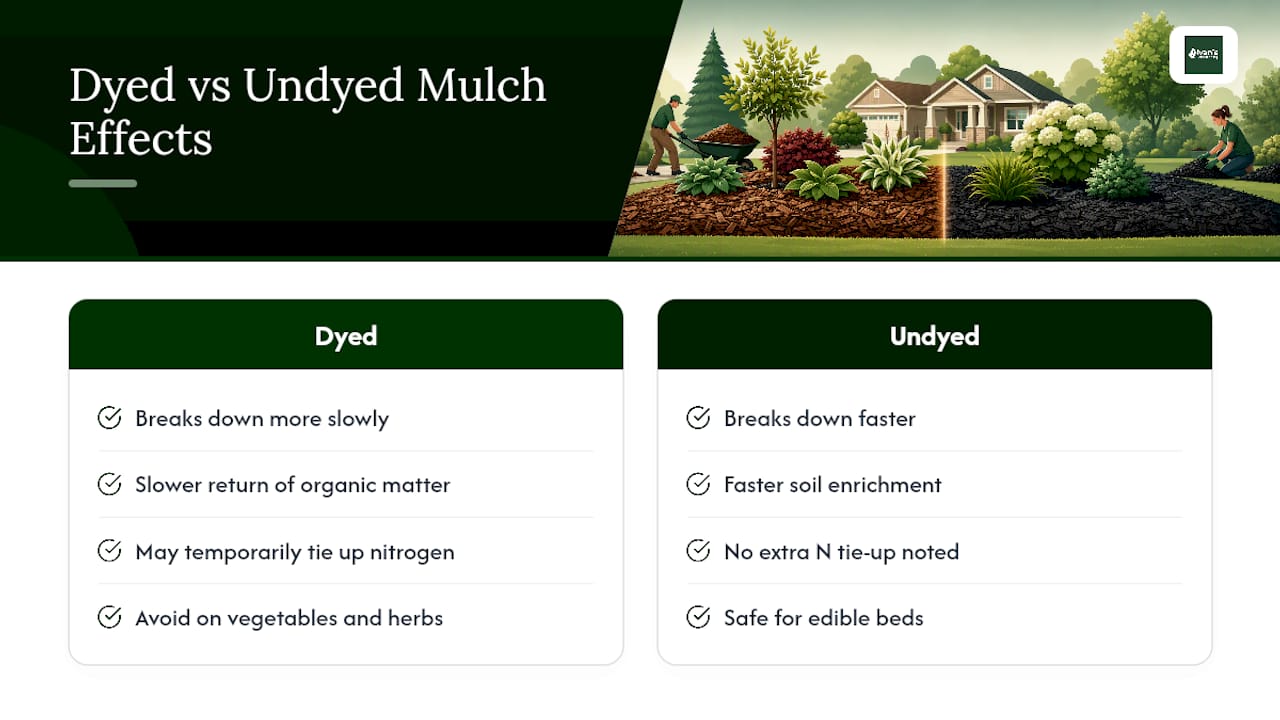
This is the part most homeowners never think about until their plants start looking sluggish. Dyed mulch, whether black or brown, tends to break down more slowly than raw, undyed bark. The dye coating and the processing that goes into colored mulch both slow the natural decomposition that feeds organic matter back into your soil, according to Penn State Extension.
Slower breakdown means slower soil enrichment, and it can also temporarily tie up nitrogen as microbes work to break down the wood fiber, which can leave nearby plants looking pale or stunted if you are not watching for it. Penn State’s guidance suggests planning a modest nitrogen boost, either through fertilizer or compost, when you are mulching heavily around nitrogen-hungry plants.
For anything you plan to eat, skip the dye altogether. University guidance consistently recommends avoiding dyed mulches in vegetable and herb beds, largely because the wood source used for colored mulch is not always tracked as closely as it should be, according to Rutgers NJAES. If you want the soil-building benefits without the guesswork, undyed hardwood or certified organic mulch is the safer call around anything destined for your kitchen table.
How to Apply Mulch the Right Way
Getting the color right does not help if the application is wrong. Landscapers lean on a simple guideline sometimes called the 3-3-3 rule: roughly 3 inches of mulch depth, kept at least 3 inches back from trunks and stems, refreshed or checked every 3 months during the growing season.
- Measure your depth. Two to three inches is the sweet spot for most beds; more than four invites rot and can suffocate roots.
- Clear the ring. Keep mulch pulled back from trunks and woody stems to avoid trapping moisture against the bark, which invites rot and gives pests, including termites, a hidden pathway toward your home.
- Edge cleanly. A defined edge between mulch and lawn keeps the bed looking sharp and cuts down on mulch migration.
- Time it right. Late spring, after the soil has started warming, is ideal for most of the country; a fall refresh ahead of winter also protects roots and holds moisture through dry stretches.
- Check dye cure time before watering. Freshly dyed mulch that has not fully cured can bleed color onto sidewalks and siding after the first watering or rain.
Pro Tip: If you are laying mulch near your home’s foundation, keep it at least 6 inches away from siding and never let it pile against wood trim. That gap alone prevents a surprising share of the moisture and pest complaints homeowners deal with every summer.
How Landscapers Actually Choose Mulch Color on Real Jobs
Two examples from typical residential work show how the decision plays out on the ground. For a modern front bed with charcoal siding and boxwood hedging, black mulch was the clear call: the homeowner wanted the plants to pop, and the bed’s north-facing exposure meant the extra soil warmth was a benefit rather than a risk. For a shady, native-plant bed along a wooded property line, brown was the better fit. The plants were shallow-rooted natives that do not tolerate extra heat well, and brown mulch let the bed blend into the surrounding tree line instead of standing out.
Before installing dyed mulch, professionals typically confirm the wood source, check that the dye has fully cured, and look for certification through a body like the Mulch & Soil Council, which publishes guidance on proper dye processing to avoid wash-off. If you want that kind of quality check handled for you, Ivan’s Landscaping’s mulch service covers sourcing, installation, and cleanup in one visit.
The Color Debate Misses the Real Decision
Most articles frame this as a style question, and style matters, but it is not the variable that will bite you in July. The temperature difference between black and brown mulch is the part homeowners consistently underweight. A 10 to 15 degree jump in soil temperature is not a cosmetic detail. It is the difference between a hydrangea that sails through summer and one that wilts every afternoon no matter how much you water it.
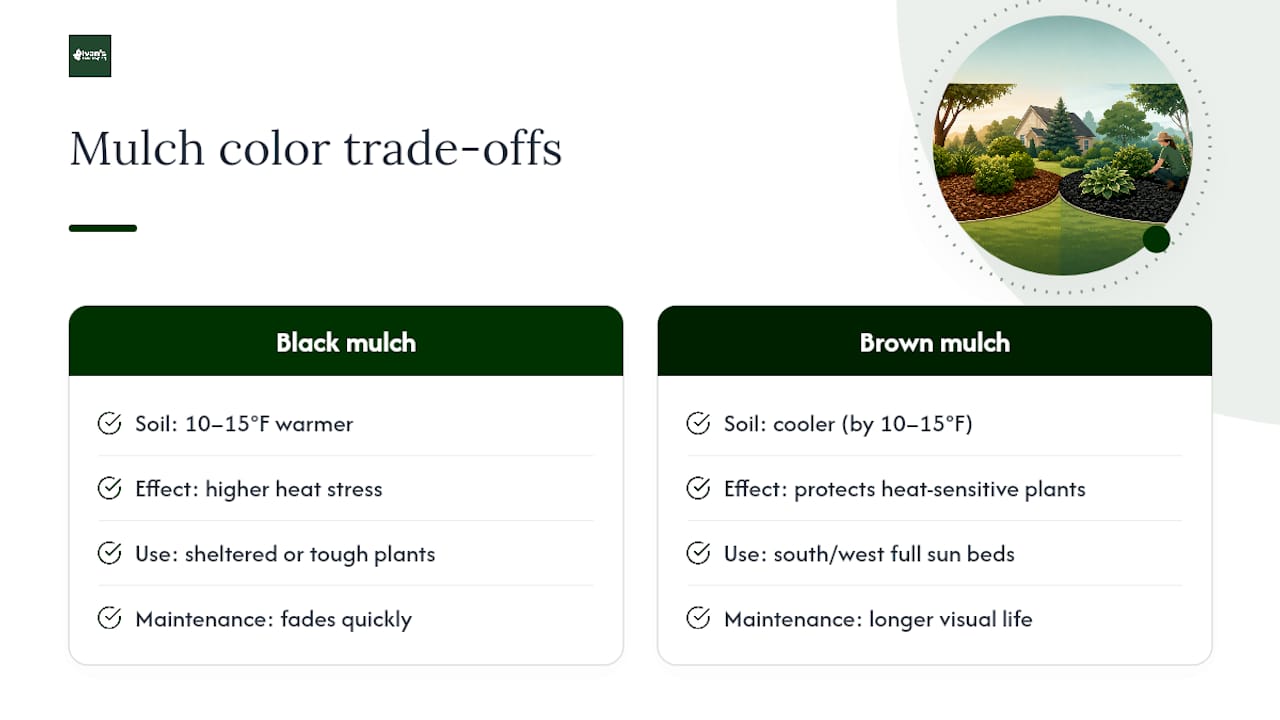
Here is where I will push back on common advice: pick your mulch color based on exposure and plant type first, then let aesthetics narrow the choice within that constraint. If your bed faces south or west in full sun, brown should win almost by default, regardless of what matches your trim color. Save black for beds where the microclimate genuinely benefits from the extra warmth, or where the plants are tough enough not to notice.
The other underrated factor is maintenance honesty. Homeowners pick black for its punch, then get frustrated a year later when it looks gray and patchy. If you are not going to top it up annually, brown’s longer visual life will save you more effort than the initial contrast was worth.
— Chas
Get Mulch Installed Right the First Time
Picking the right color solves half the problem. Getting it applied at the correct depth, cured properly, and edged cleanly is the other half, and that is where most DIY mulch jobs go sideways. Professional mulch services handle delivery, installation, and cleanup as one service, which means no guessing on depth, no color mismatch between old and new material, and no dye wash-off staining your walkway after the first rain. Quality material is sourced, cure time is checked before installation, and job sites are left clean when the work is done.
If you are ready to get your beds refreshed for the season, request a mulch delivery and installation quote and get a fast response with a clear estimate.
Sources
- Mulch: a survey of available options | Penn State Extension
- Meta-analysis of colored plastic mulch effects (PMC)
- Mulch & Soil Council FAQs
FAQ
What Is the 3-3-3 Rule for Mulch?
The 3-3-3 rule is a simple guideline for mulch application: keep the layer around 3 inches deep, leave 3 inches of clearance around trunks and stems, and check or refresh the bed roughly every 3 months during the growing season. It helps prevent rot, pest habitat, and uneven fading.
What Are the Downsides of Black Mulch?
Black mulch absorbs more heat, raising soil temperature by roughly 10 to 15°F in full sun, which can stress heat-sensitive plants. It also fades to a patchy gray faster than brown, meaning more frequent topping up to keep the look consistent.
What Is the Most Popular Mulch Color?
Brown mulch is generally the more common choice for residential landscapes because it blends with a wider range of home styles and plant palettes. Black mulch remains popular for modern and commercial designs where strong contrast is the goal.
Does Black Mulch Attract Termites?
Mulch color itself does not attract termites; the risk comes from moisture retention and mulch piled directly against a home’s foundation or trunks. Keeping mulch a few inches away from wood surfaces and siding, as Mulch & Soil Council guidance recommends, reduces that risk regardless of color.
Can I Use Dyed Mulch in a Vegetable Garden?
It is generally best to avoid dyed mulch in edible beds and use undyed hardwood or certified organic mulch instead. Extension guidance from Rutgers NJAES notes that the wood source in dyed products is not always tracked as carefully as it should be for food-growing areas.