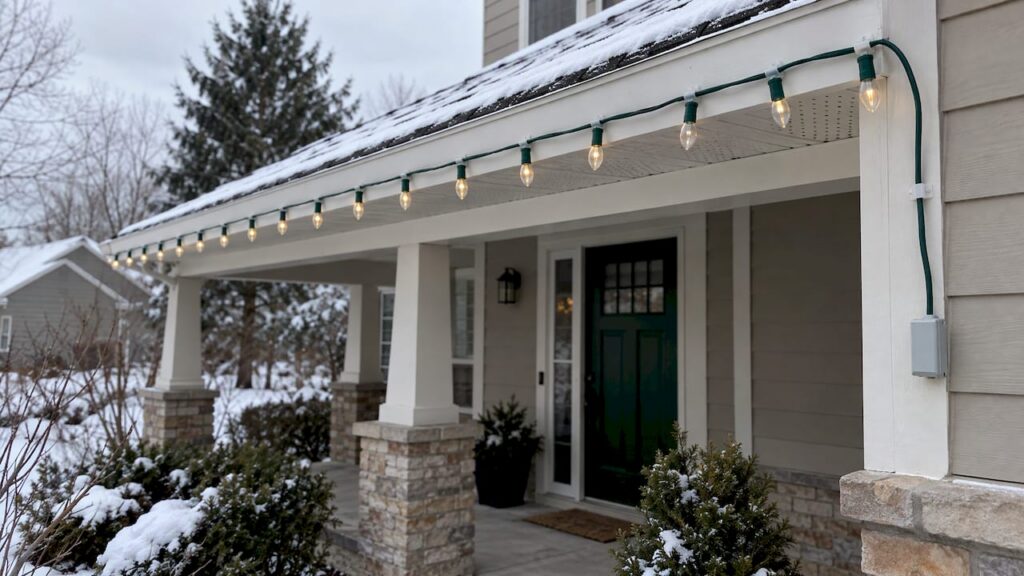
Safe outdoor Christmas lights come down to five habits: inspect every strand, use only lights and cords rated for outdoor use, plug into a GFCI-protected outlet, fasten everything securely and keep connections off wet ground, and turn the lights off when you sleep or leave. Here is how to do each one, in the order you will actually need them.
TL;DR
- Throw out any strand with cracked sockets, frayed or bare wire, or loose connections before it goes up.
- Use lights marked for outdoor use, outdoor-rated three-prong extension cords, and no more than three standard-size sets per cord.
- Plug into a GFCI outlet, or use a portable outdoor GFCI, and test it first.
- Use a dry wooden or fiberglass ladder and stay at least 10 feet from power lines.
- Put lights on a timer so they are off overnight and when you are away.
Table of Contents
- Inspect every strand before it goes up
- Choose lights, cords, and connections rated for outdoors
- GFCI protection for outdoor lights
- Hang and secure lights safely
- Rain, snow, and wind in Illinois
- When to turn the lights off
- Plan ahead with a professional install
- FAQ
- Sources
Inspect every strand before it goes up
Start on the ground, not on the ladder. The U.S. Consumer Product Safety Commission advises checking each set, new or old, for broken or cracked sockets, frayed or bare wires, or loose connections, and throwing out damaged sets. Do the same for every extension cord: skip any with cuts or fraying.
The Texas Department of Insurance suggests a further step. Lay each set on a nonflammable surface and plug it in for 10 to 15 minutes to confirm nothing melts or smokes. Shut off the power when you replace bulbs, and keep it off while you put up outdoor lighting.
Look for the certification label as well. Outdoor lights should carry a mark showing they were tested by a recognized laboratory for outdoor use. Indoor-only strands do not belong outside, even for a short season.
Choose lights, cords, and connections rated for outdoors
Seasonal lighting is covered by a voluntary safety standard, UL 588. NIST notes that it addresses minimum wire size, strain relief, and overcurrent protection for decorative lighting. The standard applies to temporary-use products rated up to 120 volts, with temporary meaning installation of no more than 90 days. UL also says certified holiday lights go through rain, water immersion, and UV exposure tests.
The 2026 National Electrical Code likewise allows temporary holiday decorative lighting and its wiring for no more than 90 days. That is a reason to take lights down in January rather than leaving them up all year.
Extension cords
- Use cords marked for outdoor use. The Electrical Safety Foundation International (ESFI) recommends weather-resistant, medium-to-heavy gauge cords with molded connectors so moisture cannot seep in, and three-wire cords with three-prong plugs.
- Limit the load. The Texas guide says to use no more than three standard-size light sets per extension cord. Always read the maximum connection count printed on the packaging as well.
- Keep cords short where you can. ESFI notes that beyond 100 feet a cord can lose power, and it suggests replacing outdoor cords every three or four years if damage is noted.
The New York Electrical Inspection Agency adds that, under the National Electrical Code, cords used for holiday lights must be listed for hard or extra-hard usage. That is a good reason to buy a heavy-duty outdoor cord rather than a thin household one.
LED or incandescent
LEDs run cooler. Eversource notes that LED holiday lights use one-tenth the energy of traditional mini-lights and are cooler to the touch, which reduces fire risk. If you are weighing brightness and bulb type, our guide to LED vs incandescent lights explains how to shop by lumens.
GFCI protection for outdoor lights
A ground-fault circuit interrupter (GFCI) cuts power quickly when electricity leaks to ground, for example through a wet connection. It is the single most useful safeguard for outdoor lighting.
NFPA’s electrical specialist says GFCI protection of the circuit or receptacles is crucial for everyone’s safety. If your exterior outlets are not GFCI-protected, have a qualified person install them. The same guidance says to test GFCI devices before use, because outdoor wiring and equipment degrade over time.
If you cannot get a protected outlet, ESFI says portable outdoor GFCIs are sold where electrical supplies are sold and need no special knowledge to install. Tips for a quick setup:
- Press the TEST button on the outlet or portable unit. Power should cut off.
- Press RESET and confirm power returns.
- If it will not trip or will not reset, stop and call a licensed electrician.
NFPA also notes that the decision to require an inspection often lies with the local authority, and that changing or installing new GFCI devices will likely call for one. Check with your village or township building department before you swap outlets.
Hang and secure lights safely
Most holiday injuries happen on ladders, so treat the hanging as the riskiest part of the job.
- Ladder material: ESFI recommends wooden or fiberglass ladders because metal conducts electricity. Keep the ladder dry.
- Power lines: Keep yourself and your equipment at least 10 feet away from overhead lines, per the same ESFI guidance. Plan your route before you climb, and never carry a long pole or ladder under a service drop.
- Fasteners: The Texas guide says to fasten lights to trees, walls, or other firm supports with insulated staples hammered in, or run strings through hooks, never nails or tacks that can pierce the wire.
- Pinch points: OSHA warns that cords can be damaged by door or window edges, staples, abrasion, or simple aging, and exposed conductors risk shock, burns, or fire. Do not run a cord through a closed door or window.
- Sharp corners: Route cords away from sharp edges and projections, which the electrical code treats as accidental-damage hazards.
If you are lighting a roofline, a tall tree, or a two-story front, you may prefer to hand that part off. Our holiday light installation service covers McHenry County homes and businesses, and we carry insurance for our work.
Rain, snow, and wind in Illinois
Northern Illinois December weather tests every connection. The Texas guide says to waterproof all electrical connections and keep them elevated so rainwater does not run into them. It also advises pointing bulb sockets downward to avoid moisture buildup, and keeping cords and strings clear of snow and standing water.
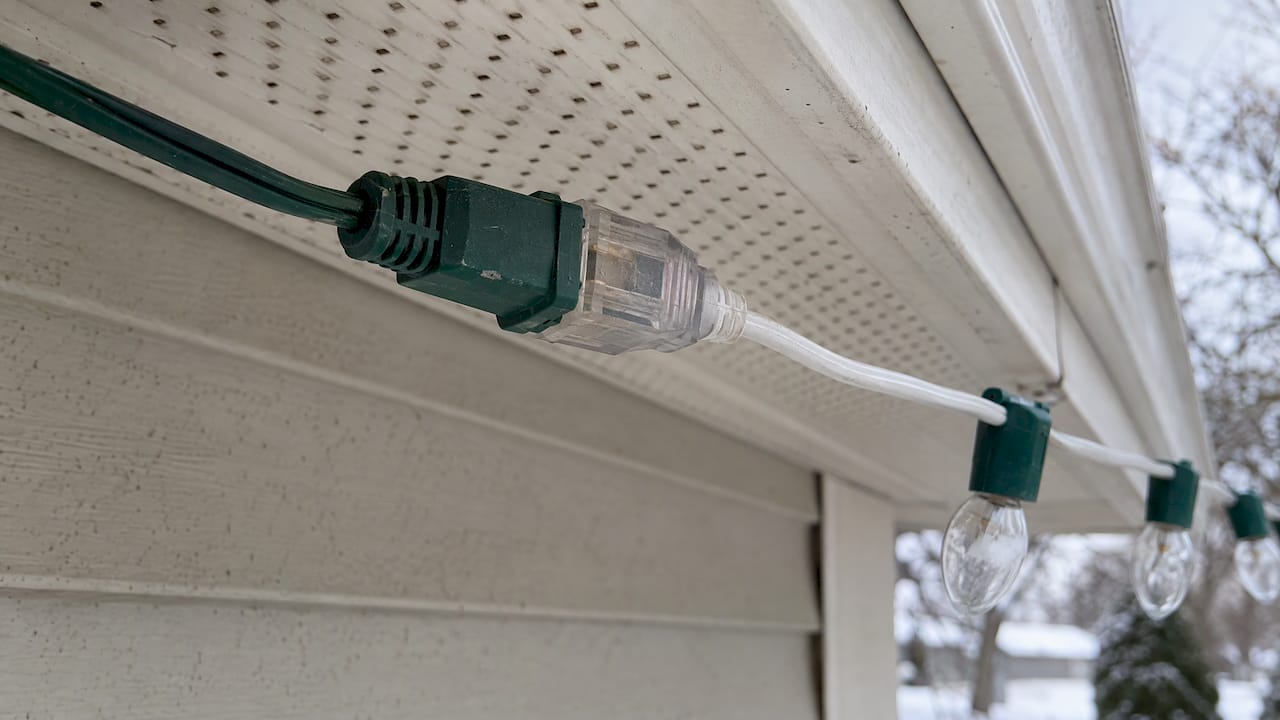
OSHA explains that a wet or poorly sealed connector can let current escape from live parts, and recommends watertight or sealable connectors plus a portable GFCI. UL adds that lights should go into weatherproof GFCI outlets outdoors.
A few practical habits help:
- Use a weatherproof in-use outlet cover that closes with the cord plugged in.
- Lift plug connections off the ground with a hook or a small stand, away from drifting snow and where snowmelt pools.
- Anchor strands firmly so wind does not whip them against gutters or branches.
- Brush snow from lights gently by hand. Never pull on a frozen strand.
- Keep cords away from the path of a shovel, snow blower, or plow.
When to turn the lights off
Turn them off when you go to bed or leave the house. The CPSC states that lights could short out and start a fire if left on. UL says holiday lights should not be left on overnight or when you are away, and recommends an automatic timer.
A common schedule is on at dusk and off before bedtime, around 10 or 11 p.m. Eversource points out that a programmable timer also keeps lights from being left on by accident and trims energy cost. Use an outdoor-rated timer and check its wattage rating against the total load.
Our perspective
We install and service outdoor properties across McHenry County, and the holiday lighting problems we hear about rarely come from the lights themselves. They come from the setup: a thin indoor cord run to a rooftop, a connection lying in a snowbank, an outlet no one tested.
That is why we treat lighting like any other outdoor project. We plan the route of every cord, think about where water and snow will collect, and keep the job site clean when we leave. Our approach to holiday lighting is designed around those details, and we back our work with a satisfaction guarantee.
If you hang lights yourself, the checklist above covers what matters most. If you would rather not climb a ladder in November wind, we are happy to give you a free estimate.
Chas
Plan ahead with a professional install
If you want the safety work handled for you, we design, install, and take down holiday lighting for homes and commercial properties in McHenry County. Learn how booking early and activating later works, read about choosing C7 or C9 bulbs, or see what to budget. When you are ready, request a free estimate on our holiday lights page.
FAQ
Can I leave my Christmas lights on 24/7?
No. UL says holiday lights should not be left on overnight or while you are away, because electrical fires may occur. Use an outdoor-rated automatic timer so they switch off before bed.
Do outdoor Christmas lights need a GFCI?
Yes, they should be plugged into a GFCI-protected circuit. If your exterior outlets lack GFCI protection, have a qualified electrician add it, or use a portable outdoor GFCI. Test it before each season.
How many strands can I connect together?
The Texas guide says no more than three standard-size sets per extension cord. Mini-light strands often have their own limit, so follow the maximum printed on the package and never exceed it.
Can I use indoor lights outside?
No. Use only lights labeled and certified for outdoor use, and outdoor-rated extension cords with three-prong plugs. Indoor strands are not built for rain, snow, or cold.
Sources
- CPSC and NIST holiday decorating hazards
- CPSC holiday decoration safety tips
- Texas Department of Insurance, Decorating Safely with Lights
- NIST guide to U.S. electrical and electronic requirements
- UL 588 standard
- UL Standards & Engagement holiday decorating safety tips
- NFPA, electrical safety tips for exterior holiday lights
- ESFI Outdoor Electrical Safety Check Booklet
- ESFI outdoor decoration safety tips
- New York Electrical Inspection Agency, temporary holiday lights
- OSHA, Extension Cords: 5 Things to Know
- Eversource holiday light safety